Do You Need a Permit to Replace a Water Heater in Prince William?
Are you having issues with this question: do you need a permit to replace a water heater in Prince William? This article will help you figure that out. We’ll walk through which swaps need one, where the county’s electric exemption stops, what skipping the permit can cost you later and who should pull it. Let’s get into it.
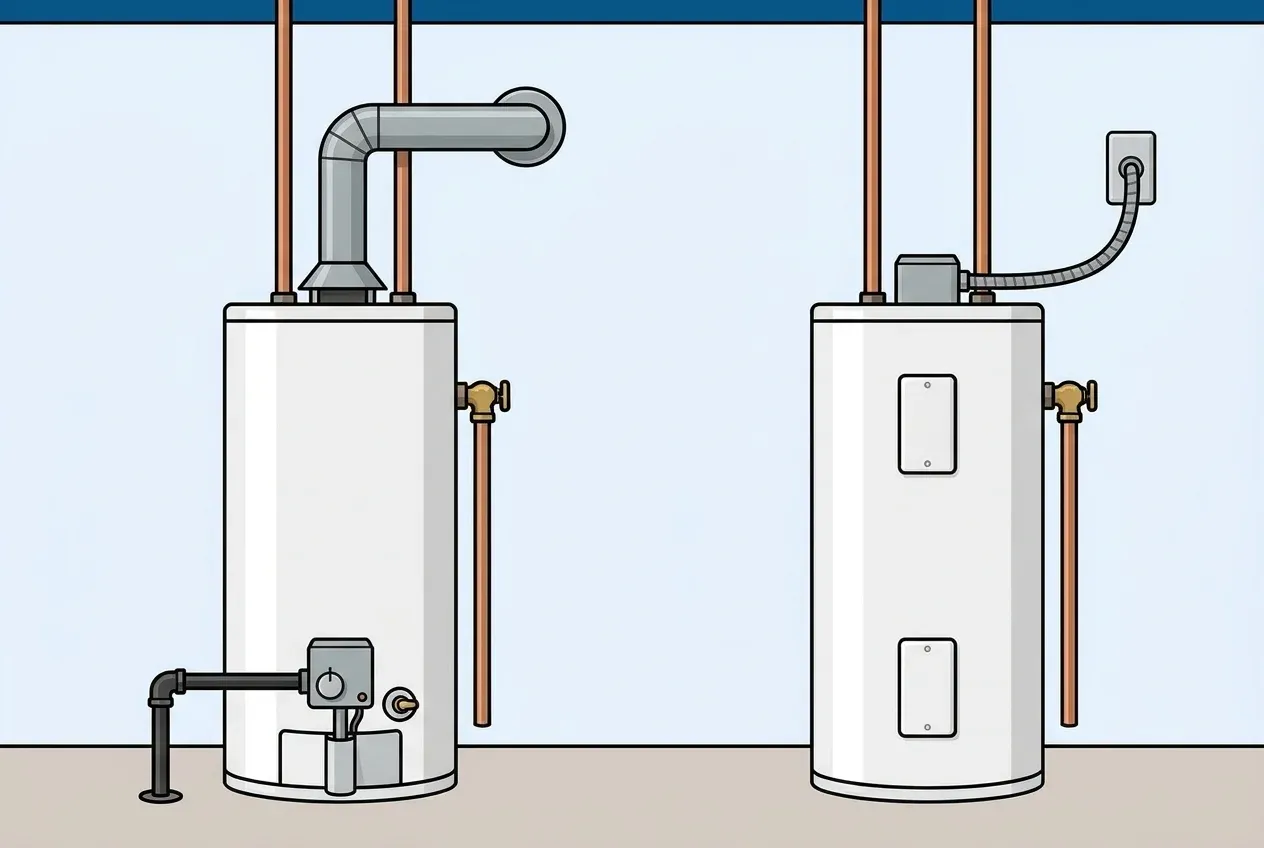
Yes, if the heater burns gas or oil. For a house or townhouse in Prince William County, every gas or oil water heater replacement needs a permit, even in the old heater’s exact spot. An electric heater can skip the permit when a heater of the same size goes back in the same location.
Which Water Heater Replacements Need a Permit in Prince William County?
Replacing a gas or oil appliance, the water heater included, is on Prince William County’s list of work that always needs a permit. Electric heaters get an exemption, but it comes with limits.
That list covers one- and two-family homes and townhouses. The county treats condos and apartment buildings as commercial projects, so if you own a condo, check with its Building Development Division before relying on the list. And the county’s Development Services department doesn’t serve the Town of Dumfries, the City of Manassas or the City of Manassas Park, so if your home is in one of them, check with that town or city instead.
A same-model gas swap still needs a permit
Say you’re replacing an aging gas heater with the same model in the same closet. That job still needs a permit, because for gas and oil the county’s rule turns on the fuel alone. Virginia’s building code draws the same line. In certain residential buildings, it lets a replaced mechanical appliance skip the permit only when the equipment is “not fueled by gas or oil.”
An emergency swap can start before the application goes in
If your gas heater gives out and the replacement can’t wait, you don’t have to go without hot water until a permit is issued. The state code lets emergency equipment replacement begin first, with the permit application due by the end of the first working day following the day the work starts. The deadline shifts, but the permit is still required.
When Does an Electric Water Heater Swap Need a Permit in Prince William?
When the job includes one of the changes Prince William County lists as always needing a permit:
- a new electrical circuit, fixture or receptacle
- a new appliance in a new location
- an upgraded appliance that needs electrical, plumbing or mechanical system upgrades
- any other alteration to the house’s plumbing, electrical or heating and air conditioning systems
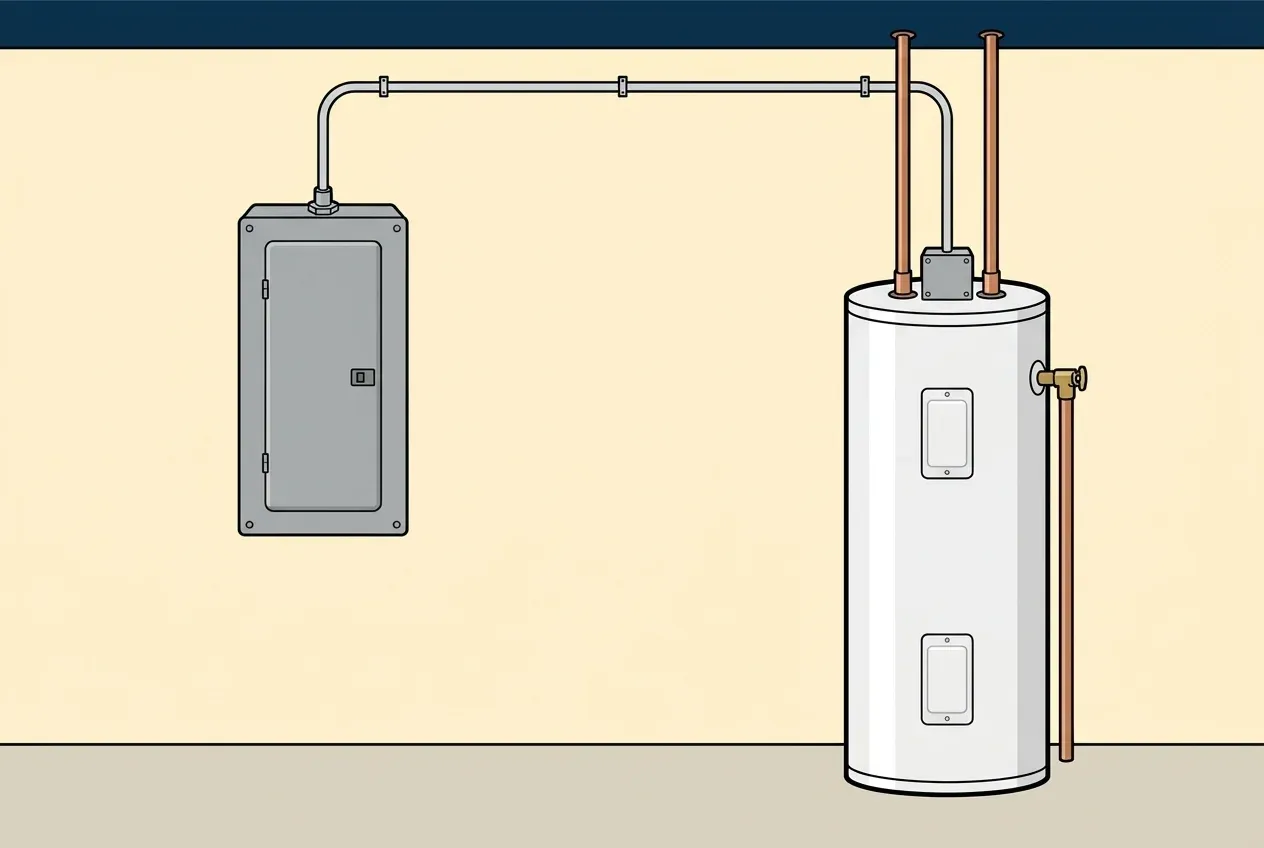
The exemption itself is one line on the county’s no-permit list, covering an electric water heater swapped for “the same size heater in the same location.” That list also says exempt jobs “must be performed in a manner meeting code requirements,” so skipping the permit doesn’t mean skipping the code. Whether your setup also calls for an expansion tank is its own question, and our post on whether a water heater needs an expansion tank covers it.
Moving the heater ends the exemption
Say you’d like the new heater in the garage instead of the basement corner where the old one stood. That’s a new appliance in a new location, so it needs a permit even if the fuel and the size stay the same.
The county doesn’t define same size or same location
The county’s permit list doesn’t say what counts as the same size, or how far a heater can move before it’s in a new location. It doesn’t name tankless or heat pump water heaters, either. So if the new heater differs in size, shifts position or is a different kind of heater, ask the county’s Building Development Division before counting on the exemption. If you’re weighing tankless, our tankless vs tank comparison covers what that switch involves.
You can still ask for a permit on an exempt swap
Skipping the permit on a same-size electric swap is allowed, not required. Under Virginia’s building code, when an owner or the owner’s agent asks for a permit on exempt work, the permit has to be issued, inspections included. That’s your option if you’d like an inspector to look the job over, or a record of the work on file.
Can Skipping the Water Heater Permit Cost a Prince William Homeowner Later?
It can. Prince William County treats unpermitted work as new work. A heater that skipped its permit has to meet the code in effect when the permit is finally issued, not the code from the day it went in. There’s no grandfathering to lean on, either, since “the building code makes no reference to ‘grandfathering’ of unpermitted work,” as the county puts it.
Fixing it later takes a permit and a final inspection
Once you learn of unpermitted work on your property, or get a violation notice for it, the county’s steps for correcting it include getting the appropriate permits and passing a final inspection. The inspector assigned to your case can explain each step.
The violation notice comes to the owner
If an installer tells you a gas swap doesn’t need a permit, go by the county’s list instead, because a skipped permit comes back to you as the owner. The county lets either an owner or a contractor get the permits for a project. If your installer was meant to pull it, the county will send the contractor a notice as well as you. First you’ll have to show who did the work, with a copy of the contract, a payment receipt or similar proof, and the county has to confirm it. Keep that paperwork from any water heater job.
A buyer inherits the violation
If you buy a property with building code violations, you become legally responsible for correcting them as the new owner, according to the county. You’re also obligated to bring deficient work up to current building code standards. The county warns buyers about the costs of correcting work done without proper permits. If you’re the one buying, check the permit status of past work before you purchase. Your agent may look into it, but the county encourages buyers to do their own research too, starting with its Development Services ePortal.
Who Pulls the Water Heater Permit for a Prince William County Home?
Your contractor, if you’ve hired one. An owner, a contractor or an authorized agent can sign the application. When a homeowner hires a contractor, though, the county’s rules on who should apply for a permit call for the contractor to be the permit holder. Whoever holds the permit is ultimately responsible for the work done under it.
A hired contractor goes on the permit with its licenses
To put the permit in a contractor’s name, the county needs a copy of its Virginia State Contractor’s License and a copy of its Prince William County business license. You can check a state license before you sign anything, using the state’s contractor license lookup, which searches by name, license number or address. Hiring a licensed contractor also makes you eligible for money from the Contractors Transaction Recovery Fund in a case of improper and dishonest conduct. If you’re unhappy with a contractor’s work later, complaints go to the Virginia Department of Professional and Occupational Regulation, which regulates contractors and their licensing.
Doing the work yourself makes you the permit holder
If you’ll do the job yourself, the permit is in your name. You’ll also complete the county’s Statement of Exemption, which confirms you own the property and are authorized to make the changes. The county expects whoever applies to understand the code and material requirements and to answer questions about the project. Applications are on the county’s eBuildingDevelopmentForms page, and Virginia’s building code says no applicant can be required to apply in person.
The county tells homeowners who’ve hired a contractor not to complete the Statement of Exemption, since it’s only for owners doing the work themselves. It also warns that signing the statement and then knowingly hiring an unlicensed contractor is a Class 1 misdemeanor under Virginia law.
The Bottom Line on Water Heater Permits in Prince William County
Plan on a permit in Prince William County unless your job is the plain electric swap the county exempts. Before you shop, check the old heater’s label for its fuel and size, and decide whether the new one will stand in the same spot. If you’re not sure yours is due, our guide to how long a water heater lasts can help you replace it on your schedule, not after a breakdown.
When you collect estimates, ask each contractor whose name goes on the permit. Our breakdown of water heater costs in Alexandria covers what a permit adds to the price. We’ve been family-owned since James Leonard and Charlie Splaine founded the company in 1956, and our water heater replacement estimates are free. You can read about how we work before you call.