How Much Does a Gas Line for a Furnace Cost in Fairfax County?
Are you having issues with a planned gas furnace and one open question: how much does a gas line for a furnace cost in Fairfax County? This article will help you figure that out. We’re going to cover who supplies your gas, how the utility prices the line to your house, what each part costs and what the county requires first. Let’s get into it.
You pay for a furnace gas line in two parts, and the first can cost nothing. Your gas utility prices the street side, the underground line from the street main to your meter, and its tariff can cover the first stretch at no charge. The house side comes with your gas furnace installation: the pipe from the meter to the furnace, the pressure test and the county permit. Nationally, running a gas line to a furnace averages $600 to $1,500, by HomeGuide’s January 2026 figures. Fairfax County’s mechanical permit for gas piping carries its $141.75 base fee, plus a 10% technology surcharge, under the fee schedule effective July 1, 2026. None of the dollar figures in this post are our prices.
Can Your Fairfax County Home Get Natural Gas at All?
Your address decides it, and the first step is finding out which utility serves your street.
Two gas utilities serve Fairfax County
Washington Gas serves Fairfax County, though its service territory page notes that some areas of the county are served by Columbia Gas of Virginia instead. The two price the line to your house under different rules, so knowing which one serves you comes before any budget.
Each utility checks availability by address
Washington Gas has an online gas availability check that answers right away for a home close to one of its mains. If Washington Gas needs more research, it sends a follow-up email in three business days. Columbia Gas has an availability form and says it will call you back within two business days.
If the answer is no, or the line costs more than it’s worth to you, a heat pump runs on electricity instead. We weigh that choice in our post on whether a heat pump or a furnace suits a Northern Virginia home. Propane is the other gas option, and it needs a storage tank on the property, which natural gas doesn’t.
A Washington Gas conversion can take up to 6 months
Washington Gas says its conversion process can take up to 6 months, and it asks for your request at least 6 months before you need gas. So if you’re switching to gas heat, start the gas side well before the heating season, not after the old system quits. If Columbia Gas serves you, ask for its timeline when it calls.
How Does the Gas Utility Price a New Line to a Fairfax County Home?
Job by job, once the utility knows what gas equipment you’re adding. Neither Washington Gas nor Columbia Gas publishes a set price for the service line, the underground pipe from the gas main to your meter.
Washington Gas prices the line after your contractor files the forms
For a Washington Gas address, your contractor lists each gas appliance you’re adding, with its type and BTU rating, on the utility’s service forms. Washington Gas uses them to size the new service and meter, then evaluates the job. Since distance from its pipes, easements, site conditions, permits and your equipment all vary, it says it can’t give an accurate quote up front.
Instead, you get a customer commitment letter that lists any cost for the service line, meter and regulator, on top of your contractor’s quote. Washington Gas does nothing further until you sign and return it with any required contribution, and the estimate in the letter holds for 45 days from its date.
The first stretch of service line can cost nothing
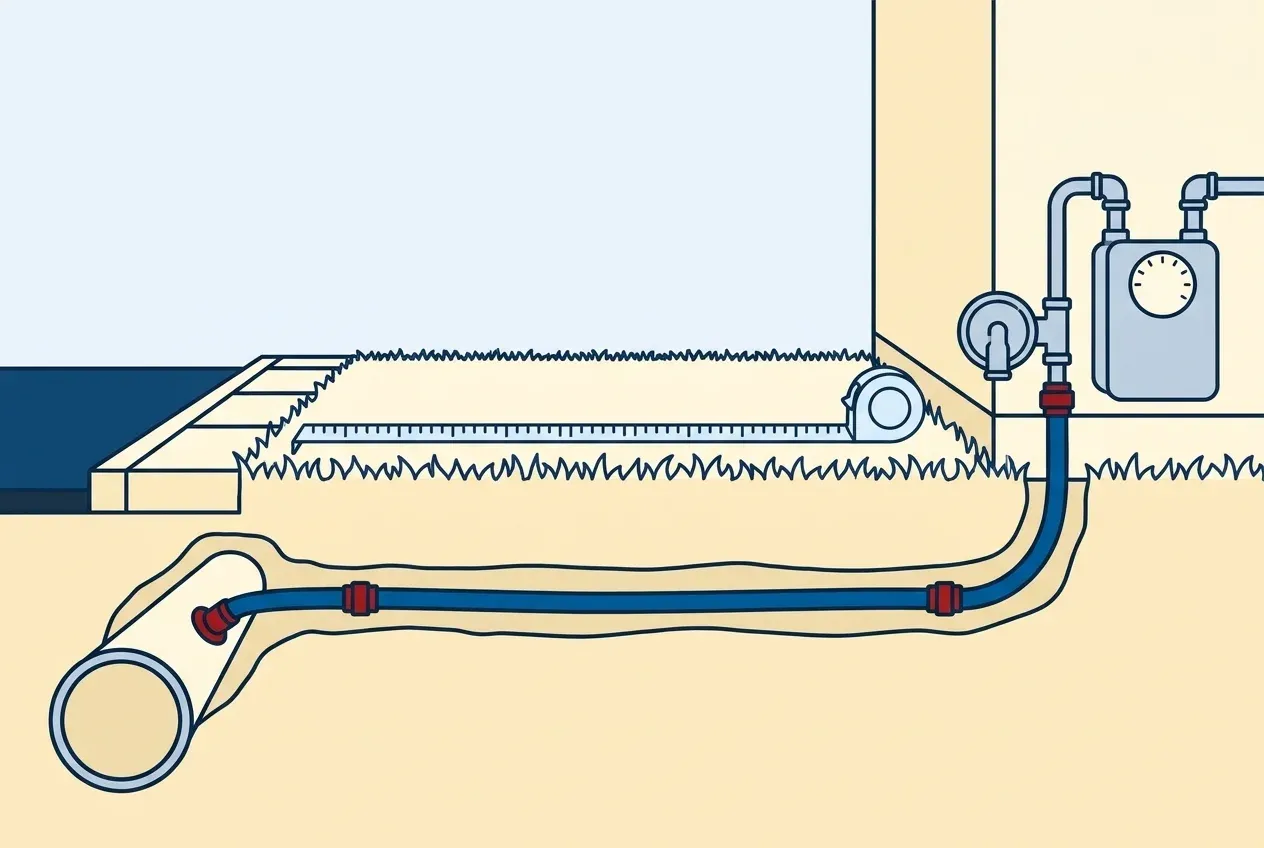
Washington Gas’s Virginia tariff provides up to 175 feet of service line at no charge, from the existing main to your meter. That allowance is for a single home that needs no new or upgraded main. For example, a home with a 100-foot service line from an existing Washington Gas main, and no main work, falls inside it.
Columbia Gas of Virginia’s tariff provides a single home up to 150 feet of service line, main or both at no charge. The condition is that you install and use the gas equipment listed in your service line agreement.
Longer lines and new mains can bring a contribution
Past its allowance, or where a main is needed, Washington Gas decides whether you owe anything with a 30-year test. It weighs its cost to serve the house against the revenue your gas use should bring. You pay a contribution only when the cost comes out higher, and it isn’t a fee every new customer pays. Washington Gas also says that when a neighborhood converts together, each home may save on upfront costs.
Columbia Gas charges a contribution that isn’t refunded for footage past 150 feet, or for unusual underground conditions or permitting. A high-pressure regulator or main, where one is needed, isn’t free under its tariff either.
How Much Does Each Part of a Furnace Gas Line Cost in Fairfax County?
The table’s national figures come from the cost guide named above, as of January 2026, and the permit fee is Fairfax County’s own.
| Part of the job | Who sets the price | What it costs |
|---|---|---|
| Service line and meter, from the street main to your house | Washington Gas or Columbia Gas | Nothing within the tariff’s free footage; past it, the amount in the utility’s letter or agreement. Nationally, a new line from the street, meter included, runs $2,000 to $10,000+ before any utility allowance. |
| Gas pipe from the meter to the furnace | Your contractor | $600 to $1,500 nationally for a furnace line |
| Simple pipe run with easy access, by length | Your contractor | $15 to $25 per foot with materials and labor: $450 to $750 for 30 feet, or $1,500 to $2,500 for 100 feet |
| Complex run with underground sections, many fittings or hard access | Your contractor | $35 to $50+ per foot |
| Pressure test of the new piping | Your contractor | $75 to $150 for a standard test |
| Mechanical permit for the gas piping | Fairfax County | The county’s base fee of $141.75, plus a 10% technology surcharge, under the fee schedule effective July 1, 2026; the exact fee depends on the job |
Distance and access move the contractor’s price
The furnace line figure is an average for the whole run, and the per-foot rows show how length moves it. A furnace close to the wall where the meter sits needs a short, simple run. A furnace across a finished basement needs more pipe, and a run through finished walls or into a crawlspace or attic pushes the price toward the complex rate.
The furnace’s size shapes the pipe
Virginia’s fuel gas code requires gas pipe to be sized for the appliances it serves and the length of the run. So a bigger furnace, or a water heater sharing the line, can call for larger pipe. Other gas appliances, such as a range, dryer or fireplace, price differently, so ask for each one as its own line on the quote. Your quote should also name the pipe material, such as black iron or flexible stainless steel tubing called CSST.
The house side can be the whole gas line bill
If your street side fits inside the utility’s free allowance, like the 100-foot example above, the house side can be all you pay for the gas line itself. The furnace comes on top, and our post on what a replacement furnace costs walks through national furnace prices.
What Does Fairfax County Require Before a Furnace Gas Line Goes Live?
A mechanical permit, inspections and a pressure test of the new piping, all before gas reaches the furnace.
A mechanical permit covers the gas piping
For a house or townhouse, Fairfax County Land Development Services lists gas piping for equipment among the projects that need a residential mechanical permit. New, replacement and converted HVAC systems are on the same list. In the towns of Vienna and Clifton, the county says the project also needs the town’s own approval. In the City of Fairfax or Falls Church, check with that city before you apply.
Inspections and a pressure test come before the gas goes on
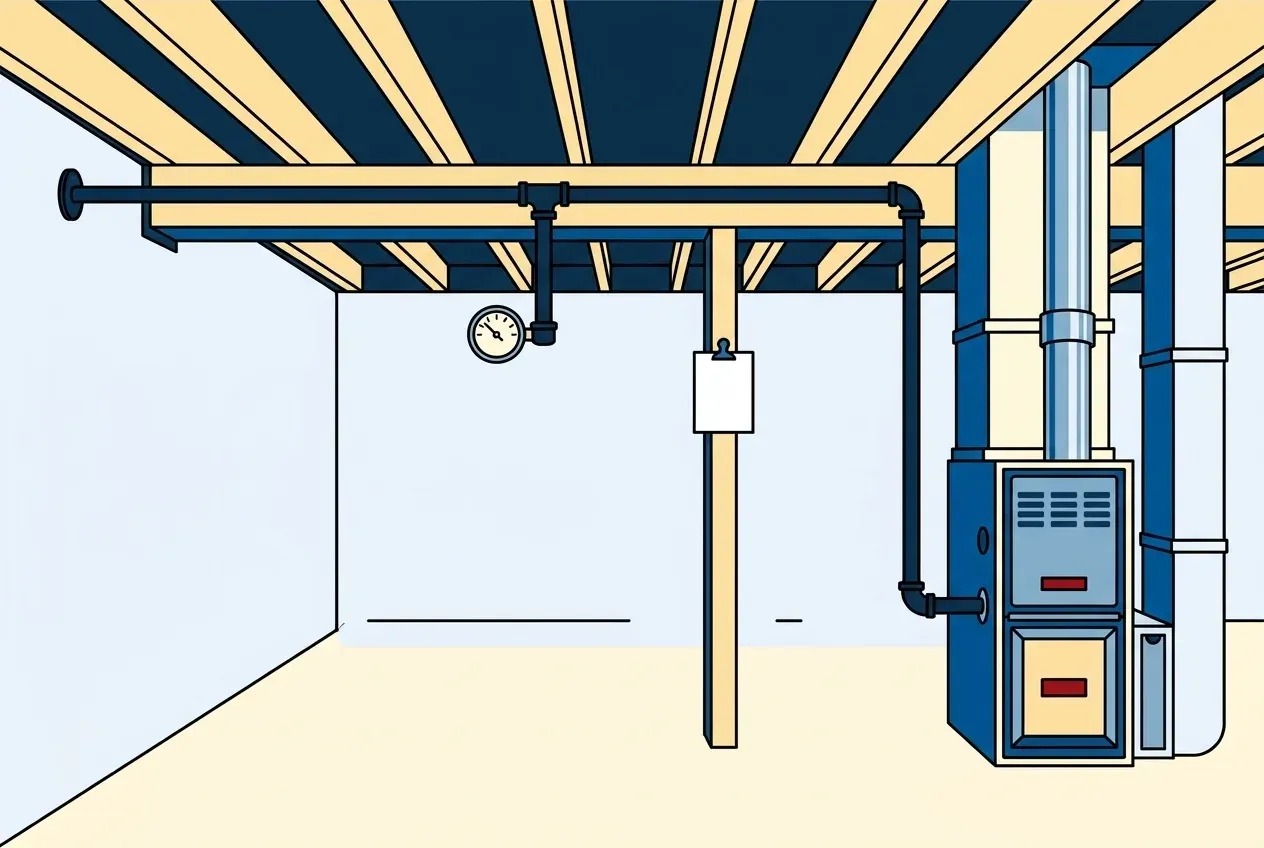
State law requires the inspections, and scheduling them is the permit holder’s job. Fairfax County bundles related inspections for a project on the same day, and booking one before the work is finished can bring a reinspection fee. Virginia’s fuel gas code also requires new gas piping to be visually inspected and pressure tested before it’s accepted and put into use.
On a Washington Gas job, the meter is set once the underground line is in. Your contractor then finishes the inside piping and the furnace, the local code inspections follow, and only after they’re complete does the contractor connect the house line to the meter.
The county recommends a licensed contractor as the permit holder
Can you run the gas line yourself? Fairfax County lets property owners take out permits in their own name. It strongly recommends a licensed contractor as the responsible party, though, so the county can better help if the work proves defective. If no licensed contractor is on the application, the county asks for a license exemption affidavit. Either way, the same permit, inspections and pressure test apply.
The Bottom Line on Furnace Gas Line Costs in Fairfax County
Before you set a budget, take these steps in order:
- Check your address with Washington Gas or Columbia Gas of Virginia.
- For a Washington Gas address, have your contractor file the equipment details. For either utility, wait for its letter or agreement before you count the street side.
- Ask for a quote that lists the pipe run, the pressure test and the permit separately.
- For a Washington Gas address, start months ahead of the heating season.
When you want numbers for your own house, our estimates for a replacement furnace are free, and we can give them the same day. You can also meet our family-owned company, founded in 1956, before anyone comes out.