Should You Replace a Boiler With Forced Air in Arlington?
Are you having issues with an old boiler and wondering: should you replace a boiler with forced air in Arlington? This article will help you figure that out. Below, we cover why older Arlington houses still have boilers, how the two systems compare, when to switch, and what happens to the radiators. Let’s get into it.
For heat alone, usually not. The main thing a switch buys you is central air conditioning, and the trade is new ductwork and the loss of your radiators. If heat is all you’re after, a boiler replacement keeps the system you already have. And if cooling is the draw, you can keep the boiler and add cooling on its own, with no ducts at all.
Why Do So Many Older Arlington Homes Still Heat With a Boiler?
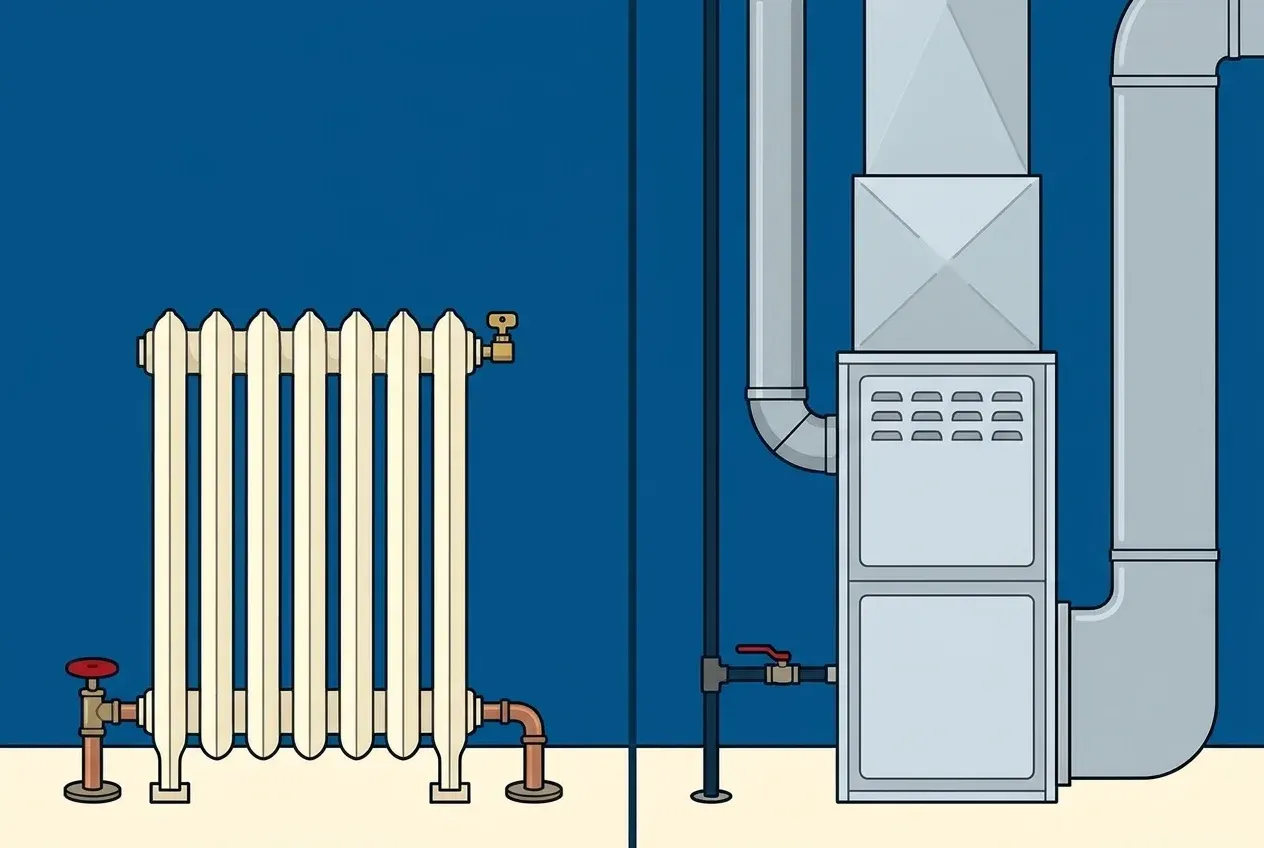
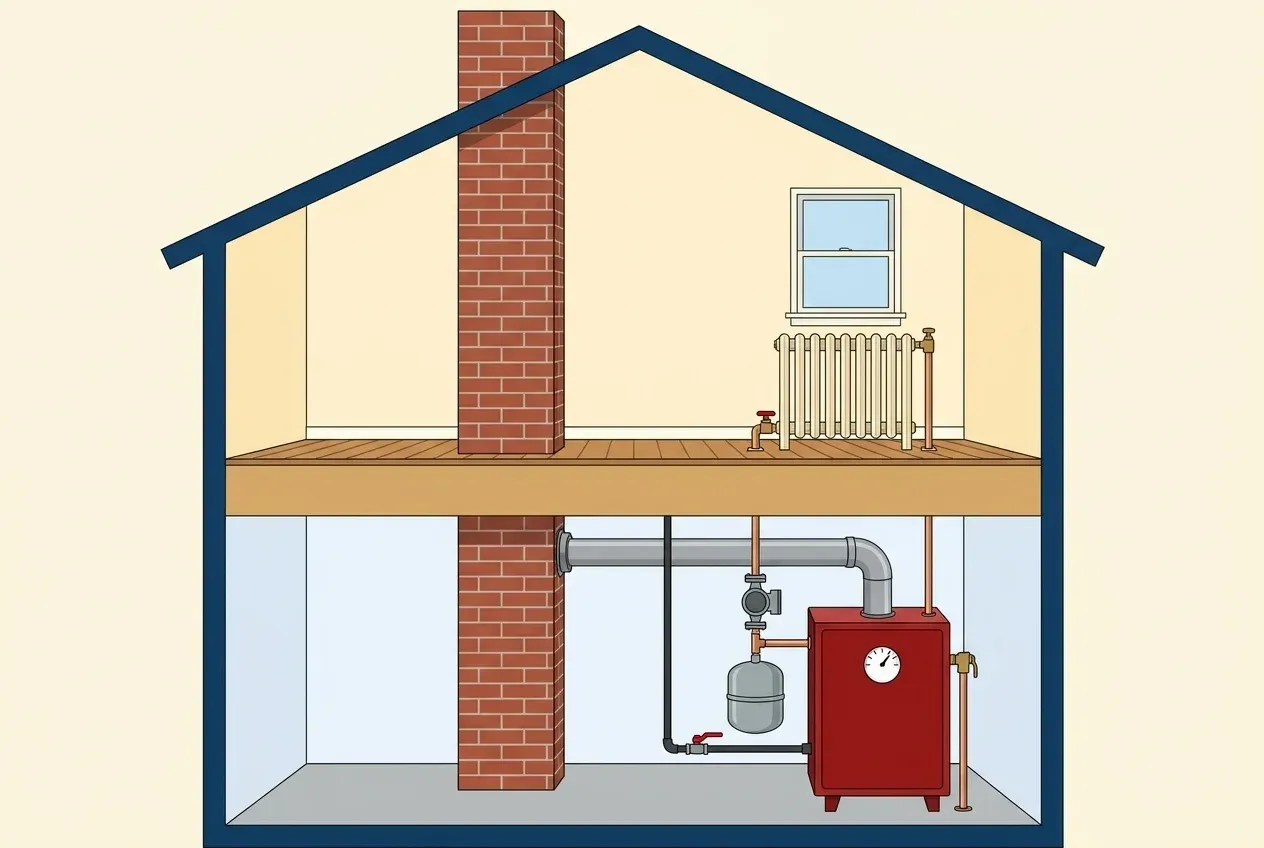
Mostly because of how they were built. Steam radiators are one of the oldest types of home heating, according to the U.S. Department of Energy’s home heating fact sheet. A house built for radiators had no need for ducts. Its boiler heats water and sends it through pipes, as hot water or steam, to radiators, baseboards or radiant floors. A furnace heats air instead, and it needs ducts to carry that air. So when the boiler wears out, a new boiler on the same pipes is the easy choice. The radiators stay where they are, and the walls, floors and ceilings stay closed.
Much of Arlington County’s housing was built by 1969
About 45 percent of Arlington County’s housing units were built in 1969 or earlier, in the Census Bureau’s 2020 to 2024 American Community Survey estimates. That count takes in apartments and condos as well as houses. It doesn’t record heating systems, so it can’t tell you how many Arlington homes have a boiler. If your house is one of those older ones, its age matters in a full switch, which pulls out the old heating pipes. Until the 1970s, many insulation materials used in homes contained asbestos, according to the U.S. Consumer Product Safety Commission.
How Do a Boiler and Forced Air Compare in an Arlington House?
A boiler is a good way to heat a house; it just can’t cool one. That difference counts for more than efficiency or lifespan, where new models of the two come out close.
Radiators heat more evenly, and forced air can cool
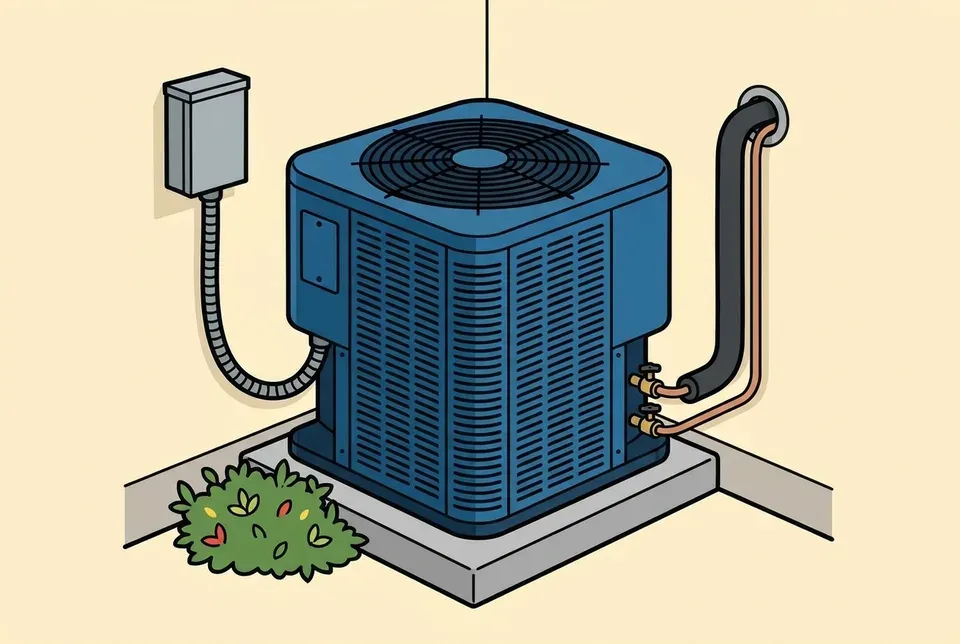
Radiator heat is steadier and quieter, with no blower pushing air through ducts. A furnace warms the house faster, but its blower makes noise and some rooms end up more comfortable than others, as Lennox’s furnace and boiler guide notes. Forced air can also carry allergens around the house, though the same system gives you a place to filter the air. On qualifying installs, we fit Aprilaire media air cleaners. What forced air can do that a boiler can’t is cool. Its ducts can serve central air conditioning, or a heat pump that both heats and cools.
Old versus new matters more than boiler versus furnace
Old, low-efficiency furnaces and boilers turn 56 to 70 percent of their fuel into heat, a rating called AFUE, in the Department of Energy’s efficiency figures. High-efficiency models start at 90 percent, and the most efficient furnaces reach 98.5 percent, by the same Department of Energy figures. So if lower heating bills are the goal, a new boiler gets you most of the way there. The Department of Energy sheet also gives furnaces and boilers matching life expectancies of 15 to 30 years, so on paper neither outlasts the other. Fuel doesn’t separate them either: both run on natural gas, propane, heating oil or electricity. Each needs a yearly inspection. Between visits, a furnace needs regular filter changes, while a boiler has no filter but needs watching for leaks.
A boiler’s weak spot is water
A leaking furnace loses air, which wastes energy but doesn’t damage the house. An old or damaged boiler can leak water, and its pipes can freeze and burst in extreme cold. That’s why a boiler house shouldn’t sit unheated through a hard freeze.
With radiators in place, forced air means extra work
Like for like, a furnace costs less to install than a boiler. In an older Arlington house with radiators, though, the furnace comes with extra work: ductwork, central air if you want it, and taking the old system out. On our installs, the work also includes return air boxes and a new pad for any outdoor unit. A conversion’s price depends on the house and how far the ducts have to reach, so this post gives no typical figure. For the boiler side, our post on what a new boiler costs in Arlington walks through the national price ranges.
When Should an Arlington Homeowner Switch From a Failing Boiler to Forced Air?
When you want central air through the whole house, or when the pipes and radiators are wearing out along with the boiler. A renovation that opens walls and ceilings anyway is another good moment.
A wearing boiler is your cue to start planning
A boiler with wearing parts can give you warning signs, for example water leaks, longer waits for heat or odd noises. Some of those point to a repair rather than a replacement. Our Alexandria guide to boiler pressure covers what a dropping gauge or a dripping relief valve can mean. If the boiler really is at the end, weigh the switch while you still have heat. A conversion is a much bigger job than a boiler swap, and the house has no heat between shutting off the boiler and starting the furnace. A no-heat call in the middle of winter leaves little time to plan all that.
Size the new system to the house
Whichever system you choose, have it sized to the house, because one that’s too big costs more to run. If you’re planning insulation or air sealing, do it first, since a house that holds its heat can get by with a smaller system. Within either type, a higher-efficiency model costs more to buy and less to run.
Wanting air conditioning doesn’t mean giving up the boiler
If cooling is what’s pulling you toward forced air, you can add it without ducts. ENERGY STAR lists older homes that heat with radiators or baseboards and have never had central air conditioning among the places mini-split heat pumps are increasingly used. A mini-split mounts one or more indoor units on a wall or ceiling, linked to a unit outside. You trade hidden ducts for a unit you can see in each room it serves. We’re a Mitsubishi Diamond Contractor and install ductless mini-splits. With one, the boiler and radiators keep heating the house while the mini-split’s indoor units handle the cooling.
What Happens to the Radiators When an Arlington Home Switches to Forced Air?
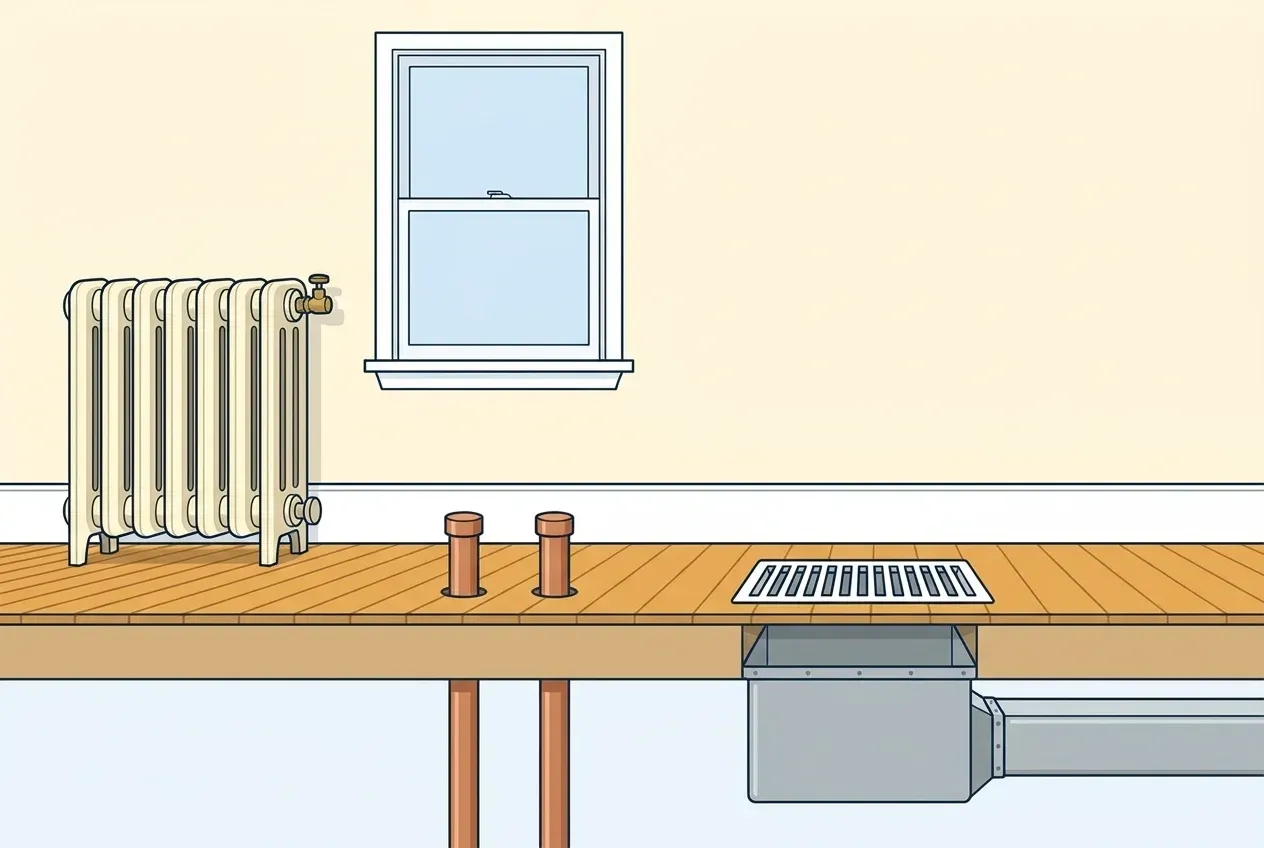
In a full switch, the radiators come out with the pipes that feed them, and the floor and wall where each one stood need patching. Cast-iron radiators are heavy, so getting them out, especially from upper floors, is real labor. Ducts and registers take over moving the heat, and the boiler is disconnected, whether it’s hauled away or left in place. Where those new ducts can run in an older house is a question of its own, and we’re covering it in a separate post.
Your hot water may go with the boiler
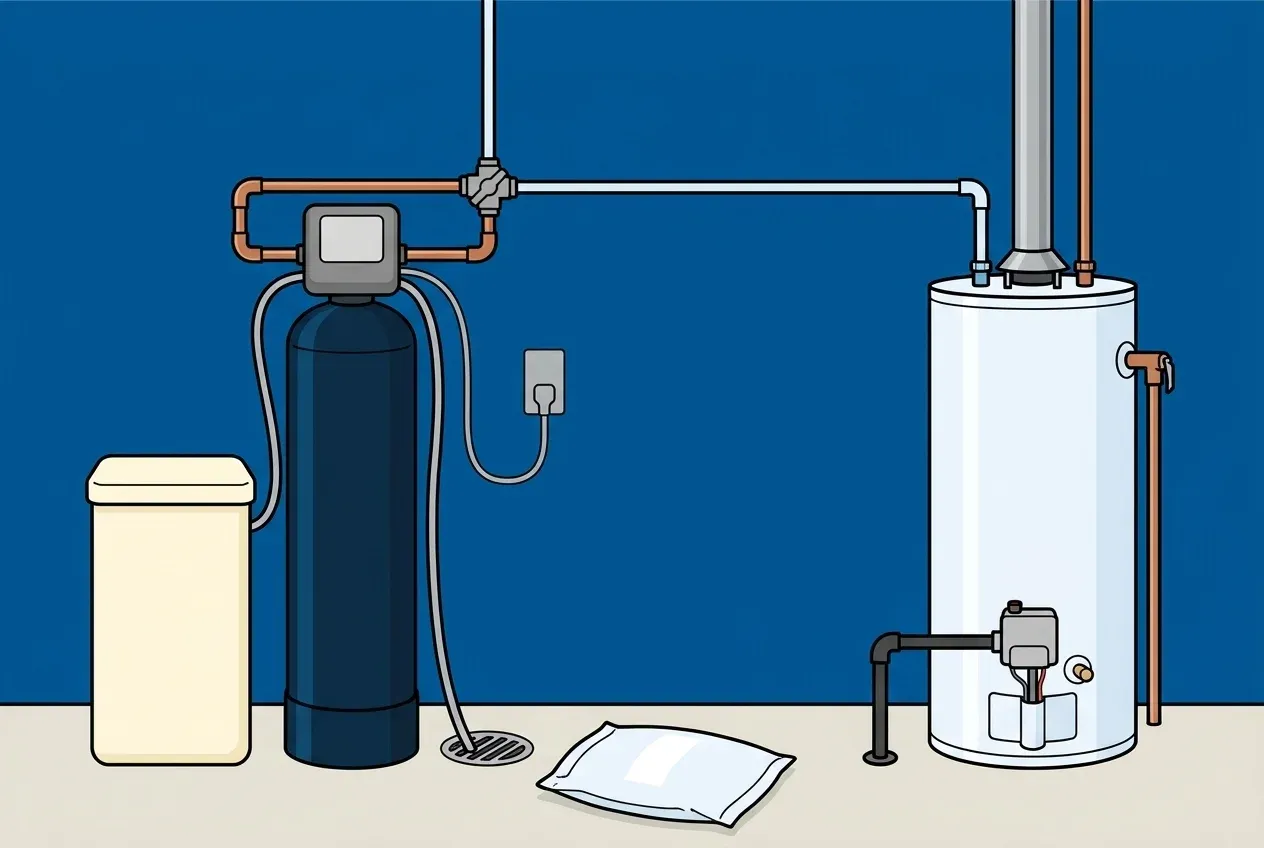
Some boilers heat the house’s tap water as well as its radiators. If yours does, the switch also needs a separate water heater, so make sure it’s in the plan and on the quote before any work starts. Not sure? Ask whoever services the boiler before you collect quotes.
Old pipe insulation gets checked before anything comes out
In older houses, the insulation on steam and hot-water pipes, and on boilers themselves, may contain asbestos, and you can’t tell by looking unless it’s labeled. Before a remodel, find out whether asbestos is present, as the U.S. Consumer Product Safety Commission advises, and leave the sampling to a qualified professional rather than taking samples yourself. Changes that might disturb it call for repair or removal by a professional. Pulling out radiators and pipes can disturb exactly that material, so leave it alone until it has been checked.
Arlington County treats the switch as permit work
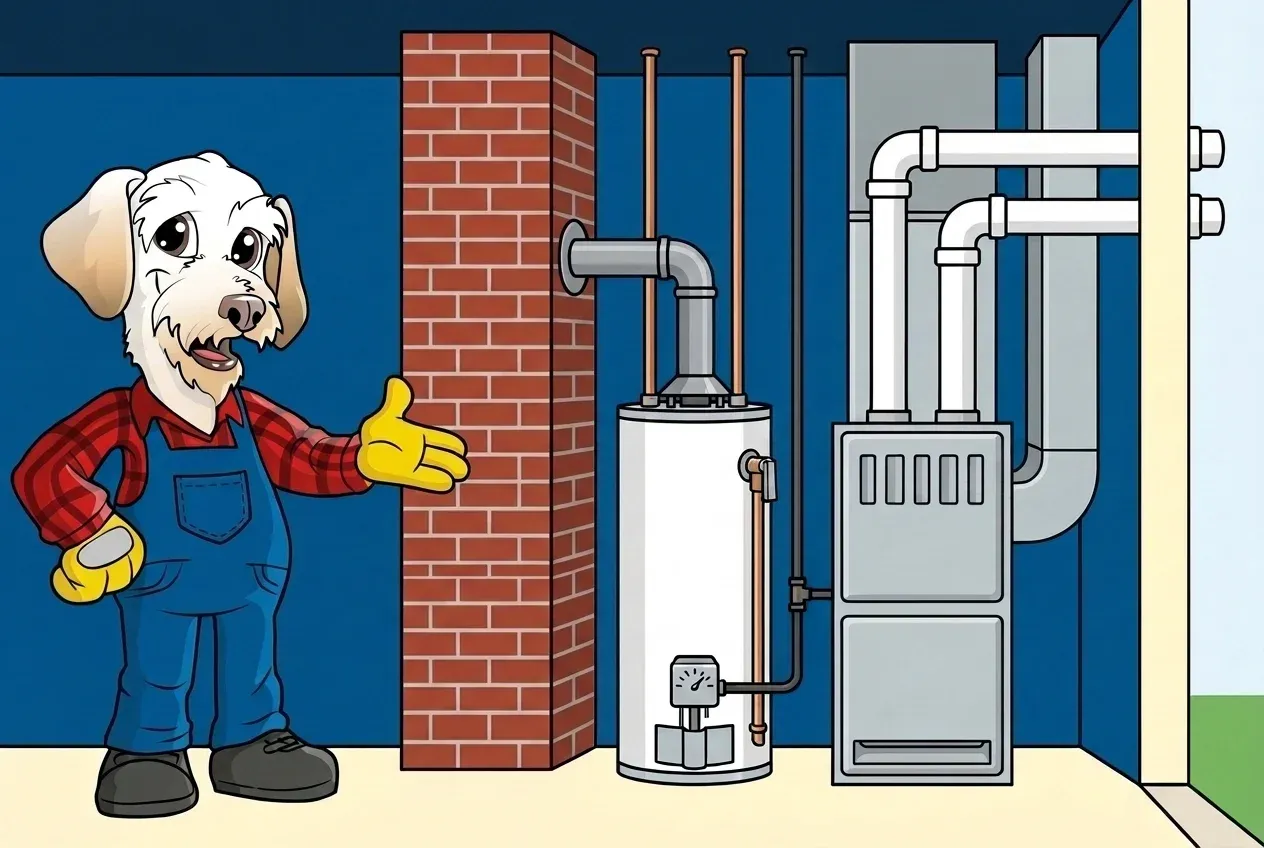
In Arlington, adding, removing or relocating a furnace, an air-conditioning system or ductwork takes a mechanical permit, according to the County’s mechanical permit page. Gas work takes the County’s plumbing and gas permit for adding, removing or relocating gas appliances and piping, and a new gas furnace adds a vent or chimney check. Ask the County’s Inspection Services Division how those rules apply to taking out your boiler, and look on your quote for each permit and who pulls it.
The Bottom Line on Boiler vs Forced Air in Arlington
Our replacement estimates are free, so it costs nothing to see a new boiler and a switch to forced air priced for your own house. Whichever you choose, our installs carry a Lifetime Workmanship Guarantee: it covers our workmanship for as long as you own the system, and it isn’t a parts warranty. We’re family-owned, and you can read how we work and who we are before you call.