What Should Boiler Pressure Be in an Older Alexandria, VA Home?
Are you having issues with your boiler and one plain question about its gauge: what should boiler pressure be in Alexandria, VA? This article will help you figure that out. In this article we’re going to cover the normal cold and running reading, why pressure drops or climbs, dripping relief valves, cold radiators, steam systems, and when a technician should take over. Let’s get into it.
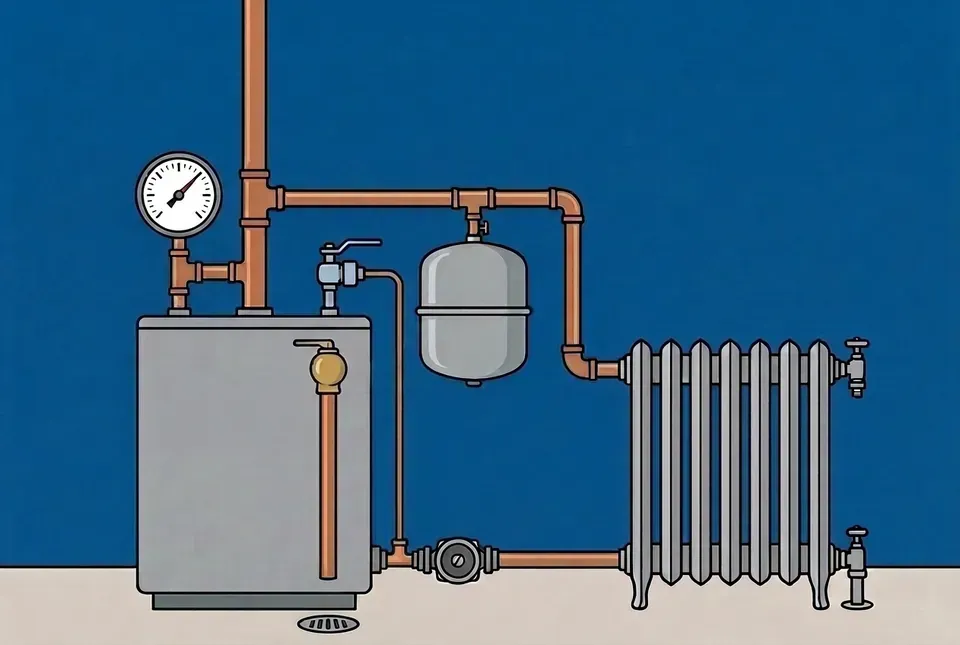
For a hot-water system, Weil-McLain’s installation manual for its CGa Series 3 boiler gives 12 psi as the typical cold fill pressure for a residential system and says the correct pressure will vary with each application. The reading rises as the water heats, and Weil-McLain’s user manual for that boiler says the gauge on its water boilers should not exceed 24 psig. Those are one maker’s figures, and another brand’s manual may differ. A reading that keeps falling, keeps climbing or comes with a dripping valve deserves a closer look, and sometimes boiler repair.
What Pressure Should an Alexandria Boiler Show When It Is Cold?
Read the gauge when the boiler hasn’t been running and the water is cool. Weil-McLain’s installation manual calls 12 psi the typical cold fill pressure for a residential system, and because the same manual says the correct pressure varies with each application, treat it as a starting point rather than a rule for every house. On Weil-McLain’s water boilers, pressure and temperature share one dial, which its user manual for the CGa Series 3 and sister models calls the boiler pressure/temperature gauge, so read the pressure scale.
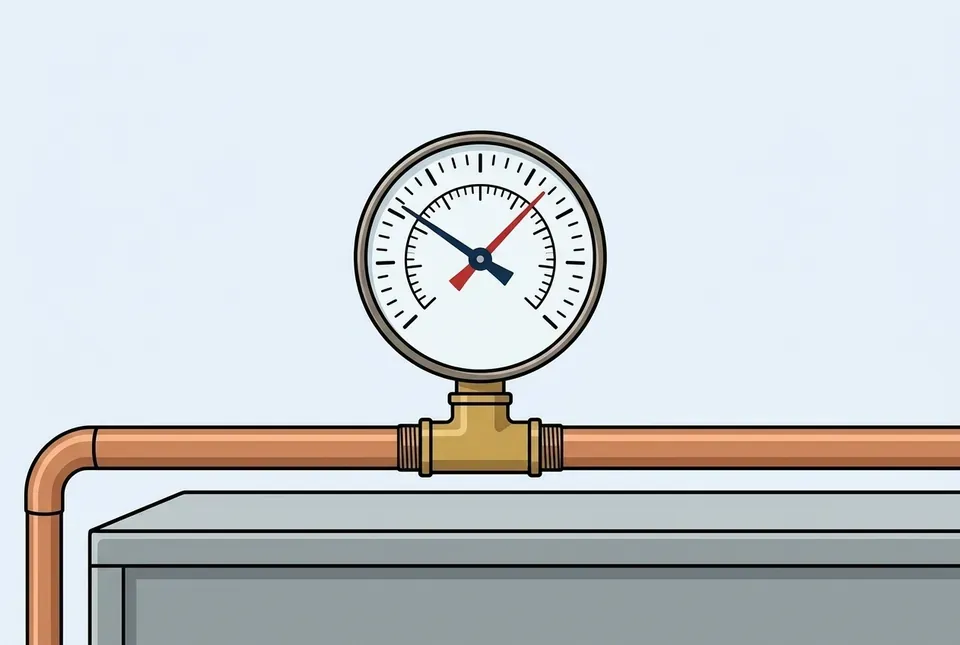
The reading climbs once the water heats
Water expands as it heats. Weil-McLain’s installation manual describes the expansion tank as the space that takes in that extra water and gives it back as the system cools, and its annual start-up check still expects the pressure to rise as the system heats, as long as the rise is normal. Weil-McLain’s user manual sets a daily line for its water boilers: the gauge should not exceed 24 psig, a higher reading may indicate a problem with the expansion tank or the gauge itself, and if the problem persists, contact a qualified service technician.
How Can You Tell Why Boiler Pressure Keeps Dropping in an Alexandria Home?
A reading that sinks day after day means water is leaving, or the water that should replace it isn’t getting in. Weil-McLain’s user manual traces the need to add makeup water frequently to leaks in the boiler or piping, asks owners to check monthly for leaks around the piping, circulators, relief valve and other fittings, and says to have a qualified service technician fix any leak at once, because constant makeup water can lead to boiler section failure. Check the end of the relief valve’s discharge pipe too, since that water has to be replaced.
Refilling belongs to your boiler’s manual
An article on pressure-reducing valves on hot-water heating systems in the ASHI Reporter, published by the American Society of Home Inspectors, describes the automatic fill valve on a boiler’s water supply as designed to top the system up on its own, and notes that it can be obstructed or defective so that no water gets through. Adding water follows steps specific to each boiler: Weil-McLain, for example, covers them under “Fill the system with water” in its CGa Series 3 installation manual, which it says must only be used by a qualified heating installer or service technician. Weil-McLain’s user manual adds a warning that matters here: do not add cold water to a hot boiler, because thermal shock can crack the heat exchanger.
Can a Failing Fill Valve Push Pressure Too High on an Alexandria Boiler?
It can, although that ASHI Reporter article says these valves are rarely faulty: when one fails, the boiler’s water pressure may be too high, and if too much pressure gets through, the relief valve will operate constantly; if that relief valve isn’t working or is missing, the article warns of a risk of a pressure build-up and a steam explosion.
A high cold reading points to the fill valve
The ASHI Reporter article’s test is the gauge with the boiler cold: a reading above the normal cold range suggests the fill valve may have failed. A reading that starts normal and climbs hard as the boiler heats points instead to the expansion tank, since Weil-McLain’s installation manual says too high a rise would indicate a waterlogged or undersized expansion tank. One homeowner on Reddit’s r/hvacadvice replaced a fill valve they suspected of letting extra water in, found the relief valve had purged again, and ordered a new expansion tank next, a good argument for a diagnosis before parts.
When Is a Dripping Relief Valve a Warning for Alexandria Homeowners?
The relief valve is the safety valve with a discharge pipe running down from it. Lennox’s guide to boiler pressure relief valves says it opens on its own when pressure crosses a set threshold, and calls continuous dripping from the valve or its discharge pipe one of the most common early warning signs that it’s no longer seating properly. A leaking valve doesn’t always need replacing, Lennox adds: it can signal a deeper problem, such as a failing expansion tank or a waterlogged system, and a qualified HVAC professional can determine which.
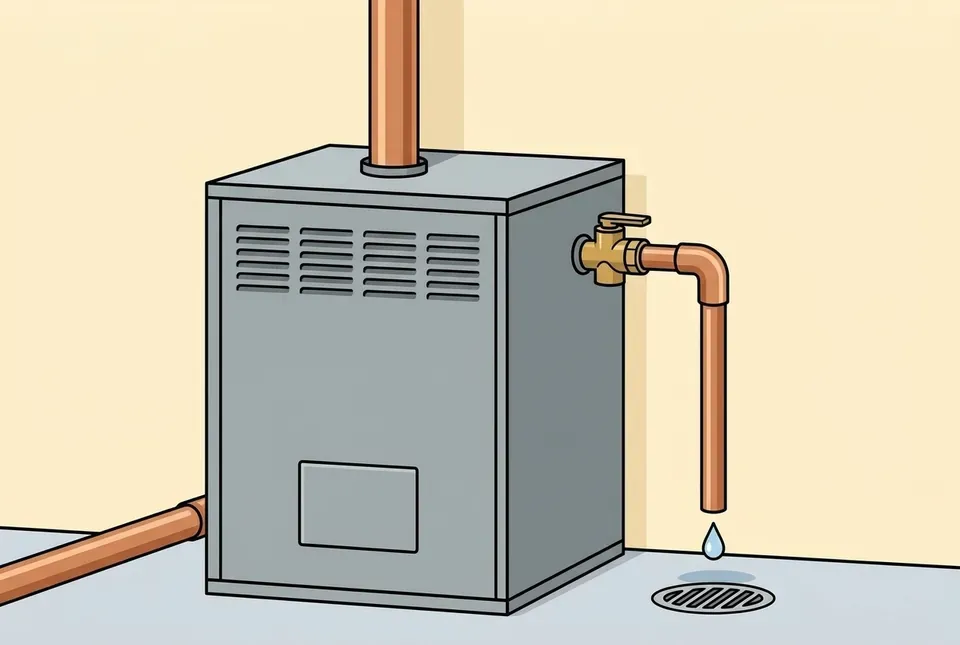
A valve that weeps often needs a technician
Weil-McLain’s user manual makes this a monthly owner check: inspect the relief valve and its discharge pipe for signs of weeping or leakage, and if the valve often weeps on a water boiler, the expansion tank may not be working properly, so immediately contact your qualified service technician to inspect the boiler and system. Weil-McLain’s installation manual also says no shutoff valve may sit between the relief valve and the boiler or in the discharge line, and nothing may plug or obstruct that line.
If the drip is coming from the water heater instead, that’s its own relief valve, and our Arlington post on losing hot water covers it.
Why Would Radiators Stay Cold in Alexandria When the Gauge Looks Normal?
Because a normal-looking number may not be enough for your house. The same ASHI Reporter article explains that the pressure at the boiler has to push water to the top of the heating system, that a tall, three-story house with a basement may need its fill valve set higher, and that if the radiators on the upper floor aren’t filled with water, those rooms will be cold.
Air and low pressure leave radiators cold too
Weil-McLain’s troubleshooting table lists three common causes when some radiators or baseboard units don’t heat or are noisy: air in the system, low system pressure, and a high limit set too low. Before any maintenance, Weil-McLain’s user manual asks that all electrical supplies to the boiler be disconnected and the boiler allowed to cool; with that done, its correction for air is to bleed it from the system through the air vents in the radiators or baseboard units. Low pressure takes you back to the leak and refill checks above.
What Noises From an Alexandria Boiler Mean Air in the System?
Noisy radiators or baseboard units sit on the same line as cold ones in Weil-McLain’s troubleshooting table, so the same causes apply, air in the system and low pressure among them. The homeowner in the fill-valve story above heard water rushing through the baseboards after bleeding them.
Popping in the boiler itself is a different problem
Weil-McLain’s table gives a popping or percolating noise from the boiler a line of its own, and air isn’t among its causes. The first one listed is mineral deposits in the boiler sections from constant makeup water, and the table’s corrections call in a qualified service technician to de-lime the boiler if necessary and to repair the leaks behind the makeup water.
Do Steam Systems in Older Alexandria Homes Need Different Pressure?
Yes, and this article’s figures don’t apply to them: everything above is about hot-water systems, where water fills the pipes and radiators. Weil-McLain’s user manual covers both kinds and handles them separately, giving its steam boilers a pressure gauge instead of the water boilers’ combined pressure and temperature gauge, and a pressure limit of their own.
A water-level glass points to steam
On the boilers Weil-McLain’s user manual covers, the gauge glass, a glass tube that shows the water level, is listed as a steam-only part. If your boiler has one, or you can’t tell which kind you have, leave the psi figures here aside and ask a technician who works on steam systems before changing anything.
When Does a Boiler Pressure Problem Need a Technician in Alexandria?
Weil-McLain’s user manual sends owners to a qualified service technician when the gauge on its water boilers keeps reading above 24 psig, when the relief valve often weeps, and when there’s a leak or makeup water has to be added frequently. Add the cases from the sections above: a suspected fill valve or expansion tank, any steam boiler, and any boiler you aren’t sure about.
Have your readings ready when you call
Note the cold reading, the reading once the house is warm, and where any water is showing, before you call. Finding someone can take some asking: in August 2026 a Del Ray homeowner whose house still has its original-style baseboard radiators asked on Reddit’s r/nova who works on older hot-water systems, after two companies said they don’t work on that type of system. Ask up front whether a company works on hot-water boilers and radiators. When repair or replacement comes up, our boiler service page walks through both, and if the boiler is down and the house is cooling while you wait, our post on staying warm in a house with no heat covers how to do that safely.
Key Takeaways
- Weil-McLain’s CGa Series 3 installation manual calls 12 psi a typical cold fill pressure for a residential system, varying by application; its user manual says the gauge on its water boilers should not exceed 24 psig.
- A reading that keeps sinking means water is leaving, through a leak or the relief valve, or isn’t getting back in through the fill valve.
- A high cold reading may mean a failed fill valve, while too high a rise as the boiler heats would indicate a waterlogged or undersized expansion tank.
- A relief valve that weeps often needs a technician, and nothing should plug or obstruct its discharge line.
- Cold upstairs radiators at a normal-looking reading can mean too little pressure for a tall house, or air in the system.
- Steam boilers are a different system, and these hot-water figures don’t apply to them.
The habit we’d leave you with: know your own number. Read the gauge with the boiler cold, write it down, and check it again once the house is warm, so you’ll notice when it changes. Our technicians are licensed, and they train continuously. Alexandria is part of the Northern Virginia area we cover, and you’re welcome to see the way our team works.