Is an Old Chimney Safe for a New Furnace in Arlington?
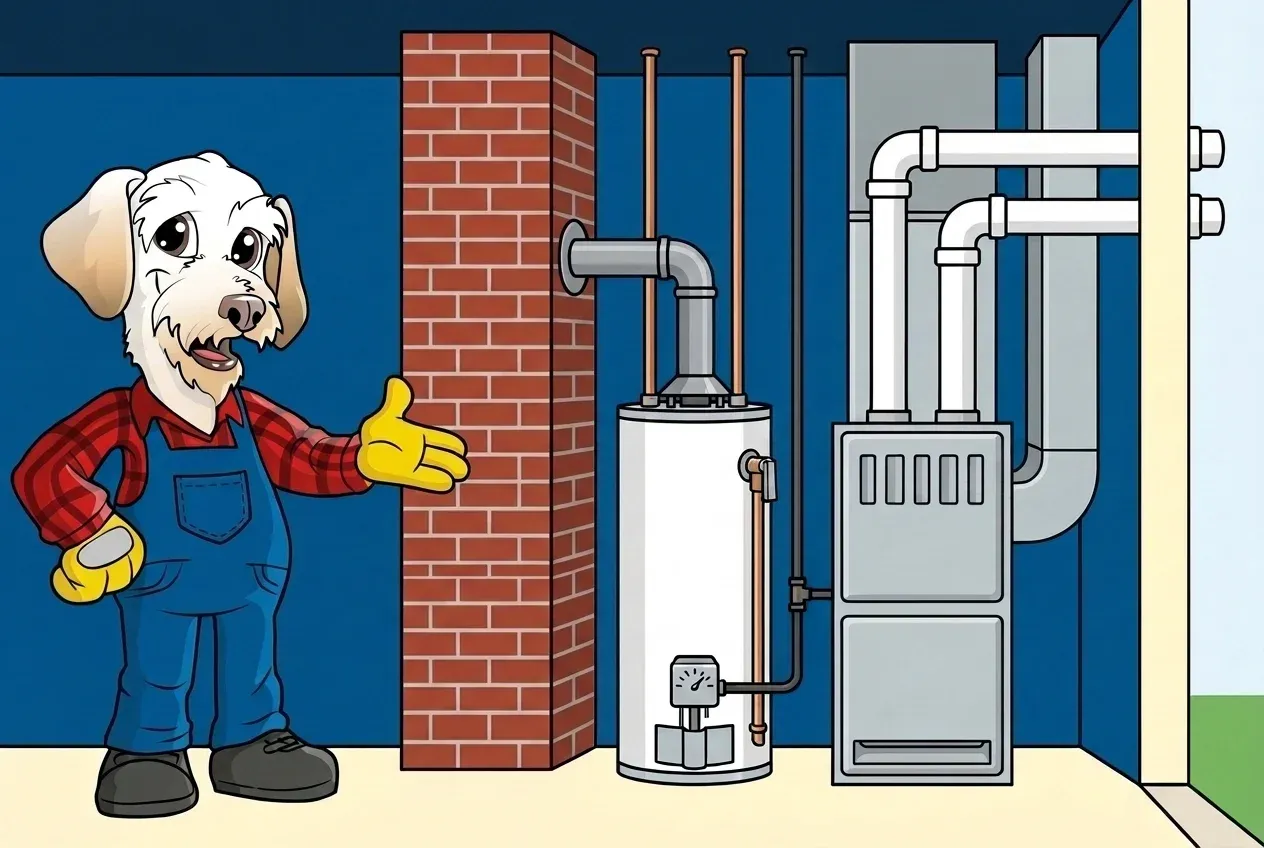
Are you having issues with a furnace replacement and one big question: is an old chimney safe for a new furnace in Arlington? This article will help you figure that out. We’re going to cover the County’s vent check, high-efficiency venting, unsafe chimneys, the water heater left behind and what happens if a chimney fails. Let’s get into it.
An old chimney can be safe for a new furnace, but only once it has been checked against whatever will vent into it after the swap. Virginia’s building code requires that check whenever a fuel-burning appliance is replaced in an existing home, and Arlington County asks for a signed form confirming the chimney passes. A high-efficiency furnace needs its own sealed vent instead, which can leave a gas water heater alone in a flue built for two. When you’re ready to plan the job, start with our furnace installation page.
Why Does Arlington County Check the Chimney When a Furnace Is Replaced?
Because a new furnace changes what the chimney has to carry, and Virginia’s code won’t let anyone assume it still copes. Any time a fuel-burning appliance is swapped out in an existing building, the vent or chimney it connects to has to be checked on two points. It must be the right size under the code, and it must be clean, unobstructed, sound and working.
The rule is statewide, and Arlington puts it on the permit
The requirement comes from Virginia’s building code, so it isn’t unique to Arlington. What’s local is how the County collects the proof. Its Mechanical and Plumbing / Gas permit pages print the rule and ask for a completed Vent / Chimney Certification form. The form cites the two code sections behind it, M1801.1.1 and G2425.1.1.
A gas furnace swap needs a permit even when nothing else changes
Swapping a furnace for one of the same type and size, in the same spot, needs no permit unless it burns gas, per Arlington’s Mechanical Permit page. Gas-fueled equipment needs a Plumbing / Gas permit and inspections, and the chimney check goes with that permit. For example, trading an old gas furnace for a new one of the same size, in the same basement corner, still goes through the County. If you’re unsure, ask the County’s Inspection Services Division.
Your installer signs for the chimney
The certification form covers one-family and two-family homes. Where the County doesn’t inspect the chimney itself, the installer has to certify it. The form carries the contractor’s Virginia DPOR license number and signature. The County applies the same rule to boilers, and our guide to boiler replacement costs in Arlington covers how the check shows up in a quote.
Does a High-Efficiency Furnace Still Need the Chimney in an Arlington Home?
No. A high-efficiency furnace needs a sealed vent of its own, though that vent can sometimes run up inside the old chimney. The chimney still matters for anything else connected to it, and for a standard furnace, which keeps using it.
Condensing exhaust is too wet for a chimney
A gas furnace rated at 90% AFUE or higher is a condensing furnace, according to a 2014 venting report prepared for the U.S. Department of Energy. It pulls so much heat from its exhaust that water condenses out of it, even in the vent. That wet exhaust can’t go straight into a clay tile-lined masonry chimney or a metal Type B chimney. It needs an airtight, corrosion-resistant vent with a way to drain the condensate.
Its vent runs out a wall, or up the chimney in a sealed liner
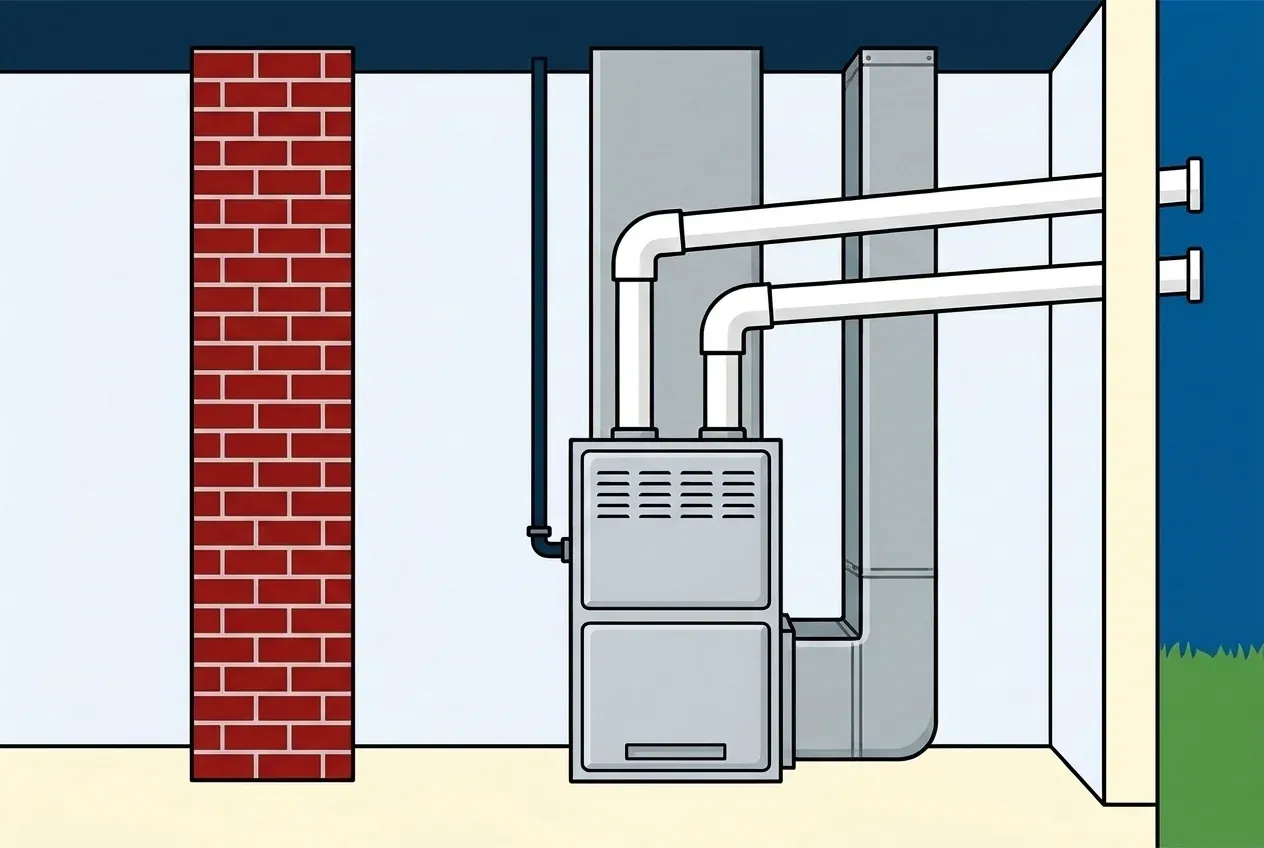
The new vent can exit through a side wall or run up inside the chimney as a sealed liner, where the house and code allow. A new run up through the roof is possible, but harder and costlier. In a townhouse or row house there are fewer good spots for a wall vent, so the chimney route can matter more.
Under Virginia’s code, the furnace maker’s instructions set the design of a condensing furnace’s vent, including its pipe size and run length. The code also sets its own minimum clearances for a vent terminal on an outside wall, and your installer’s plan should meet both. A two-pipe, or direct-vent, furnace uses one pipe for outdoor combustion air and one for exhaust. Plastic pipe, often PVC, is allowed only if the furnace is listed for it and its instructions name the material. Indoors, the pipe should pitch slightly back toward the furnace, with no dips or sags, so condensate drains back into the furnace.
A standard furnace keeps using the chimney
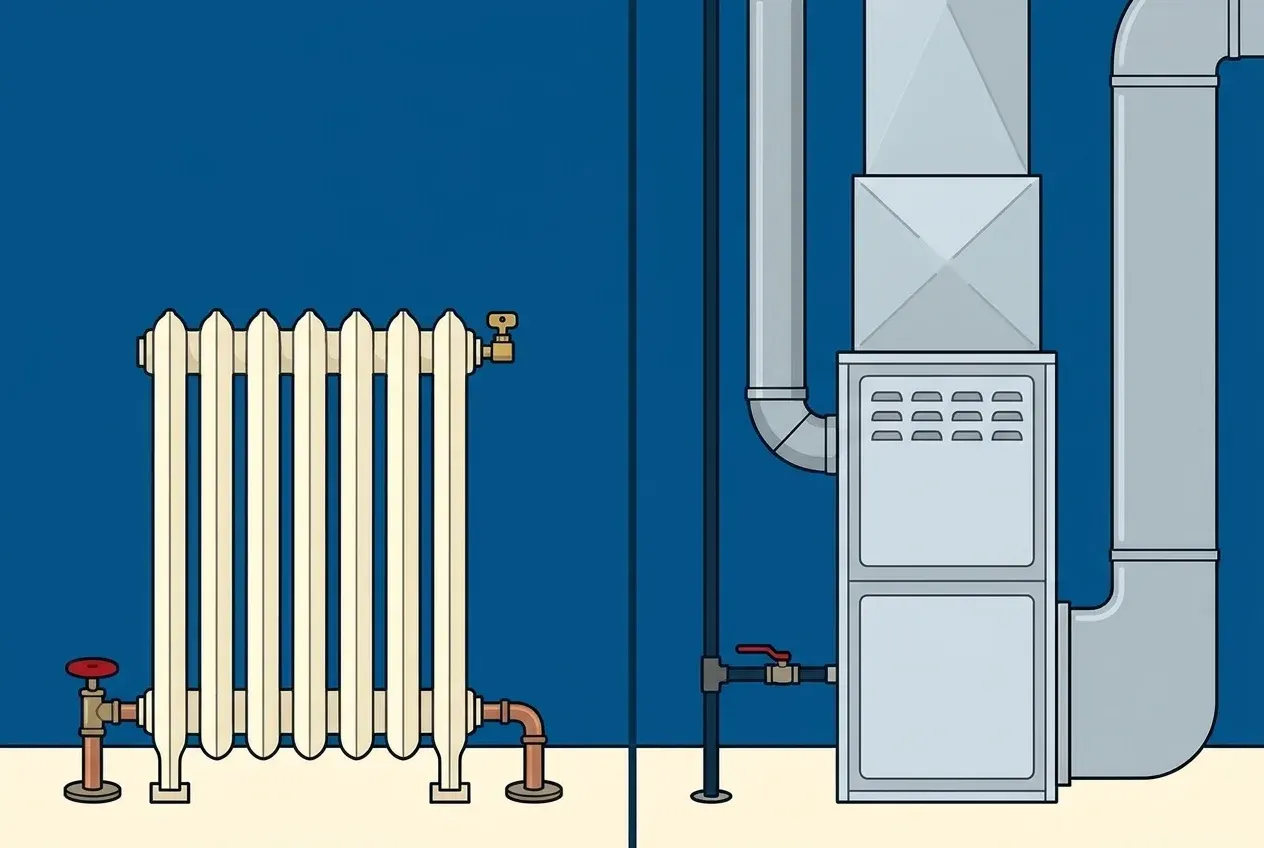
Pick a standard, non-condensing furnace and it vents into the chimney or a metal vent, the way the old one did. Where the code and its instructions allow, it can share that flue with a gas water heater. That’s why the County’s check matters on any furnace swap, not only a switch to high efficiency.
What Makes an Old Chimney Unsafe for a New Furnace in Arlington?
Two things: a flue that’s the wrong size for what now vents into it, or one that’s cracked, blocked or wearing out. A worn or poorly maintained furnace or boiler with a wrong-size, blocked, disconnected or leaking flue is one of the carbon monoxide sources the U.S. Environmental Protection Agency names.
Old chimneys were built for hotter exhaust
Many older masonry chimneys have clay tile liners and were built for furnaces that sent much more heat up the flue than today’s models. That heat kept the flue warm, so it drafted well and stayed dry. A newer furnace sends less heat up, even a standard model, and an oversized flue can run cold.
When it does, water vapor in the exhaust condenses on the tile and mortar, and wet masonry that freezes and thaws breaks down over time. For example, a brick chimney on an outside wall runs colder than one inside the house, so it’s likelier to stay wet. That’s why Virginia’s code requires resizing a chimney as needed, to control condensation and keep enough draft, when an appliance is newly connected or permanently disconnected.
Cracks, gaps and blockages fail the condition half
Virginia’s code also requires a clear flue passage and a continuous liner, with no cracks, gaps or holes that would let exhaust, moisture or creosote escape. A flue that once served a fireplace or an oil or wood burner has to be cleaned before a gas appliance uses it.
Some warning signs you can see yourself
You can’t judge a flue’s size by eye, but these signs of damage or spillage are visible:
- Crumbling mortar joints and loose or missing brick near the top of the chimney.
- Damaged or flaking brick at the base of a masonry chimney, which can point to condensation inside.
- Rust or corrosion on the metal flue pipe between an appliance and the chimney.
- Scorching or melted material around a gas water heater’s draft hood, a sign that hot exhaust is escaping into the room.
Any of these is worth a professional look before a new furnace goes in. A yearly tune-up is a good time for one; our guide to what a furnace tune-up includes covers that visit.
Can a Furnace Swap Leave the Water Heater Venting Unsafely in Arlington?
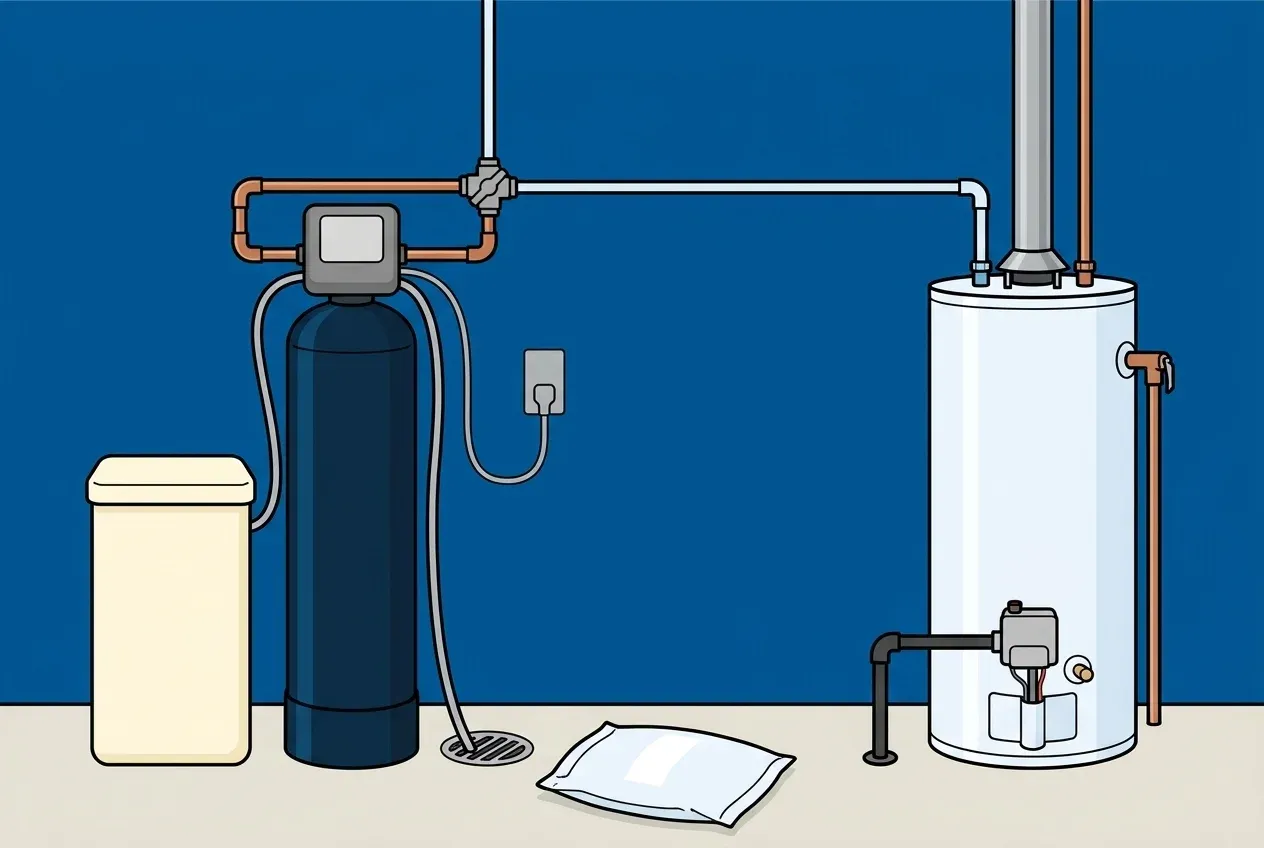
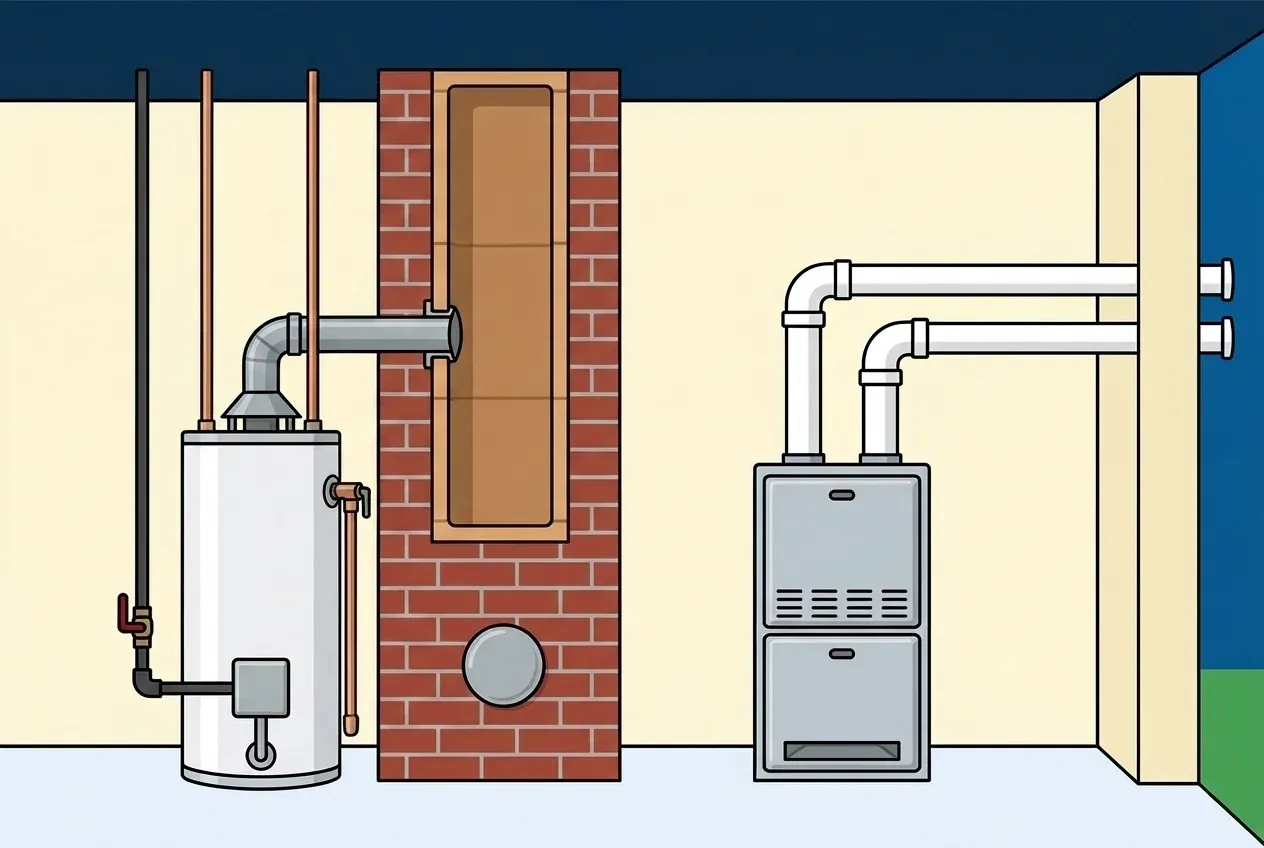
Yes. It happens when your old furnace and a gas water heater shared the chimney, and the new furnace vents through its own pipe. The water heater is then left alone in a flue sized for both, a setup known as an orphaned water heater.
A water heater alone can’t keep a big flue drafting
For example, say your Arlington basement has a gas furnace and a gas water heater piped into one brick chimney. You replace the furnace with a condensing model vented out the side wall, and the old furnace’s opening is sealed. Now the water heater’s exhaust is the only heat in a flue built for two, and in some weather and wind that may not keep it drafting.
Exhaust can then spill back into the basement through the water heater’s draft hood. That spillage could bring dangerous carbon monoxide levels into the home, according to the same Department of Energy report. A masonry chimney flue is often too large for a water heater alone, which makes it a size problem under Arlington’s check.
A sized liner or a different water heater is the cure
The fix is to make the vent fit the water heater, or take the water heater off the chimney. That can mean a metal liner sized for the water heater alone, or a water heater that skips the chimney, such as a direct-vent, power-vent or electric model. If yours is near the end of its life anyway, replacing it can be the simpler fix.
Either fix can show up as its own line in a furnace quote. For a national price range on a chimney liner, see our Arlington boiler cost guide; a liner can come up on a boiler job too. We cover water heater replacement as well as furnaces.
Deal with it during the furnace swap
An orphaned water heater that shows signs of backdraft needs a professional’s attention right away. Even without signs, it makes sense to settle its venting during the furnace swap, while the chimney is already being checked. A carbon monoxide alarm near the bedrooms is a backstop, not a fix. We put carbon monoxide detectors on fossil-fuel systems.
What Happens if an Old Chimney Fails Arlington County’s Vent Check?
Either the chimney gets fixed, or whatever was venting into it moves to a vent of its own. Under Virginia’s code, a chimney found unsafe for its intended use “shall be repaired, rebuilt, lined, relined or replaced”, and the result has to suit the appliances it serves.
The repair follows the reason it failed
A size problem calls for a liner sized for what still uses the chimney, or moving that appliance to its own vent. A condition problem calls for repair: rebuilding damaged masonry, relining a cracked flue or clearing a blockage. When the old furnace’s pipe comes out, the code requires the abandoned opening in the chimney to be closed by an approved method. For example, if a standard furnace will keep using a chimney with a cracked clay liner, relining it is one of the code’s listed fixes.
Settle these before you sign a furnace quote
Sort these out in the quote, not on installation day:
- Will the new furnace vent into the chimney or through its own pipes, and where will those pipes leave the house?
- What else stays on the chimney, and what’s the plan for it?
- If the chimney or the water heater needs work, is that in this quote or priced separately?
- Who checks the chimney, and who signs the County’s Vent / Chimney Certification form?
The Bottom Line on Furnace Chimney Safety in Arlington
So an old chimney can be safe for a new furnace once it has been checked against whatever will vent into it after the swap. That includes a gas water heater left on the chimney. In Arlington, the check ends in a signed County Vent / Chimney Certification.
If you’re replacing your furnace, our replacement estimates are free, and we offer same-day estimates. Our company was founded in 1956 and is family-owned today. You can read more about our family business before you choose who does the work.