What Does a Furnace Tune Up Include in Woodbridge, VA?
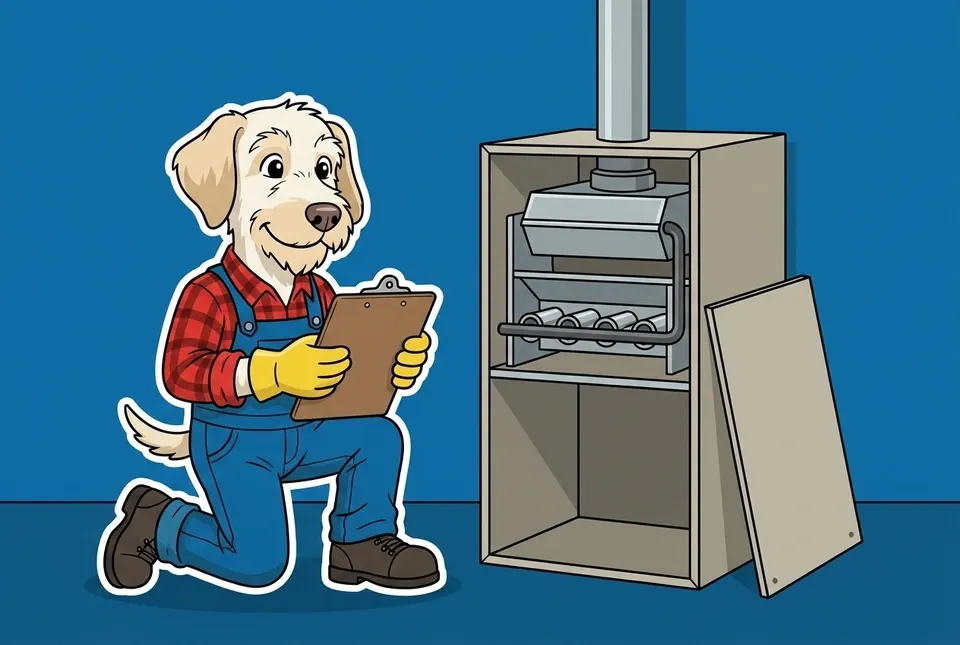
A furnace tune up is three things happening in one visit. There is an inspection of the parts that fail, a cleaning of the parts that get dirty, and a set of measurements that tell a technician whether the furnace is burning fuel the way its manufacturer intended. Most people picture the first two. The third is the half that separates a real visit from a quick look, and it is the half a homeowner cannot do alone. Timing is the simple part: the heating side gets its visit in autumn, before the first genuinely cold night, and we cover how often the rest of the system needs attention elsewhere. What follows is what actually happens during seasonal furnace tune ups in Woodbridge homes, roughly in the order a technician works through it. Our family has been doing this across Northern Virginia since 1956, and we would rather show you the work than describe it.
What Does a Technician Actually Check During a Woodbridge Furnace Tune Up?
The inspection is a circuit around the whole appliance, not a glance at the front of it.
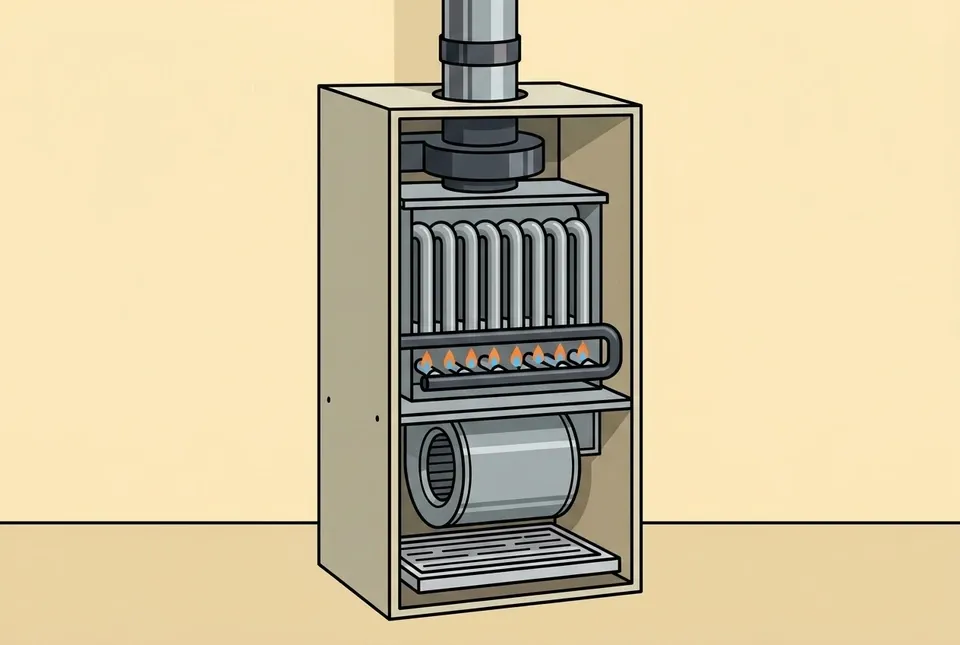
A technician opens the cabinet and works through the blower assembly, the burners, the heat exchanger, the electrical connections and the venting. Each is checked for a different failure. The blower wheel collects fine dust no filter catches, and a wheel out of balance makes noise before it makes damage. Electrical connections loosen from years of vibration and heat, and a loose connection is a resistance point that quietly gets hot.
Two smaller checks happen in the same pass. The thermostat is verified against real conditions rather than assumed accurate, because one reading three degrees off has the furnace running to a target nobody chose. The flue is confirmed intact and connected, which sounds trivial and is not, for reasons we come back to below.
The filter gets pulled and looked at too, though how often yours needs changing depends on thickness, household and season, and that deserves its own answer rather than a line here.
The University of Nebraska-Lincoln Extension puts the professional half of this plainly in its guide to managing combustion pollutants in the home, noting that annual maintenance includes adjusting the air-fuel mixture in the burner, removing soot from the heat exchanger surface, inspecting that exchanger for cracks, and checking that exhaust vents are intact and unblocked. Every item on that list needs either a tool or a trained eye.
How Does a Tune Up Check a Woodbridge Furnace Heat Exchanger for Cracks?
The heat exchanger is the wall between two things that must never meet.
Combustion happens on one side of it. The air that circulates through your Woodbridge home passes over the other side, picks up heat, and goes out to the registers. Those two streams stay separate because a sheet of metal keeps them separate. When that metal cracks, exhaust gas has a path into the air you breathe, which is why this single component gets more attention than anything else in the cabinet.
Cracks are looked for directly. A technician pulls the burner assembly where the design allows it, puts a light and a mirror or an inspection camera into the chambers, and examines the metal for splits, holes and corrosion. Older exchangers are the ones worth the extra minutes, because metal that has expanded and contracted through thirty winters is metal with a fatigue history.
The inspection does not stop at looking. A combustion reading taken at the flue can corroborate what the eye found or contradict it, and a technician who is unsure will say so rather than guess. A suspected crack is not a repair conversation. It is a shut-the-furnace-off conversation.
Why Do Technicians Clean the Burners During a Woodbridge Furnace Tune Up?
Because a dirty burner changes the shape of the flame, and the flame is the whole machine working correctly or not.
Burners mix gas with air in a specific ratio and light it. Rust flakes, dust and soot narrow the ports that meter that mixture. As the ports foul, the flame goes ragged, lifts off the burner or leans yellow instead of blue, and incomplete combustion starts producing carbon monoxide where it previously produced almost none. Cleaning the burners in a Woodbridge basement is not housekeeping. It is restoring the geometry that keeps combustion clean.
Flame quality is one of the few things you can look at yourself without opening anything. Through the sight port, a healthy gas flame is steady and consistently blue across every burner in the row. Yellow, lazy or uneven flames are worth a call.
The flame sensor sits in that same assembly and gets cleaned in the same pass, though a furnace that lights and then drops out a few seconds later is a different problem with its own causes, and we walk through why a furnace burner will not stay lit separately.
How Does a Woodbridge Furnace Tune Up Check for Carbon Monoxide?
With an instrument, not an assumption.
Carbon monoxide is colorless and odorless, which is exactly why it cannot be part of a visual inspection. A technician carries a calibrated analyzer and uses it in two ways: sampling the flue gases to see what the furnace is actually producing, and testing the ambient air around the appliance to confirm none of it is spilling into the room.
The federal position on this is not subtle. The Consumer Product Safety Commission urges consumers to schedule a yearly professional inspection of all fuel-burning home heating systems, naming furnaces, water heaters, chimneys, flues and vents, and it does so because heating equipment is among the leading contributors to accidental carbon monoxide deaths each year. The EPA covers the same ground in its material on carbon monoxide and indoor air quality.
Your own alarms are the second layer, and they are not a substitute for the first. An alarm tells you a problem has already reached the room. A combustion test tells a technician the problem is beginning. We fit carbon monoxide detectors on fossil-fuel systems as a matter of course, because a Woodbridge home heated by gas deserves both layers rather than a choice between them.
How Do You Protect a Woodbridge Furnace From Nearby Storage and Clutter?
This is the part of the visit that is genuinely your half of the job, and almost nobody is told about it.
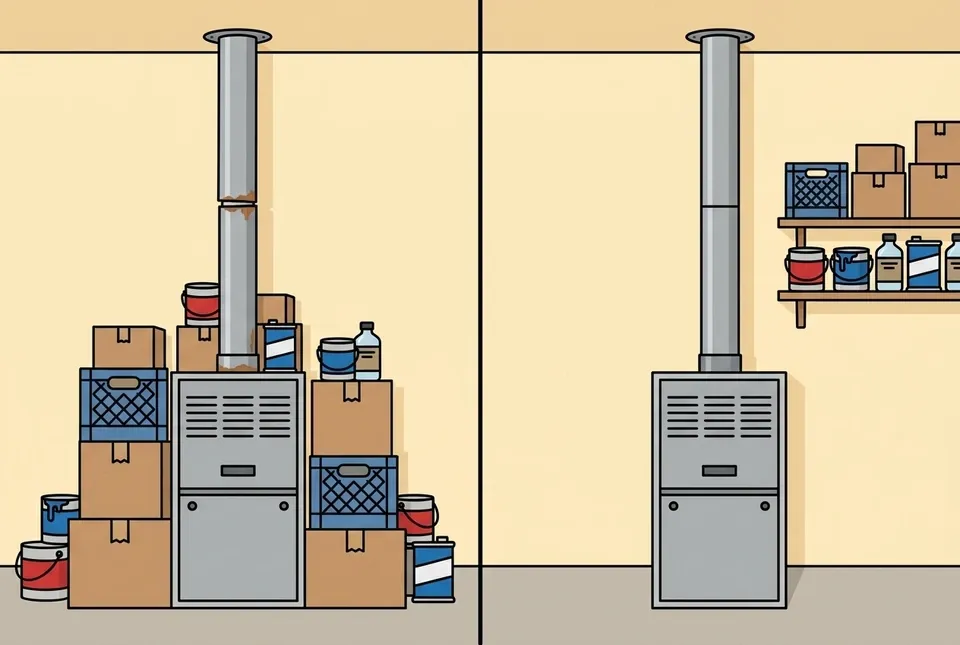
Furnaces in Woodbridge homes tend to live in basements and utility closets, which are also where a household stores things. Over a few years, boxes stack against the cabinet and a laundry rack ends up in front of the return. Paint tins, solvents and cleaning supplies collect beside a burning appliance, which is a poor place for anything giving off fumes. A furnace in a small closet also needs combustion air, and a closet packed to the door has less of it than the appliance was designed to draw.
The more serious version is the flue. The pipe that carries exhaust out of the house runs through the same space people work in, and it gets knocked. The Nebraska Extension guide lists disconnected, corroded and damaged flues and vent pipes among the sources of carbon monoxide in a home, and it flags loose or missing furnace panels and rust streaks on flue pipes as clues a homeowner can spot without tools. A flue pipe pushed out of its collar during a renovation, by someone who took it for a dryer vent, is exactly the kind of thing a heating visit is looking for.
So before the visit, clear a working radius around the cabinet, move anything flammable well away from it, and glance up at the flue to check it still looks connected and unrusted. It costs you ten minutes, it gives the technician room to actually pull panels, and once in a while it finds the problem before we arrive.
How Does a Woodbridge Furnace Tune Up Test Combustion and Gas Pressure?
Two instruments come out for this, and neither of them is optional on a gas appliance.
Gas pressure is measured with a manometer at the valve, and the reading is compared against the manifold pressure the manufacturer specifies for that model. It matters in both directions. A furnace running over its rated pressure is over-firing, which means more heat than the exchanger was built to absorb and a shorter life for the most expensive part in the cabinet. A furnace running under pressure struggles to deliver the heat you are paying for.
Combustion analysis is the other half. The analyzer samples the flue gases and reports what the burn is actually doing, and that reading is how a technician adjusts the air-fuel mixture from evidence rather than by eye. This is standard practice rather than a specialty: our furnace maintenance work treats combustion testing as a normal part of a heating visit, and so does most of the trade.
How Does a Woodbridge Furnace Tune Up Check the Temperature Rise?
Here is the measurement worth knowing about, because the standard it is judged against is printed on your own furnace.
Temperature rise is the difference between the air going into the furnace and the air coming out of it. A technician measures the return air and the supply air once the furnace has run long enough to settle, subtracts one from the other, and compares the result against the range printed on the data plate inside the cabinet door. That plate is specific to your model. There is no universal correct number, which is precisely why the plate exists and why a generic figure from the internet is worth very little.
What the comparison reveals is airflow. If the rise is above the range, the furnace is not getting enough air across the exchanger. The usual causes are a clogged filter, closed or blocked registers, or a return that was undersized when the system went in. The furnace then runs hotter than designed, trips its high limit switch on the worst days, and puts thermal stress on the same heat exchanger that everything else in this article is trying to protect. If the rise falls below the range, air is moving too fast or the burn is weak, and the furnace never settles into the efficiency it was rated for.
This is the number that connects the cheapest part in the system to the most expensive one, and it is the one most homeowners have never heard of. The data plate is on the inside of the cabinet door and reading it costs nothing. Knowing the band your own furnace is supposed to hold is the difference between changing a filter out of vague habit and changing it because you understand what it protects.
The Bottom Line on Furnace Tune Ups in Woodbridge
A furnace tune up is an inspection, a cleaning and a set of measurements, and the measurements are what make the first two meaningful. The inspection finds the crack, the corrosion and the loose connection. The cleaning restores the burners and the blower to something close to how they left the factory. The combustion reading, the gas pressure and the temperature rise are how anyone knows the furnace is burning safely and moving air properly rather than merely switching on.
Your part is smaller and still worth doing. Keep the space around the cabinet clear, keep flammable things away from it, and glance at the flue now and again.
If you would rather hand the rest to someone, our heating tune ups cover the full checklist above and the technician will walk you through what they measured before they pack up. Showing our work is most of what three generations of one family business is built on.