Is a Water Softener Worth It in Fairfax County?
Are you having issues with scale and spots, and asking, is a water softener worth it in Fairfax County? This article will help you figure that out. Inside: how hard the water runs, what a softener costs, when it beats living with hard water, and why to test first. Let’s get into it.
For most homes on Fairfax Water, a softener is a judgment call, not a must. The water sits close to the hardness where softening starts to help. A softener pays its way when scale is already wearing on your water heater, fixtures or cleaning time, and it makes a weak buy as an energy saver.
Whole-home water quality, including water softener installation, is part of what we cover. Every price below comes from a named outside source, though, and none of it is our pricing.
Is Fairfax County Water Hard Enough to Need a Softener?
Need, no. Hard water isn’t a health problem, and Fairfax Water says the minerals in its water are not a risk to human health. As of November 2026, Fairfax Water’s website rates its water as typically “moderately hard” to “hard”: 5 to 10 grains per gallon, or 84 to 170 mg/L. The minerals come from its two sources, the Potomac River and the Occoquan Reservoir, and the utility says hardness can vary with location and rainfall.
Softening starts to make sense around 7 grains per gallon, or 120 mg/L. EPA’s May 2026 WaterSense guide to water softeners says water above that line may benefit from softening, and that softeners are often recommended past 180 mg/L, or 10 grains. Below 7.0 grains, water generally needs no treatment, per Virginia Cooperative Extension’s 2024 hardness guide. It adds that treatment is only needed when hardness is causing you a problem.
Fairfax Water’s supply straddles that line. Its lab posts monthly test results from two distribution sites, one representing its northern treatment plant and one its southern plant. For example, in the 10 months sampled in 2025, total hardness at the northern site ran from 77 to 184 mg/L. It topped 120 in 6 of those months and passed 180 once. The southern site ran from 52 to 136 mg/L and topped 120 in 3. If you open the reports, read the total hardness line, not the calcium line. So depending on your service area and the month, your tap water can land on either side of the line.
Fairfax Water says homes toward the north end of the county generally get the northern plant’s water, and more southern homes get the southern plant’s. Some customers get water treated at the Washington Aqueduct’s plants instead, and those two sites don’t speak for them. The map in Fairfax Water’s 2026 annual water quality report shows which service area your home is in. If the map leaves you unsure, the report points you to the utility’s website or phone line, and it notes the borders can shift with operating needs. On a private well, none of these numbers apply, and your own test is the one that counts.
What Does a Water Softener Cost to Buy and Run in Fairfax County?
A basic softener costs about $1,131 to $1,405 installed, in Homewyse’s May 2026 national estimate. Running one you own adds about $5 to $18 a month, mostly salt, according to Mid Atlantic Water, an online softener seller, in its 2026 cost guide. We don’t know of a price survey for Fairfax County alone, so treat these as national starting points.
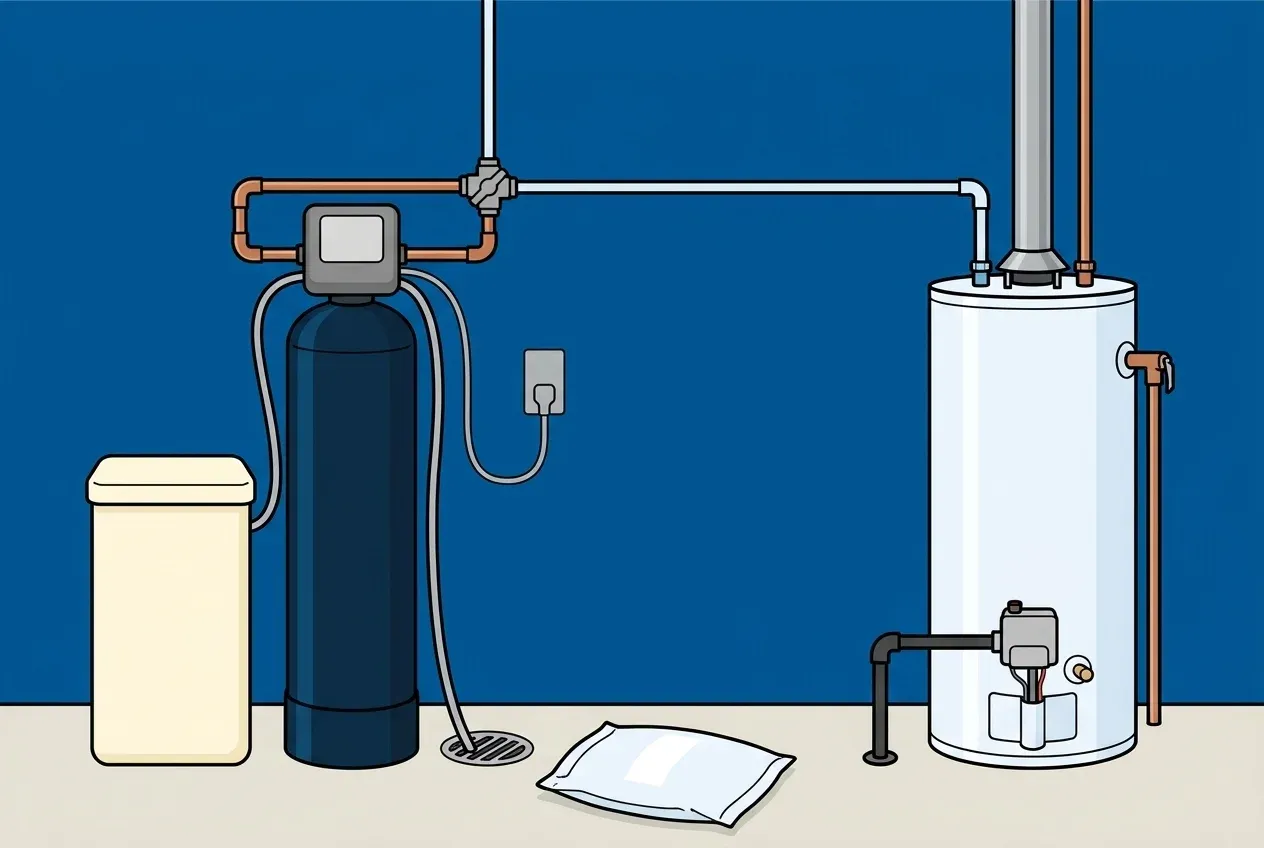
That estimate assumes a 20,000-grain city-water softener and a basic job by a pro in easy conditions. Its labor, about 2.8 hours, covers mounting the unit, tying it into the supply line, hooking up the drain and power, and checking that it works. It leaves out permit fees, hauling away an old unit and any changes to your plumbing.
The same seller says its softeners need a drain within about 20 feet, such as a floor drain, utility sink or standpipe, plus a standard outlet nearby. It recommends a licensed plumber for the install.
The kind of water softening system you pick is one of the biggest factors in the price. Aquasana, a softener maker, gives this price range for the hardware alone:
| System | How it handles hardness | Hardware price |
|---|---|---|
| Salt-based, single tank | Resin beads trade calcium and magnesium for sodium or potassium | $500 to $2,000 |
| Dual tank | One tank regenerates while the other keeps softening | $1,500 to $5,000 |
| Salt-free conditioner | Changes the minerals so they leave less scale, without removing them | $800 to $4,000 |
It puts installation at $200 to $1,000, rising with how much your plumbing has to change. It also puts a softener’s life at 10 to 20 years, with type, water quality and upkeep deciding where in that range.
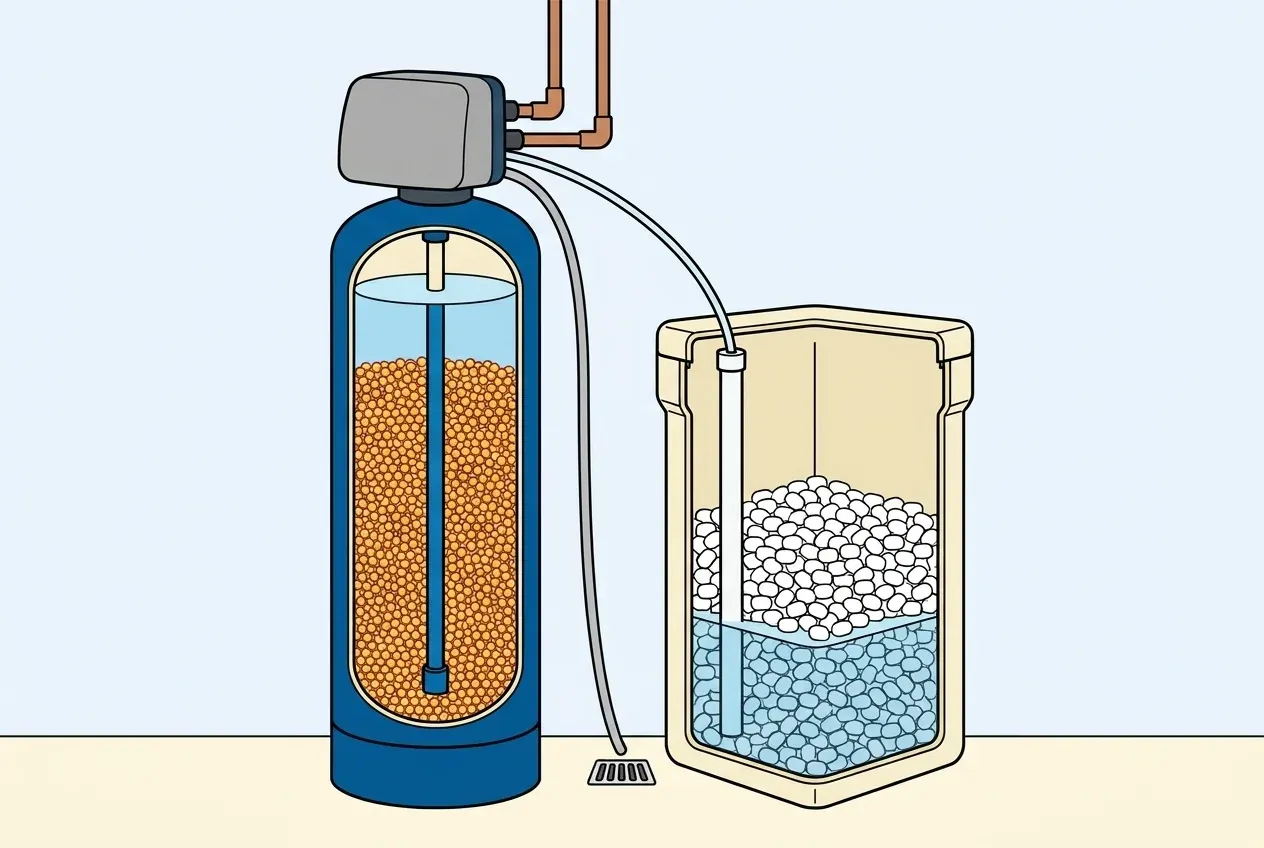
A typical softener flushes 20 to 70 gallons each time it regenerates, per EPA’s WaterSense guide. So a model that regenerates on demand, when a meter or sensor calls for it, wastes less salt and water than one on a timer.
If your home is in the county, ask Fairfax County Land Development Services whether your install needs a plumbing permit. Projects in the Towns of Clifton and Vienna also need separate approval from the town.
When Does Hard Water Cost a Fairfax County Home More Than a Softener?
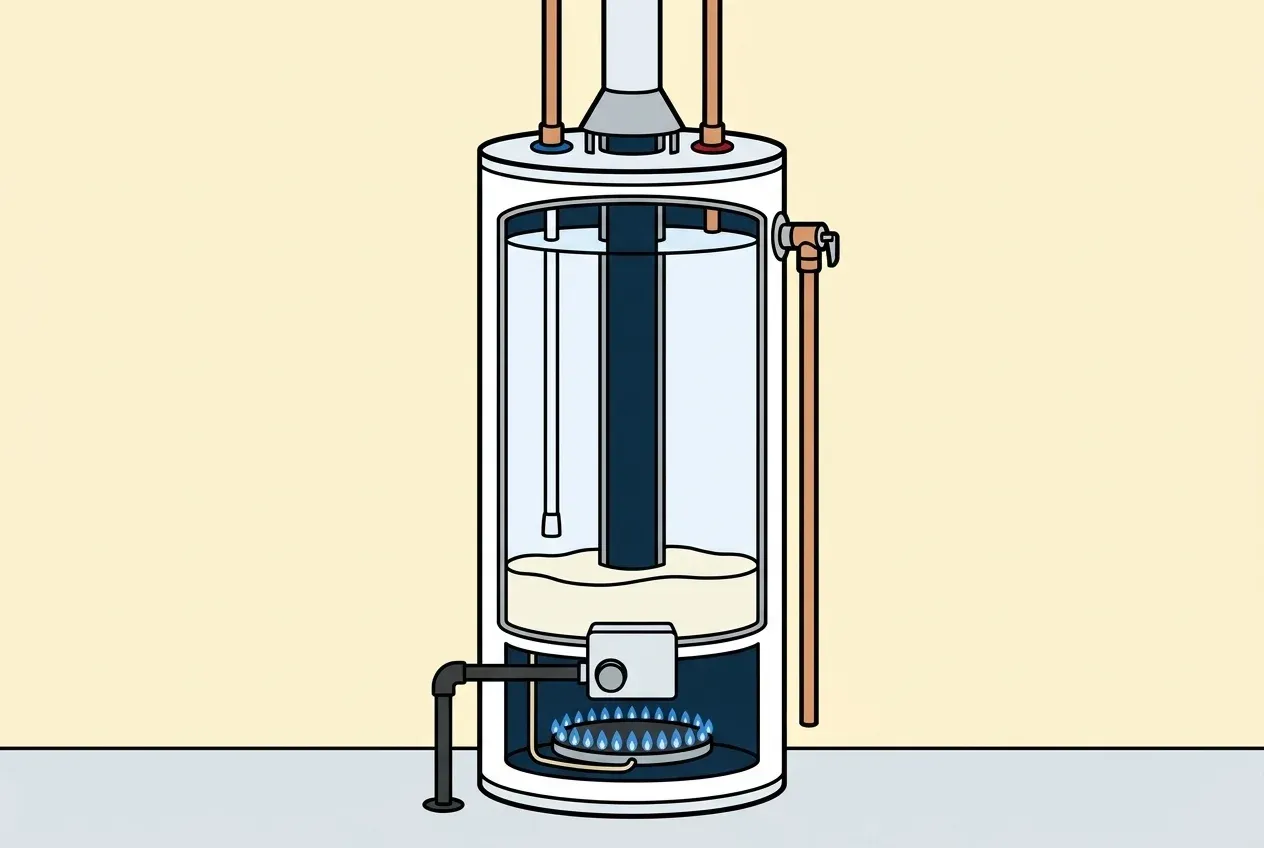
When scale is already costing you. That might be a water heater losing efficiency or years, fixtures that keep crusting over, or cleaning time you’d rather have back. As an energy saver alone, a softener makes a thin case at this hardness.
For example, softened water saves a gas tank water heater an estimated 3.1 percent of its energy cost over a 15-year life at 5 grains per gallon. At 10 grains, the estimate is 6.6 percent. Those are estimates from the Water Quality Research Foundation’s Softened Water Benefits Study, based on accelerated lab tests run in 2009 using water much harder than Fairfax’s. Scale can also shorten the life of a water heater, toilet parts and a washing machine, per EPA’s WaterSense guide.
We don’t know of a dollar break-even for water in Fairfax’s range. So the deciding question is what scale is doing in your own house. If you’re not sure, our guide to the signs of hard water shows where it turns up first. If you have a tankless heater, our post on descaling a tankless water heater covers the flushing that keeps scale in check.
You don’t have to soften the whole house. Softening only the hot water still guards the water heater and keeps your drinking and cooking water as it was. That matters if you watch your sodium, since a sodium-based softener, the most common kind, raises the sodium in your water. Whole-house softening fits better when the scale you mind is on cookware and small appliances, or the trouble is soap film after a shower.
If white residue on dishes is your only complaint, Fairfax Water notes that store-bought products remove it. And if scale has already worn your heater down, deal with that first; we handle water heater service too.
Should You Test Your Water Before Buying a Softener in Fairfax County?
Yes. A test shows whether your water is hard enough for a softener to matter. If it is, the result and your household’s water use set its size. A softener also doesn’t typically treat other contaminants, which a wider lab test can turn up.
On Fairfax Water, we’d start with what the utility already tells you: its stated range and, outside the Washington Aqueduct area, the 2025 lab readings. A test at your own tap turns that ballpark into your number, since those readings come from sampling sites, not your faucet. Results may read in grains per gallon, mg/L or ppm, which is the same as mg/L.
A hardness test is cheap next to the softener it decides: about $30 to $50, in BestCompany’s October 2025 cost guide. With your number in hand, it’s worth collecting two or three opinions from different suppliers before you buy, so every quote is sized to the same result.
On a private well, the test is the whole picture. The Virginia Household Water Quality Program runs drinking water clinics in about 70 Virginia counties a year. A $70 kit tests for 28 things, hardness among them. When no clinic is scheduled for your county, the program points you to a state list of certified private labs. If that home also has a septic system, check with the septic maker or a local service provider that a softener won’t overload it.
The Bottom Line on Water Softeners in Fairfax County
A softener here is an upkeep purchase, not a health or utility-bill one, and your own tap should make the call. Find your service area in Fairfax Water’s report and test at your faucet. Then weigh the result against what scale is already doing in your house before you price a system.
When you’re ready to price one, talk to our water quality team. We’re family-owned, and we offer same-day service and same-day estimates.