How Do You Descale a Tankless Water Heater in Alexandria?
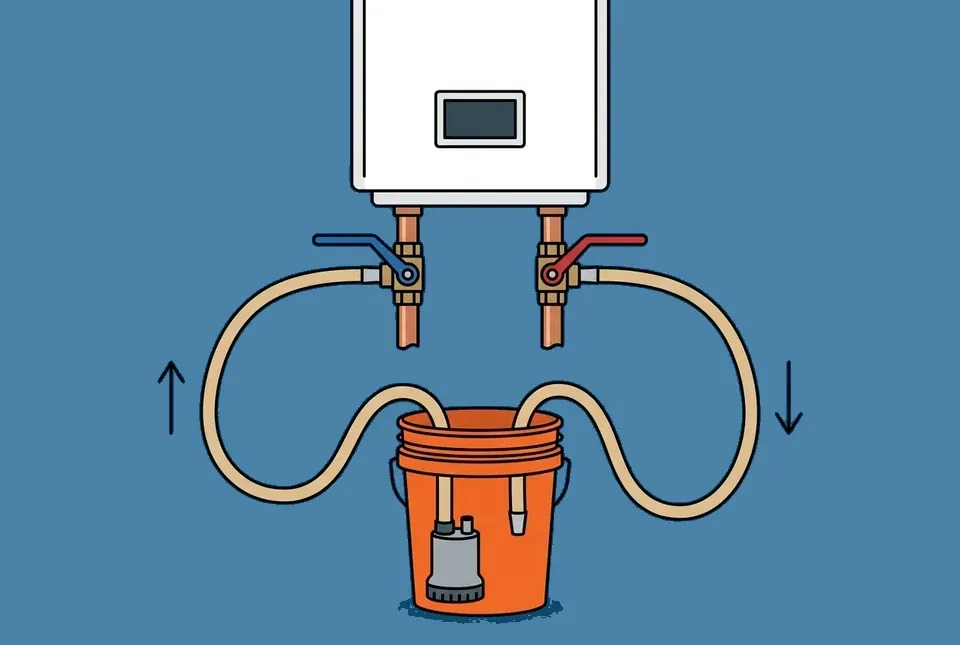
Descaling a tankless water heater means circulating a mild acid through its heat exchanger in a closed loop, using a bucket, a small submersible pump and two hoses connected to the unit’s service valves. The gas gets shut off and the water valves get closed before anything is opened.
The reason it has to happen is sitting in your water. Virginia American Water operates Alexandria’s distribution system but buys the water already treated from Fairfax Water, drawn from the Potomac River and the Occoquan Reservoir. Fairfax Water publishes the result: moderately hard to hard, 5 to 10 grains per gallon. Those minerals bake onto hot metal, and a tankless unit packs a lot of hot metal into a small space.
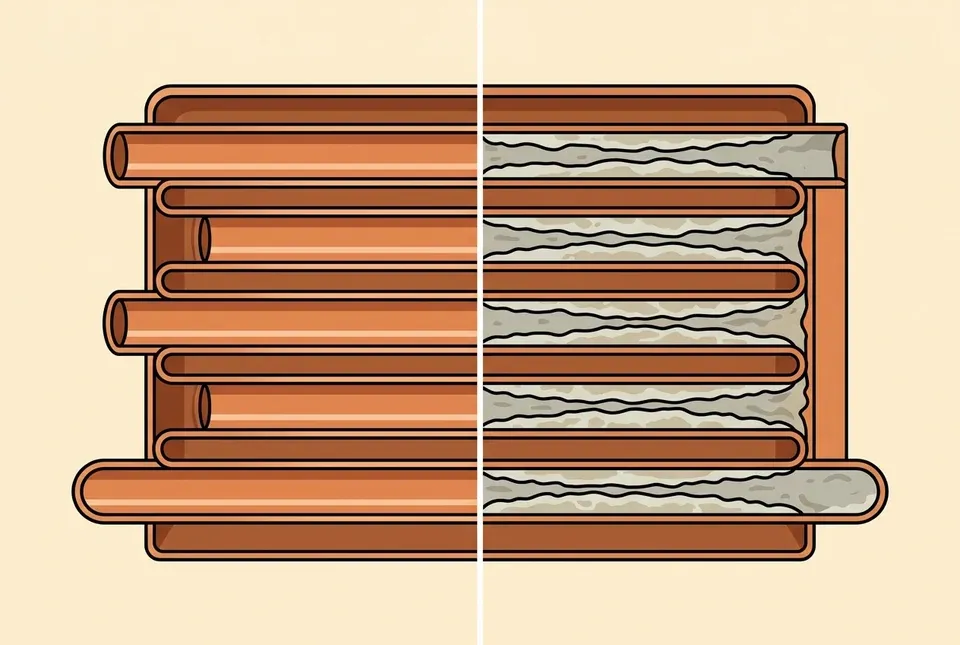
How Do You Flush Scale Out of an Alexandria Tankless Water Heater?
The whole procedure is a loop. A bucket holds a few gallons of descaling solution. A submersible pump pushes it into the cold service valve, it travels through the heat exchanger, and it comes back out the hot service valve into the same bucket. Nothing goes down a drain while it circulates.
The loop is only half the job. Both manufacturers require a fresh water rinse once the solution comes out. Navien says to always flush with fresh water for a minimum of ten minutes, and Rinnai’s manual asks for five. Skipping it leaves acid sitting inside the exchanger.
That is genuinely all of it, which is why so many Alexandria homeowners take it on after watching it once. Owners in r/HomeImprovement and r/homeowners who built their own kits flag two snags: pump outlets and hose fittings often do not match, and undersized hoses throttle the pump enough to hurt flow. One also found the vinegar had pitted their cheap hoses, so buy better ones than you think you need.
While it circulates the solution usually turns blue or blue green. That color is dissolved copper coming off the exchanger rather than a measure of how much scale you had, which is our own reason for not letting a flush run all night. Plenty of owners finish a flush with colored liquid and no visible debris at all.
How Do You Shut Off an Alexandria Tankless Heater Before a Flush?
Gas off. Water valves closed. Then you open something.
The gas shutoff is not negotiable and every source agrees on it. The house water supply must be off before you open any service port. Power comes off too, and this is where forum advice goes wrong. You will find threads arguing that certain units have to stay energized because power holds an internal bypass open. The manuals do not say that. Rinnai’s flushing procedure opens by turning off the power source, then the gas or breaker, then the water valves, and Navien’s runs the same way. Read your own unit’s manual, but expect it to take power off first.
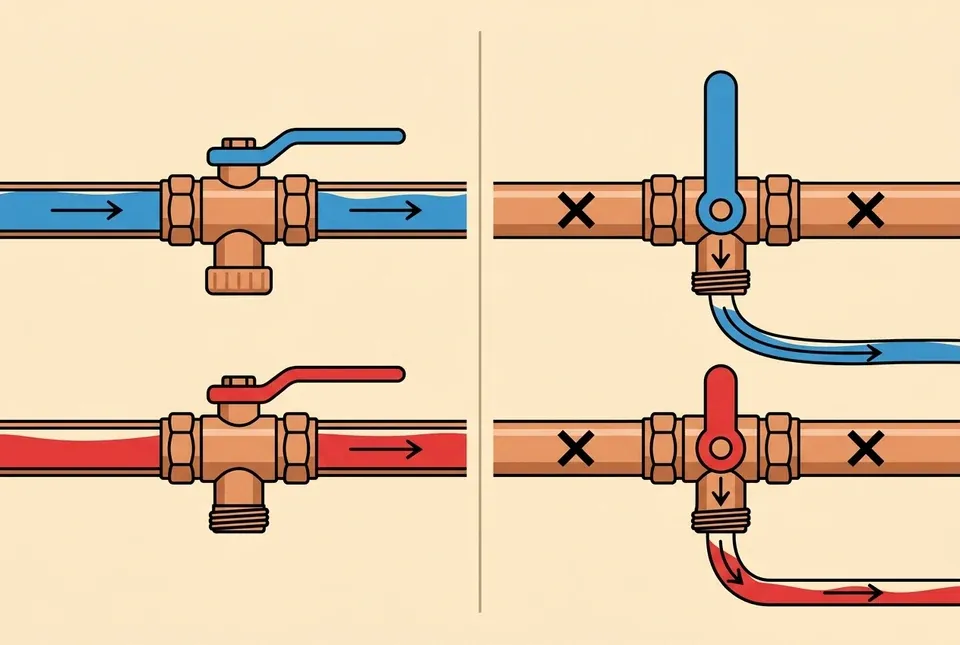
Identify the valves before you connect anything to them. One homeowner attempting a first flush posted a photo of the fitting they were about to attach a pump to. It was the gas line. Service valves are conventionally color coded, blue on the cold side and red on the hot, each with a capped port the hose threads onto.
One more, because this job involves acid. If you are reaching for vinegar, read the warning in our guide to an air conditioner leaking water in a Woodbridge home about what it must never be mixed with.
How Do You Descale an Alexandria Tankless Heater With No Service Valves?
First, make sure that is actually true, because very often it is not.
The most common version of this problem is not a missing valve. It is a valve nobody recognized. In one widely read repair thread, a homeowner was told by a contractor that their unit had no service valves and that a set would have to be installed first. The three highest voted replies all said the same thing: the valves were already there, and one pointed straight at the fitting with the yellow tag on it. A service valve does two jobs at once, which is what confuses people. Turned one way it feeds the unit. Turned the other way it shuts the unit off and opens the service port instead.
Sometimes they really are absent. A widely discussed r/DIY thread described a unit installed by a previous owner with none at all. Retrofit kits exist, and one warning came with that advice: they can be fitted the wrong way round, so the water paths need to be clear before anything is cut.
What we would ask you not to do is improvise a loop through your fixtures. One owner with no isolation valves proposed pumping from a nearby sink, up through the unit and back out through an open faucet. The response was immediate and right: an open loop running through household taps can push descaling solution back into the pipes carrying your drinking water. A unit with no service valves is where this stops being homeowner work. Fitting them is a short job for a licensed pro, and once they are in, every future flush is yours. It is exactly what our tankless water heater service is for.
How Do You Clean the Inlet Filter Screen on an Alexandria Tankless Heater?
Almost every flush guide leaves this part out, and it often fixes the complaint that sent you looking.
Most tankless units carry a small filter screen on the cold water inlet, and many designs have two, sitting underneath as dark threaded plugs. A commenter who says they field these calls described the routine: isolate the water to the unit, unscrew the plugs, rinse the screens, put them back. In their experience that is usually the problem behind a no hot water call. The homeowner in that thread tried it and watched the flow rate at every fixture climb back up.
We want to be straight about the limits, because that homeowner’s problem came back, and the root cause turned out to be a stuck internal check valve. So: cleaning the screen is the cheapest and fastest thing to check, it frequently restores flow on its own, and if the symptom returns within weeks then the screen was a symptom rather than the cause.
There is a useful distinction in the same discussion. A clogged screen on the inlet side means debris arriving at your unit. A clogged screen on the outlet side means debris that traveled all the way through the heat exchanger, which points at the exchanger needing the flush. It does not always come from the heater either: one owner whose inlet screen clogged three times in a year was told the material looked freshly shed from inside a supply pipe.
Drain the unit before you introduce solution so you are not diluting it, and clean the screens on the same visit. If a unit is so scaled that solution will not pass, try running the pump with the screen out of its plug, O ring left in place. Two things never to do: force solution through backwards, or flush by running the unit and pulling water through your fixtures.
How Do You Set the Descaling Interval for an Alexandria Tankless Heater?
Once a year is the baseline, and that is the number we hold to on our own tankless service page. What moves a household off it is worth knowing.
Hardness is the first variable, and Alexandria’s supply sits in the moderately hard to hard band. Volume is the second, and it gets overlooked. An owner in r/homeowners went two and a half years before a first flush and found almost no buildup, explaining simply that two people live there. A large Alexandria household running showers, a dishwasher and a washing machine through one unit asks far more of that heat exchanger. Owners in r/DIY with hard water commonly settle at six months instead.
The most interesting voice in these discussions says they manage more than four hundred tankless units across a property portfolio. They have moved their own program away from a fixed annual flush toward flushing when a unit’s error codes call for it. But they were clear about what they would tell a homeowner: descale every year, as the best insurance against failure. Fleet scale monitoring is not the same as a house.
Duration and solution are settled in the manuals, whatever the forums say. Navien asks for at least forty five minutes of circulation. Rinnai’s published procedure says the job may take up to forty five, while its unit manuals ask for a full hour, so follow the manual that came with your heater rather than any single number. Neither manufacturer asks for an overnight soak, and the dissolved copper in that blue liquid is our own reason not to improvise one. On solution Rinnai is blunt: four gallons of undiluted white vinegar, never chemical solutions of any kind, because the water in that loop is the water you drink. Navien also permits an approved descaling solution, which is why your manual decides this and a forum cannot, and warns that a descale done wrong can damage the unit and void the warranty. Confirm nothing is leaking, then let it run.
How Do You Check a Long Neglected Alexandria Tankless Heater Before a Flush?
If a unit has gone years without service, look before you circulate anything.
One warning gets repeated often enough to deserve a careful answer: in a badly neglected unit, scale can sit over pitted copper, and stripping it away exposes pinhole leaks it was effectively plugging. An owner who flushed a unit untouched for a decade was told this afterward and asked whether they had got away with it once.
That same commenter, who says they manage four hundred plus units, answered directly: across eight years they have never seen a leak or failure caused by pitting. In the other direction, one owner reported a heat exchanger that began leaking in its ninth year shortly after a descale. Call it disputed rather than established, and note that the largest sample has not seen it.
What everyone agrees on is the case where solution will not pass. If you cannot get flow in either direction, that is not a maintenance job any more, and a badly set up flush can lock a unit up completely. If the unit is old enough that replacement is the real question, we get into that in how long a water heater lasts in Stafford.
How Do You Protect an Alexandria Tankless Heater From Scale Between Flushes?
Treat scale as a supply problem before a heater problem. The habits between flushes are about what reaches the unit. Cleaning the inlet screens on a schedule is the highest value one, and it takes minutes. Roughly every six months suits most Alexandria homes, and homes on a well benefit from checking more often. A point of use inline filter on the cold feed is the other common step, and the owners who fit them are honest about the results. One put it well: they would not use the word never, but it plausibly turns one year between cleanings into two.
If scale is a recurring fight rather than an annual chore, treating the supply itself belongs with our water quality team. One thing worth saying plainly: a tankless unit has no tank, no drain valve and no settled layer at the bottom, so none of the tank flushing routine applies here. If it is a conventional tank you are dealing with, no hot water in an Arlington home walks through it.
The Bottom Line on Descaling a Tankless Water Heater in Alexandria
Four things decide whether this goes smoothly. Confirm you have service valves and that you have identified them correctly, because far more units have them than their owners realize. Get the shutoff sequence right for your specific unit, which means reading its manual rather than a generic list. Rinse the unit through with fresh water when the solution comes out, taking the ten minute figure if you want the conservative one. And clean the inlet screens while you are in there, because that small step resolves more complaints than the flush sometimes does.
If your unit has no service valves, if solution will not pass through it, or if you would rather it were handled, that is what we are here for. We have looked after Northern Virginia homes since 1956, and you are welcome to get to know our family first.