Can a Mini Split Heat an Arlington, VA Home Through Winter?
Are you having issues working out one thing before the cold sets in: can a mini split heat an Arlington, VA home in winter? This article will help you figure that out. In this article we’re going to cover how cold different mini splits can go, what defrost and backup heat are for, how to check the sizing, and how to keep defrost water from turning to ice. Let’s get into it.
The answer turns on three things you can check: the model’s low-temperature rating, whether it was sized for your heating load or only your cooling load, and where the outdoor unit sits. Our ductless mini-split installation and service page shows the systems we put in.
How Cold Can It Get Before a Mini Split Stops Heating an Arlington Home?
Colder than Arlington usually gets, if the unit is a cold-climate model. The real question is how much heat a mini split still puts out as the air gets colder, and how far down its model is built to keep running.
ENERGY STAR sets the cold-climate yardstick
Among the requirements in ENERGY STAR’s key product criteria for heat pumps, a model earns the Cold Climate designation only if its heating capacity at 5°F is at least 70% of its capacity at 47°F. A model without the rating hasn’t shown it can do that.
Arlington seldom gets near that test point
NOAA’s 1991-2020 climate normals for the weather station at Reagan National Airport, in Arlington, average about 60 days a year with a low of 32°F or colder, but less than one day a year with a low of 10°F or colder. That’s a long-run average at one station, not a forecast for any single winter. Still, it means a cold-climate unit spends nearly every Arlington winter night above the temperature it was tested at, and many of them below freezing.
Which Mini Splits Keep Heating Below Freezing Without Stopping?
The ones built and rated for cold, and you can check a model before it goes on your wall. Look for the ENERGY STAR Cold Climate designation described above, then ask for the model’s own low-temperature figures.
The exact model’s figures are the ones that count
Mitsubishi Electric’s HVAC replacement guide says its Hyper-Heating INVERTER (H2i) technology lets heat pumps deliver 100% of their heating at 5°F outside and operate in temperatures as low as -22°F. Those figures belong to that technology, not to every mini split, so ask for the low-temperature numbers on the exact model you’re quoted. Even these units pause now and then to defrost, which is the next question.
Should You Stop a Mini Split From Defrosting on a Cold Arlington Morning?
No. Let it finish. Defrost is the outdoor unit melting frost off its coil, and it ends on its own.
A defrost cycle can look like a heater that quit
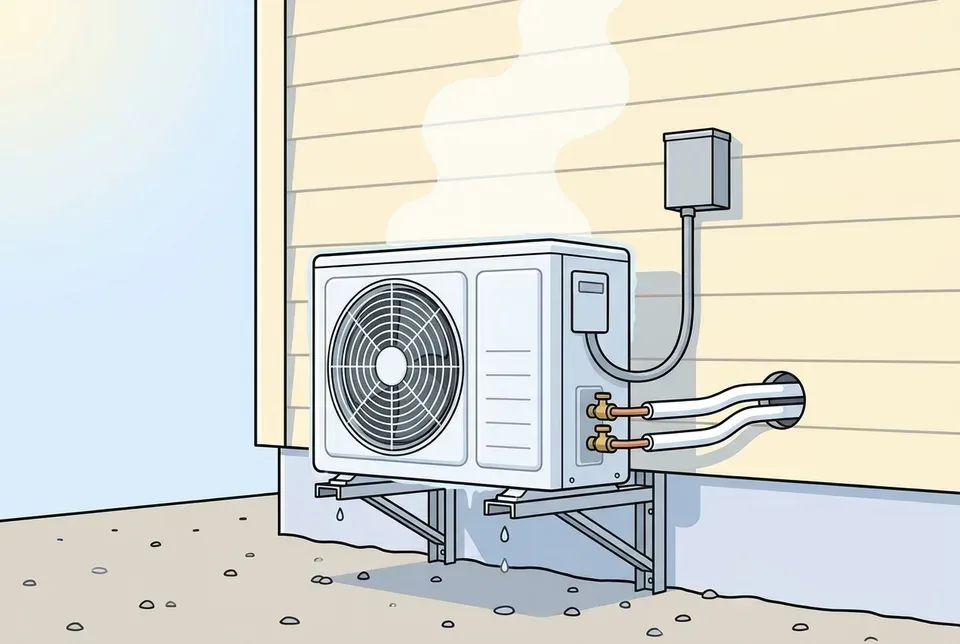
On a damp Arlington morning, this is what you’re seeing: Lennox’s user manual for its MWHD mini-splits says frost may form on the outdoor coil when the outdoor temperature is low and the humidity is high, and that during defrost the fan stops and warm air doesn’t come out, a defrost indicator appears on the indoor unit’s display, steam comes off the outdoor unit, and the remote won’t take other commands until defrost is finished.
Tricking a unit out of defrost leaves the frost in place
It’s tempting on a chilly morning to look for a way to cut a cycle short. The MWHD manual’s safety warnings say not to use any means to accelerate the defrost operation other than those Lennox recommends, and a workaround that keeps a unit out of defrost just leaves the frost on the coil.
A long or frequent cycle is the reason to call
Lennox’s guide to a mini-split that isn’t heating says defrost generally takes 3 to 15 minutes, and to arrange service if a cycle lasts longer than 15 minutes or returns more than once within an hour.
Is Backup Heat Worth Setting Up for a Mini Split in an Arlington Home?
It depends on how much of your heating the mini split was designed to carry. Backup earns its place when the system was sized to cover only part of the load, or when it heats only part of the house.
The sizing plan decides whether you need it
The Department of Energy’s Building America Solution Center, in its guide to sizing cold-climate heat pumps, describes four ways to size a heat pump in a cold climate and says three of them will require an auxiliary source of heat during the colder parts of the winter. The approach meant to provide all or nearly all the heat sizes a cold-climate heat pump to the home’s design heating load at the location’s design heating temperature, and when the unit’s capacity at that temperature is greater than the load, the guide says it should be able to meet all or nearly all of the home’s heating needs without auxiliary heat.
Deep cold is where a backup earns its keep
ENERGY STAR’s guidance on ductless heating and cooling says a cold-climate heat pump will continue working below 5°F, but that pairing it with a backup energy source will heat your home most efficiently when temperatures are even lower. By NOAA’s normals above, Arlington seldom gets that cold. A heat pump paired with a gas furnace that takes over in the cold is a dual-fuel setup, which our heat pump and furnace comparison covers.
How Do You Check Whether a Mini Split Is Sized for an Arlington Winter?
Ask for the numbers behind the system, and notice how it behaves on a mild day.
Two numbers settle most sizing questions
The first is the heating load of your home, or of the room the unit serves. The second is what the unit can deliver at your area’s design temperature, the outdoor temperature a heating system is sized to handle. The Solution Center’s sizing guide says ACCA Manual J should be used to obtain reliable results rather than rules of thumb, and that equipment should be selected on the manufacturer’s performance data at the design temperatures for the home’s location, not on nameplate capacity.
A unit sized for summer can come up short in winter
That shortfall can look like a cold-weather limit. The Department of Energy’s 2015 guide to climate regions by county places Arlington in climate zone 4. The Solution Center’s sizing guide gives the example of a zone 4 home that may have a heating load about equal to its cooling load: a traditional heat pump sized to meet that cooling load will be undersized for heating, because its heating capacity drops below its rated capacity once the outdoor temperature drops below the mid-40s or so. If your system was sized from its cooling capacity alone, ask about it.
A cold room on a mild day points somewhere else
If a cold-climate unit can’t warm a room on a mild day, the weather isn’t what’s holding it back. The Solution Center’s guide to ductless heat pumps notes that many ductless heat pumps read the room’s temperature at the indoor unit, high on the wall or ceiling where the air is warmer, so the air at head and chest level can be colder than the setting, and that setting the unit slightly higher can ease the difference. A door between the cold room and the indoor unit is another possibility, covered below.
Should a Mini Split Run All Night in Arlington or Be Set Back?
Let it run all night at a steady, comfortable setting, even on the coldest Arlington nights.
A steady setting is the efficient one
ENERGY STAR’s ductless guidance says that, unlike a furnace or boiler, heat pumps do not save energy by turning the temperature down when you’re away or asleep, and that for best use you should pick a comfortable temperature and leave it there. If the room feels cool at the setting you like, raise it a little and leave it there, rather than turning it down at bedtime and back up at dawn.
How Do You Stop Defrost Water From Freezing Under an Arlington Mini Split?
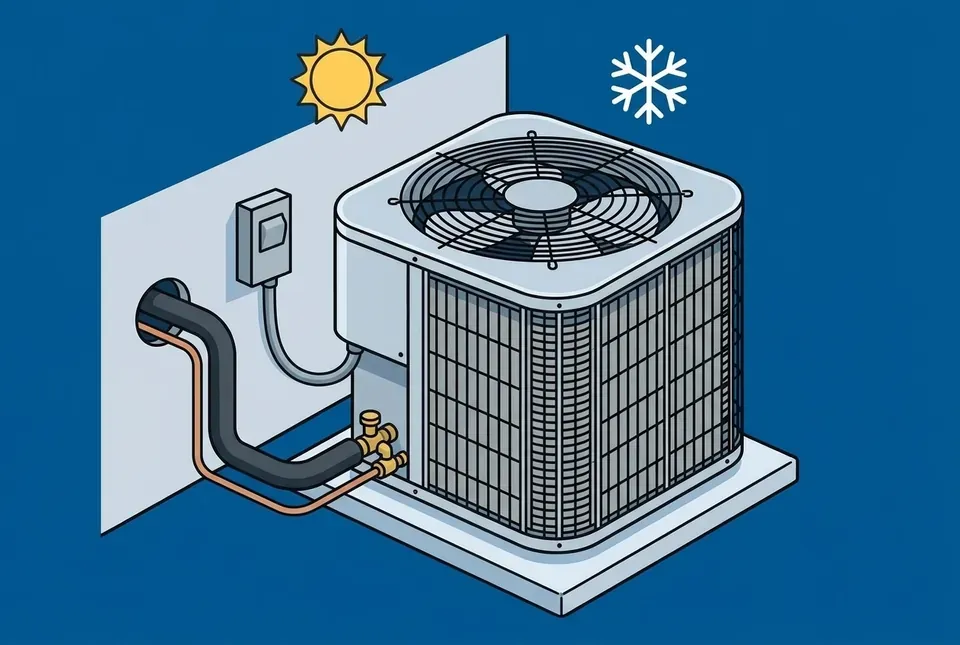
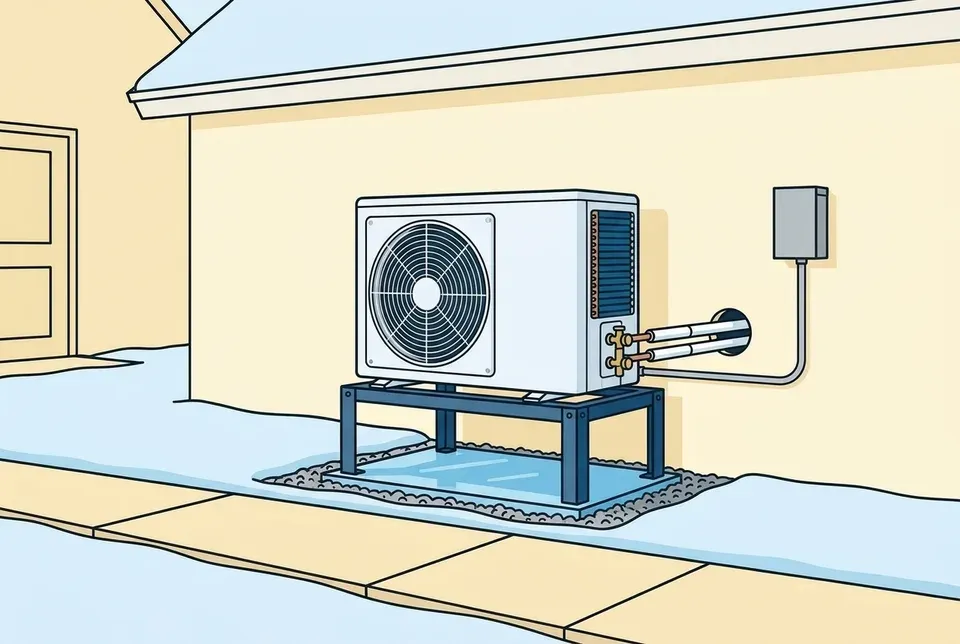
Mostly by where the outdoor unit goes and how high it sits, both settled at installation. The water itself is normal: ENERGY STAR’s installation tips for ductless systems say outdoor units release water when they defrost in the winter, which can form icy patches, and advise against installing the outdoor unit near doors and windows.
Height and placement are decided at installation
For heating in climate zones 4 and higher, which takes in Arlington, the Solution Center’s ductless guide lists recommendations to consider: install outdoor units well above snow height, on stands or wall mounts (it flags possible vibration with a wall mount), and don’t install them where water or melting snow or ice will fall on the unit. We elevate the outdoor unit on the systems we install.
Ice on a walkway is a placement problem, not a chore
On the next damp morning near freezing, look at where the meltwater ends up. If ice is spreading across a walkway or building up around the base of the unit, ask your installer about raising or moving it. Lennox’s mini-split guide notes that packed snow and ice around the coil and fan can interfere with how the unit collects heat. Clearing snow from around an outdoor unit, with the power off first, is part of our post on winter care for an outdoor unit.
Can a Mini Split Replace Space Heaters for One Cold Room in Arlington?
Usually, as long as the cold room gets an indoor unit of its own. Warm air doesn’t carry well between rooms: ENERGY STAR’s installation tips for ductless systems note that it can be challenging for heat to move through an open doorway, and impossible to move through a closed one. So the bedroom at the end of the hall in an older Arlington house needs its own indoor unit, on a single-zone system or as one zone of a multi-zone system.
A mini split moves heat instead of making it
ENERGY STAR says its certified mini splits use up to 60% less energy than standard home electric radiators, because they transfer heat rather than generate it, and the same system cools the room in summer. For a room you’ve been warming with a plug-in heater every evening, an indoor unit of its own is the lasting answer. Which rooms make the strongest case for ductless is a question our post on the best uses for a ductless mini-split answers.
The Bottom Line, Briefly
- A cold-climate mini split is built for colder weather than Arlington usually sees.
- Ask for the low-temperature figures on your exact model.
- Let defrost finish; Lennox’s mini-split guide says it generally takes 3 to 15 minutes, and to arrange service if a cycle lasts longer than 15 minutes or returns more than once within an hour.
- Backup heat earns its place when the mini split is sized to cover only part of the load, or heats only part of the house.
- Ask for a Manual J heating load and the unit’s output at your design temperature, not its nameplate capacity.
- Keep a steady, comfortable setting overnight.
- Keep the outdoor unit raised, away from doors and walkways, and out from under falling water and melting snow.
- For one cold room, put an indoor unit in that room.
We’re a Mitsubishi Diamond Contractor and install ductless mini-splits. And the next time your outdoor unit sends up a plume of steam on a frosty Arlington morning, leave it be: that’s the coil clearing its frost so the heat can come back on.