How Long Should a Heat Pump Last in a Manassas Home?
Are you having issues with a heat pump that still runs but leaves you asking how long should a heat pump last in Manassas, VA? This article will help you figure that out. In this article we’re going to cover what sets a heat pump’s lifespan, the parts and signs that show wear, what the refrigerant phase-down means for you, and when replacing beats one more repair. Let’s get into it.
Expect a life somewhere between the 10 to 15 years in Lennox’s guide to heat pump lifespan and the 15 to 20 years in a 2024 article in HUD’s Cityscape journal. Lennox gives its range for most heat pumps with proper care, air-source models (the most common type) included, while the Cityscape article gives an average for heat pumps in general. If an older unit is already acting up, our page on heat pump repair and replacement covers the work we do.
What Decides How Long a Manassas Heat Pump Lasts?
The factors Lennox lists: installation quality, regular maintenance, the climate the system works in, how it’s used, and the quality of the unit itself. Lennox says those factors decide whether a heat pump reaches the 15-year mark or calls it quits earlier.
The 12 to 15 years in our own guide sits inside that range
You may have seen a heat pump in Virginia put at 12 to 15 years in our guide to choosing a heat pump brand. That figure sits inside the range above, and the guide goes deeper on installation quality and the equipment itself.
Real heat pumps spread out around the average
On r/nova, Northern Virginia’s community on Reddit, two homeowners have described going through several heat pumps in one house, sooner than the published ranges would suggest, while another commenter in one of those threads described years of trouble-free use. If your heat pump shares the work with a gas furnace, the furnace keeps its own clock, and our guide to how long a furnace lasts covers that side.
Why Does Year-Round Heating and Cooling Wear a Heat Pump Out Faster?
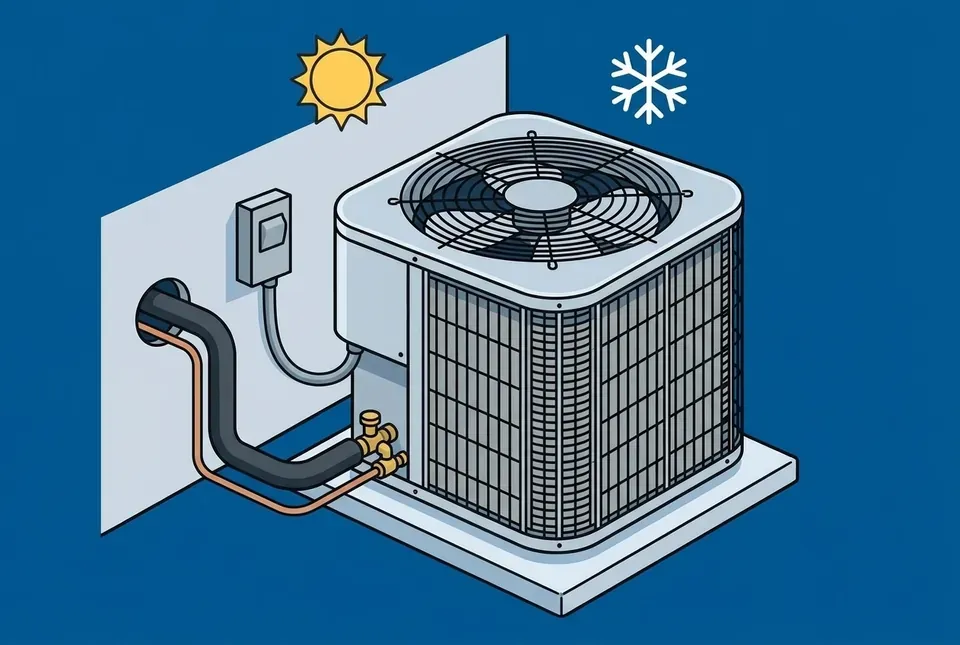
Because it works in both seasons instead of one. In a Manassas home, the same outdoor unit that cools the house through the summer heats it through the winter, while a cooling-only air conditioner sits idle in the cold months.
Two seasons of work add up
Lennox’s lifespan guide explains it: heat pumps do the double duty of heating and cooling, so they work more often throughout the year, though their efficient design, with fewer mechanical processes than combustion-based systems, helps balance that extra workload. Lennox’s own numbers show how close the result is: 10 to 15 years for a heat pump against 12 to 15 for a central air conditioner.
Hard weather and constant adjustments add strain
Lennox adds that a heat pump in an area with harsh winters or scorching summers works harder to keep the house comfortable, which speeds up wear, and that constantly adjusting the thermostat or running the system at extreme settings asks more of the equipment.
Which Heat Pump Parts Wear Out First in Manassas?
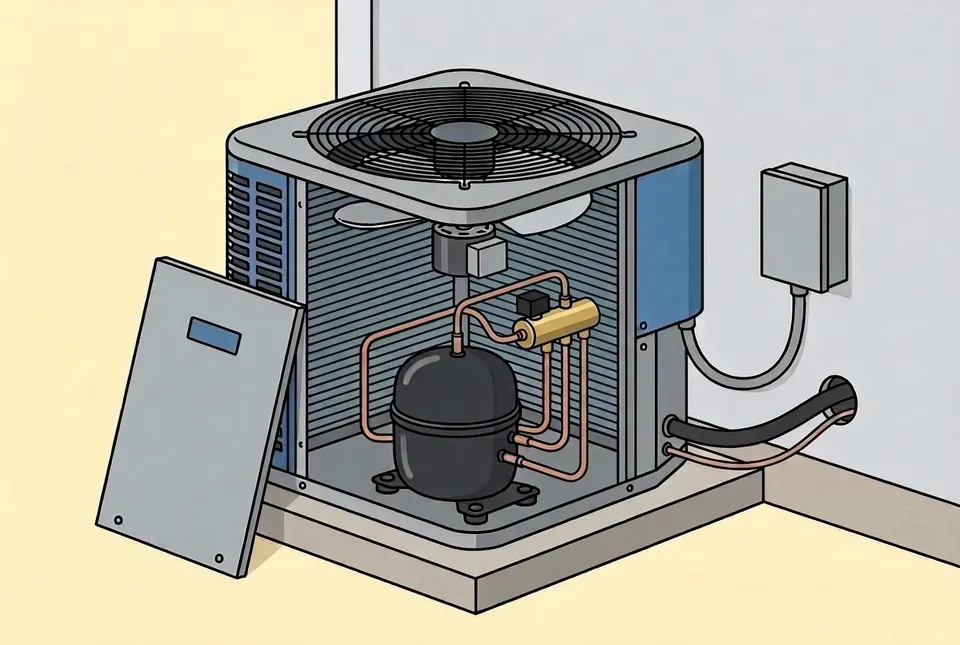
Lennox’s guide to a heat pump that won’t cool names wear as a cause of trouble in two parts, the compressor and the reversing valve, and names low refrigerant from a leak as a problem that can damage the compressor.
The compressor is the heart of the system
The same guide calls the compressor your heat pump’s heart, pressurizing the refrigerant and keeping it moving, and says compressor problems are often caused by electrical problems, overheating, or simply age and wear.
The reversing valve does the switching a cooling-only air conditioner doesn’t need
A heat pump heats or cools by reversing the flow of its refrigerant, and the reversing valve is the part that makes the switch. Lennox lists wear and tear, electrical issues and refrigerant problems as the usual causes of a stuck or broken reversing valve, which can leave a heat pump stuck in one mode.
Low refrigerant puts the compressor at risk
Refrigerant is what carries heat between the indoor and outdoor coils. Lennox says refrigerant levels usually drop because of a leak, that low refrigerant can damage the compressor and lead to expensive repairs or a full system replacement, and that leaks need professional detection and repair.
What Signs Say a Heat Pump in a Manassas Home Is Near the End of Its Life?
A pattern of trouble more than any single event. Lennox’s list of signs includes repairs that keep coming, rooms that won’t stay even, and new noises or smells.
Repairs start coming more than once a year
One repair is normal, Lennox says, but calling for service multiple times a year adds up quickly, and it counts that pattern among the signs that replacement may be on the horizon.
Rooms stop evening out, and new noises or smells appear
Lennox also lists rooms staying too hot or too cold, which it puts down to an aging heat pump struggling to distribute air evenly, along with grinding, squealing or banging sounds that signal mechanical problems and unusual smells that could indicate electrical issues or refrigerant leaks. Its advice is not to wait for a complete breakdown: a technician can assess whether a repair will solve the problem or replacement is the smarter choice.
Do Rising Electric Bills Mean a Manassas Heat Pump Is Failing?
Sometimes, but a higher bill on its own doesn’t prove it. Lennox lists rising energy bills among its replacement signs with a qualifier that matters: utility costs climbing without explanation, which it says can mean an aging heat pump is losing efficiency, using more energy for the same comfort as its components wear out.
Rule out the ordinary explanations first
A colder month than the same one last year, or a change in your electric rate, can push a bill up on its own. Comparing your usage in kilowatt-hours against the same month a year earlier, rather than the amount due, takes the rate out of the picture.
Backup heat that runs more than it used to deserves a look
If your backup heat seems to run more than it did in past winters, our post on why a heat pump’s aux heat keeps coming on explains when that’s normal and when it points to a problem. If the rise still has no explanation, have the system checked.
Should an Older R-410A Heat Pump in Manassas Be Replaced Now?
R-410A is a refrigerant, the heat-carrying fluid inside a heat pump’s coils and lines. EPA’s page on purchasing and repairing home heat pumps describes it as the primary replacement for R-22, the refrigerant in older systems, and says that after 2020 only recycled, reclaimed or previously produced R-22 can be used to service existing equipment. Now new equipment is moving off R-410A in turn, and homeowners on Reddit’s r/hvacadvice have asked whether a working system should be replaced before it’s too late. It doesn’t need to be.
The rule covers new systems, not the one you own
EPA’s 2023 Technology Transitions Rule has barred installing new residential heat pump and air conditioning systems that use refrigerants above its global warming limit, R-410A among them, since January 1, 2025, and a revision EPA finalized in May 2026 lets equipment made or imported before that date still be installed. The rule looks forward, not back: EPA’s frequent questions on the HFC phasedown say there are no requirements to stop using equipment already in use, and that you can keep repairing an existing heat pump system, including replacing a major component like the compressor. So no, a working R-410A heat pump in a Manassas home does not have to be replaced now.
What can change is the repair picture
The same EPA page cautions that the availability of HFC refrigerants, the family R-410A belongs to, and of parts may lessen over time as HFCs are phased down. That matters most when an older unit faces a major repair.
When Does Replacing a Manassas Heat Pump Beat One More Repair?
When a major repair lands on an older unit. Lennox’s guide to a heat pump that won’t cool frames that choice for a failed compressor this way: depending on the age of your system, the cost of the refrigerant it uses and the extent of the damage, you might need a compressor replacement or a full system upgrade.
EPA’s own checklist adds parts, efficiency and upkeep costs
EPA’s list of things for homeowners to weigh when choosing between repairing an R-410A system and moving to a new one on a newer refrigerant includes availability of components, energy efficiency and total maintenance costs.
Our rule of thumb starts at 10 to 12 years
Our heat pump service page draws the age line plainly: if a heat pump is under 10 to 12 years old and the repair is minor, repair it; if it’s older, low on R-22, or facing a compressor, it’s time to weigh the repair against a new system. That line sits at or just before the start of every range above, our guide’s 12 to 15 years included, so it marks when to start comparing, not a date when a heat pump has to go.
What Upkeep Helps a Heat Pump Last Longer in Manassas?
Professional tune-ups on a regular schedule, plus a clean filter and steady settings in between. All three come from Lennox’s lifespan guide.
Two tune-ups a year, one before each season
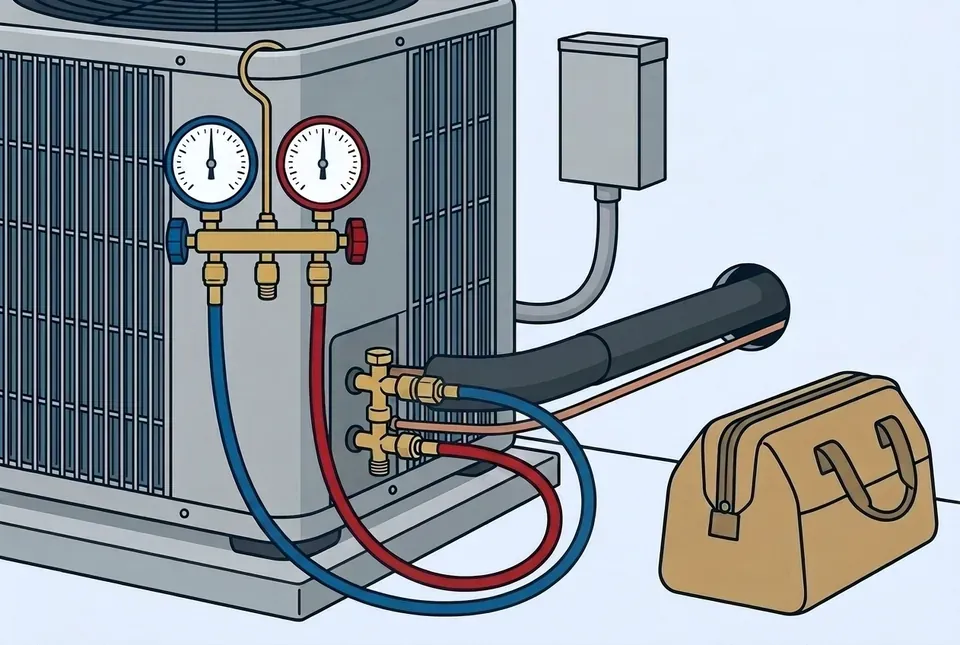
Lennox recommends professional tune-ups twice a year, once before heating season and once before cooling season, when a trained technician checks refrigerant levels, inspects electrical connections, cleans the coils and catches small issues before they become expensive repairs. When we do maintenance, we clean the condensate line.
A clean filter and a steady thermostat help between visits
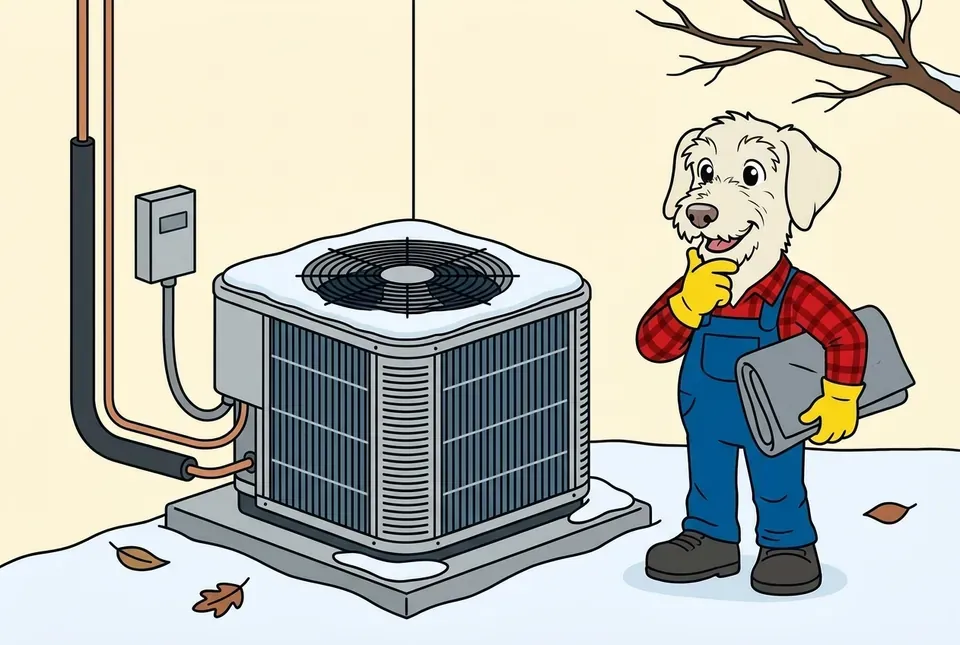
Between visits, the filter comes first on Lennox’s list, because a dirty one restricts airflow and forces the system to work harder, and Lennox suggests a consistent, comfortable thermostat setting rather than constant adjustments. Leaves, snow and covers around the outdoor unit are a separate winter question, which our post on whether to cover an outdoor unit for winter takes on.
Quick Recap
- Expect somewhere between Lennox’s 10 to 15 years and the 15 to 20 years in a 2024 article in HUD’s Cityscape journal, with the 12 to 15 years in our buying guide inside that span.
- Lennox says installation, maintenance, climate, use and unit quality decide where a heat pump lands, and that it works more of the year than an air conditioner because it heats and cools.
- Lennox names wear as a cause of trouble in the compressor and the reversing valve, and says low refrigerant from a leak can damage the compressor.
- Lennox lists repairs multiple times a year, rooms that won’t even out, and new noises or smells as warning signs, and says bills count when they climb without explanation.
- EPA’s rule moves new systems off R-410A but does not require replacing a working heat pump, and EPA says existing systems can still be repaired.
- Our rule of thumb: repair a minor problem on a heat pump under 10 to 12 years old, and weigh replacement when it’s older, low on R-22 or facing a compressor.
- Lennox recommends professional tune-ups twice a year before the heating and cooling seasons, plus a clean filter and a steady thermostat setting between visits.
EPA’s refrigerant rule doesn’t decide when your heat pump retires. Its age, its repair history and how well it keeps your home comfortable do. Replacement estimates are free if you’d like a clear picture for your Manassas home, and you can read about what working with our team looks like.