How Do You Clean a Ductless Mini Split in Fairfax, VA?
Are you having issues with a wall unit that smells stale or looks grimy, and wondering how do you clean a mini split in Fairfax, VA, without damaging it? This article will help you figure that out. In this article we’re going to cover the parts you can clean yourself, how often the filters need it, what the black gunk on the blower wheel is, and when the inside needs a technician. Let’s get into it.
The short answer: Lennox’s user manual for its MWHD wall-mounted mini-splits gives the owner jobs such as cleaning the filter and the outside of both units, and leaves cleaning inside the indoor and outdoor units to a qualified technician once a year. If your own model’s manual says otherwise, follow it. When the inside is due, start with our ductless mini-split repair and maintenance page.
What Parts of a Mini Split Can a Fairfax Homeowner Safely Clean?
Lennox’s MWHD manual hands the owner jobs such as cleaning the filters and the outside of the indoor and outdoor units. Cleaning inside either unit belongs to a qualified technician.
The inside of the unit is a technician’s job
The MWHD manual is plain about it: don’t clean the inside of the mini split yourself; for that, contact a qualified installer or Lennox service company. The coil and the blower wheel both sit in there.
The outside of the indoor unit needs only a brush or a damp cloth
Start with the manual’s warning: don’t spray water directly onto the unit, because water getting inside may cause electric shock or fire. It also rules out an alkaline detergent on the display, and acids or solvents such as paint thinner or alcohol on the surfaces. Then:
- Turn the mini split off and wait until the fan stops.
- Disconnect the power supply at the circuit breaker dedicated to the unit, which the manual calls for at installation.
- Clean the outside with a soft brush or a tepid damp cloth.
When you’re done, switch the breaker back on with dry hands; the manual warns against operating the unit with wet hands.
How Often Should You Clean Mini Split Filters in a Fairfax Home?
Lennox’s MWHD manual says to clean the air filter every two weeks or when its filter-cleaning reminder appears on the display, and adds that the time between cleanings may vary with usage and environmental conditions. ENERGY STAR’s guidance on ductless heating and cooling puts it in general terms: heat pump filters should be cleaned when visibly dirty or when the filter light indicates it.
The filter clean starts with the power off
The manual’s safety pages come first: before any cleaning, disconnect the power and wait until the fan stops.
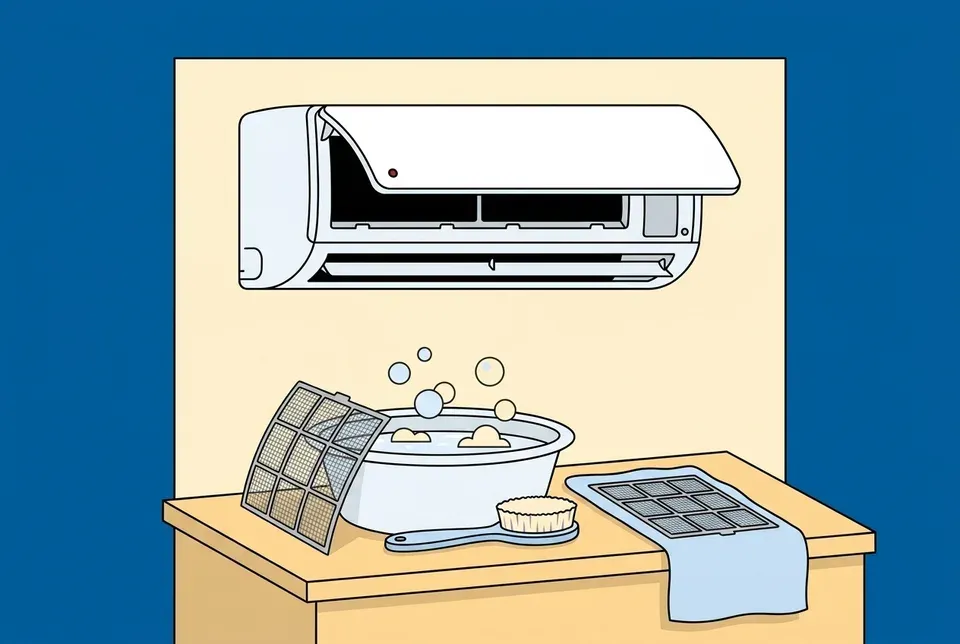
- Turn the mini split off, wait until the fan stops, and switch off its dedicated breaker.
- Slide the filter off the unit.
- Remove dust and debris with a soft brush or a vacuum cleaner.
- Soak the filter in water with a mild detergent for 30 minutes.
- Rinse it and let it air dry somewhere well ventilated, out of direct sunlight.
- Reinstall the filter once it has dried.
- With dry hands, switch the breaker back on, turn the unit on and reset the filter-cleaning reminder from the remote.
Take care not to damage the filter, and don’t scrub it with a hard-bristle brush or any other cleaning tool.
Is Black Gunk on the Blower Wheel Mold, and Who Should Clean It?
Treat it as mold, and leave the cleaning to a technician.
The wheel sits where dust meets water
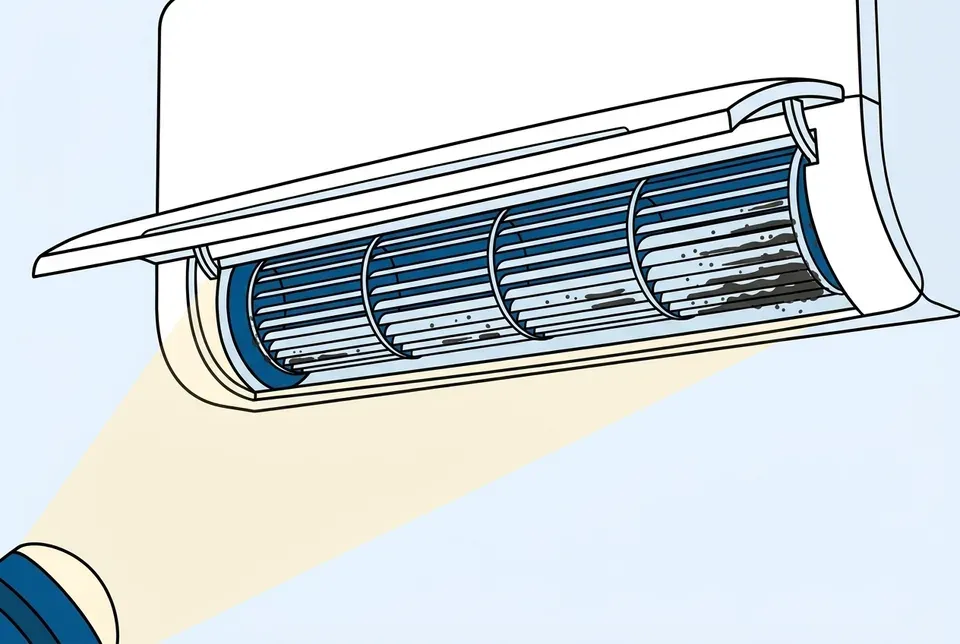
A 2024 Green Building Advisor article on cleaning ductless mini-splits starts with a flashlight: look up into the outlet where the air blows out (with the unit off, we’d add). What you’re looking for is the blower wheel, the fan that pushes the air out, and the article explains why it collects the worst of it: the blower sits downstream of the cooling coil, so it gets cold and becomes a surface where moisture condenses, and the wheel takes the brunt because it’s what moves the air.
You don’t need a lab test to act on it
Mold, wet dust or both, you don’t have to settle it first. EPA’s guide to mold, moisture and your home says that in most cases, if visible mold growth is present, sampling is unnecessary. So treat dark buildup on the wheel as mold.
Mold in the unit is a job for an HVAC professional
EPA’s mold course says mold remediation involving an HVAC system should be done only by professionals experienced in working with HVAC systems. It also says a system found to be contaminated with mold should be turned off and not used until it has been remediated, with exceptions where professional judgment finds no risk of increasing anyone’s exposure.
How Do You Clean a Mini Split Coil in Fairfax Without Damaging It?
From the outside in: keep the filter clean, use the unit’s own cleaning function if it has one, and leave the coil itself to a technician.
The filter is what protects the coil
EPA notes that the filters typically installed in mini splits are designed to protect the equipment from clogging with large particles like pet hair and lint, though they don’t filter out fine particles. So the filter routine above is your main coil care.
Some models wash their own coil
Lennox’s MWHD manual describes a Freeze Wash function that washes airborne contaminants and dust off the surface of the indoor coil by freezing and thawing it. The manual recommends running it once every two weeks and says multi-zone heat pump systems don’t support it. Check whether your own model has anything similar.
Should Fairfax Homeowners Clean a Mini Split With a Spray or a Bag Kit?
Not on your own say-so. A coil spray is a can of cleaner aimed at the coil; a bag kit is a plastic catch bag hung under the indoor unit while the coil and blower wheel are rinsed in place. Both reach the inside of the unit, so check your manual and your manufacturer’s warranty terms first, and if your manual names a cleaner or method, use that one.
Lennox limits cleaning to the methods it recommends
Lennox’s MWHD manual, in its warnings for R-32 refrigerant, rules out any cleaning method Lennox doesn’t recommend. Its cleaning warnings also rule out benzene, thinner and alcohol, and spraying water directly onto the unit, which is how a bag kit works.
Killing mold isn’t the same as removing it
If the spray’s job is killing mold, EPA’s guide to mold and moisture doesn’t recommend a mold-killing chemical such as chlorine bleach as a routine part of mold cleanup, though professional judgment may call for one. It also says killing the mold isn’t enough: it must also be removed.
How Do You Clean the Drain Line on a Wall-Mounted Mini Split in Fairfax?
Leave the clearing to a technician and watch for the signs. A wall unit’s drain line carries away the condensation the unit collects, and Lennox’s mini-split maintenance guide says keeping that line open prevents leaks and odors. The guide adds that condensation drain hoses can easily become clogged with corrosion or debris, and it puts inspecting, clearing and cleaning them on the technician’s list.
Leaks and odors are the owner’s early warning
Your part is noticing. Water dripping from the indoor unit, or a stale smell when it runs, is the cue to book a visit, and we clean the condensate line during maintenance. If a musty smell is coming through a central system’s vents instead, our post on why a central AC smells musty covers the drain pan in a ducted system.
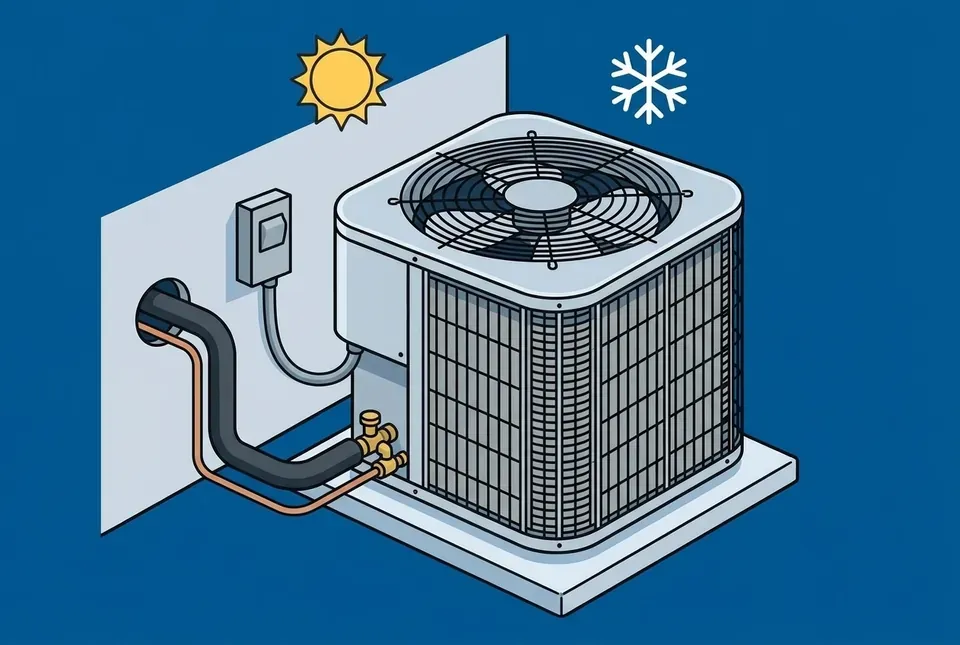
What Is the Right Way to Clean a Fairfax Mini Split’s Outdoor Unit?
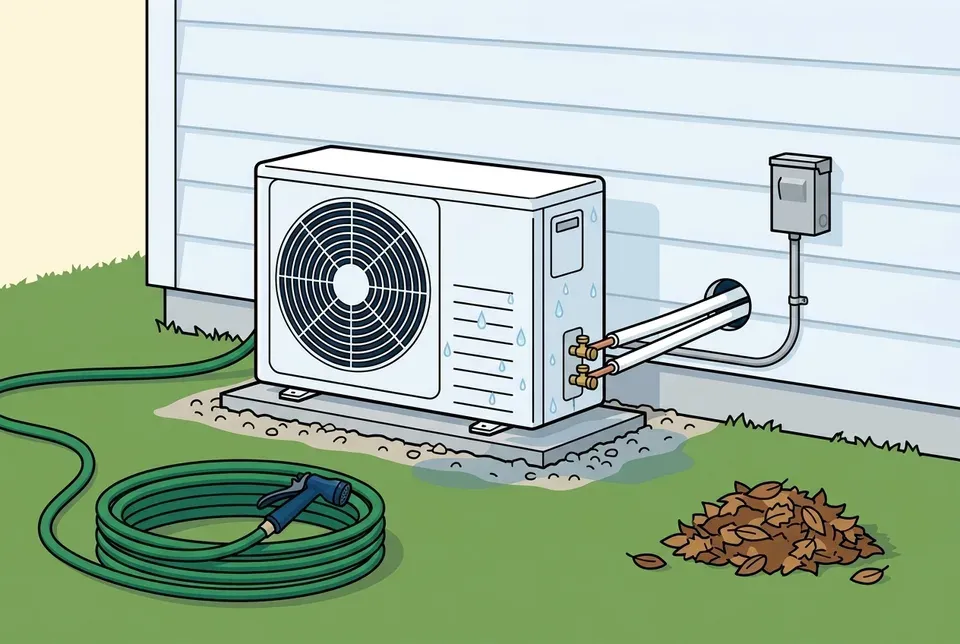
Gently: the power off, water from a regular hose, and your hands off the fins.
The fins are sharp, so the owner’s part is a rinse
Lennox’s MWHD manual makes cleaning the outside of the outdoor unit the owner’s job, at least once a year. It also cautions that the coil’s surface has sharp edges and says cleaning that surface should be done by a qualified technician. Read together, the owner’s share is a rinse and nothing more: no brush, cloth or hand on the fins, and anything water won’t move goes to the technician.
Lennox’s rinse is water and nothing harder
The manual’s three steps:
- Turn the mini split off and wait until the fan stops.
- Disconnect the power supply at its dedicated breaker.
- Spray water on the coil, the finned heat exchanger, to wash away dust and other debris.
Lennox’s maintenance guide says to use a regular hose and to avoid pressure washers and high-pressure hoses. They can damage the coil’s metal fins, the guide warns. The manual rules out acids and solvents, and sends anything inside the coil to a local dealer. Once you’ve finished, stepped away from the unit and dried your hands, switch the breaker back on.
Frost, defrost cycles and snow belong to winter operation rather than cleaning, and they get a post of their own from us, on heating with a mini split through winter.
When Does a Mini Split in a Fairfax Home Need a Professional Deep Clean?
Once a year is the interval Lennox’s MWHD manual sets for a qualified technician to clean inside the indoor and outdoor units. Go sooner when the unit gives you a reason.
Some signs move the visit up
Lennox’s maintenance guide advises reaching out to a technician as soon as possible for unusual noises or odors coming from any unit, inconsistent temperature control or increased energy consumption. Dark buildup on the blower wheel and water leaking from the indoor unit belong on that list too.
Mold that comes back points to moisture
If the wheel darkens again soon after a professional clean, look past the cleaning: EPA’s guide says that if you clean up the mold but don’t fix the water problem, the mold problem will most likely come back. Ask the technician to find the moisture source, starting with the drain line. We leave a system health report after the inspection, and you can see how our team works before you book. For a central air system, our guide to a full central AC tune-up lays out the checklist.
The Recap in Brief
- On Lennox’s MWHD schedule, owner jobs include cleaning the filter and the outside of both units; a qualified technician cleans the inside once a year.
- Before any cleaning, turn the unit off, wait until the fan stops and switch off its dedicated breaker.
- Clean the filter every two weeks or at the reminder (MWHD manual; timing may vary), or when it’s visibly dirty or the filter light comes on (ENERGY STAR).
- Treat dark buildup on the blower wheel as mold, and leave it to professionals experienced with HVAC systems.
- Protect the coil with a clean filter and any built-in wash your model has; the rest is a technician’s job.
- Check your manual and warranty terms before a spray or bag kit comes out.
- Leave the drain line to a technician; leaks or odors are the cue to book one.
- Rinse the outdoor coil with the power off and a regular hose, not a pressure washer, and keep your hands off the fins.
- Book the inside clean once a year, sooner for unusual noises or odors, inconsistent temperature control or increased energy consumption.
One last habit. While the filters are out and drying, with the power still off, shine a flashlight up into the air outlet before you slide them back in. Dark blades on the wheel mean the inside is due, whatever the calendar says.