Does Your Springfield, VA Water Heater Need an Expansion Tank?
Are you having issues with your water heater and wondering: does my water heater need an expansion tank in Springfield, VA? This article will help you figure that out. In this article we’re going to cover what an expansion tank does, how to tell whether your home’s water system is closed, where Virginia’s code stands, the warning signs, and how long a tank lasts. Let’s get into it.
The short answer: it depends on whether the water your heater expands can push back toward the street. When a one-way valve on your supply line stops it, your system is closed, the extra pressure stays inside your house, and that’s the situation Virginia’s residential code is written for. If you’re planning a water heater repair or replacement, settle this question first.
What Does an Expansion Tank Do, and Why Would a Water Heater Need One?
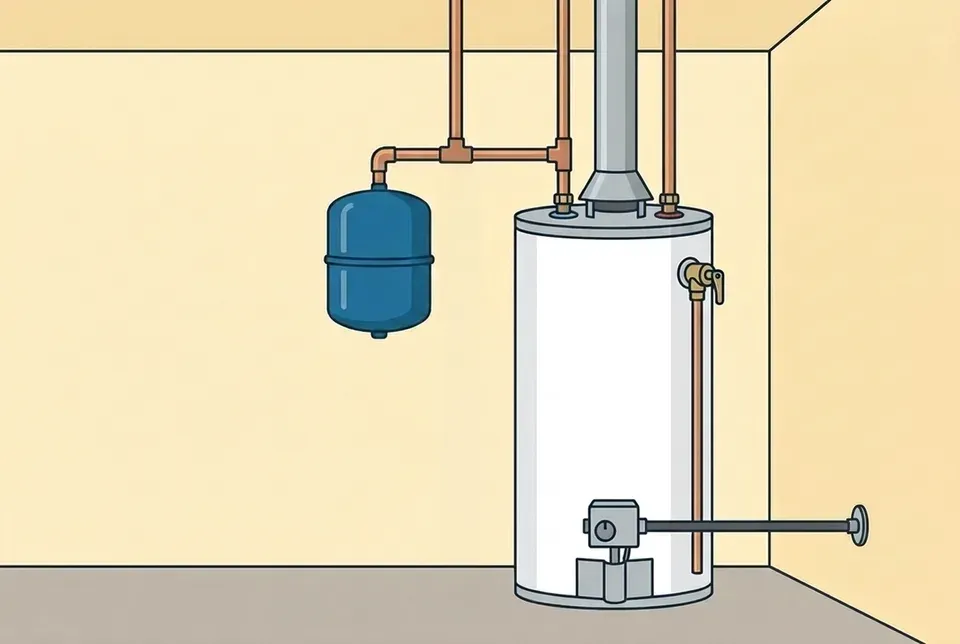
It gives the water your heater expands somewhere to go. State Water Heaters’ owner’s manual for its 2- and 5-gallon thermal expansion tanks sums up the job: water expands when it’s heated, a closed hot water system has to make room for that expansion, and its precharged diaphragm tank stores the expanded hot water, then returns it to the system when the temperature drops.
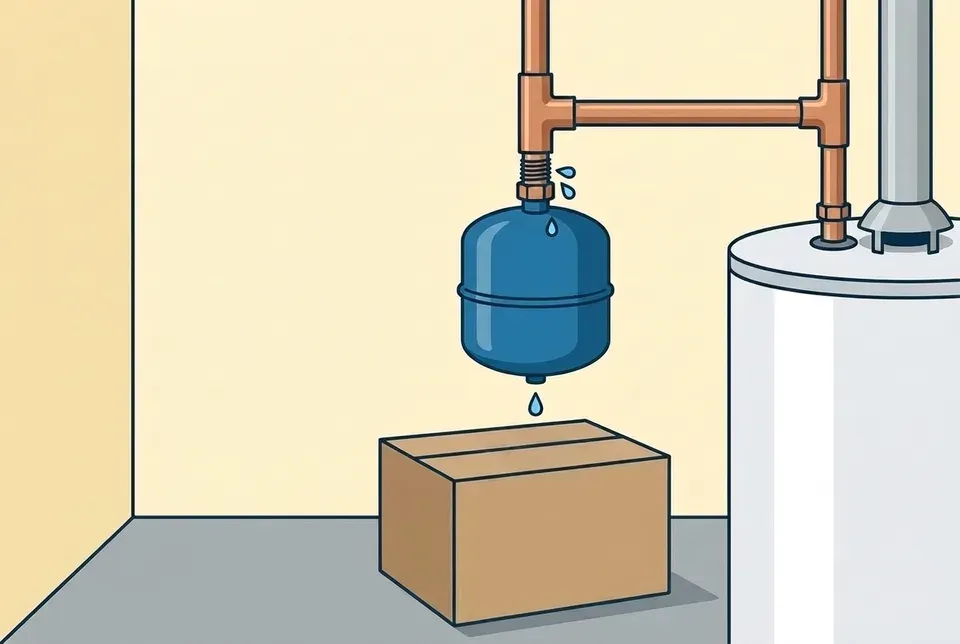
Picture a small tank, typically on the cold water line feeding the heater, with a flexible diaphragm separating your house water from a cushion of pressurized air. As the heater warms a full tank of cold water, the extra volume pushes in and squeezes that air instead of building pressure in your pipes and the heater.
Without that cushion, a closed system has no slack. The water still expands every time the burner or the elements run, and the pressure has to go somewhere; the signs sections below show where. Sizing and installing a tank is the installer’s job, so this guide sticks to whether you need one and how to tell when it’s in trouble.
How Can You Tell If a Springfield Water Heater Sits on a Closed System?
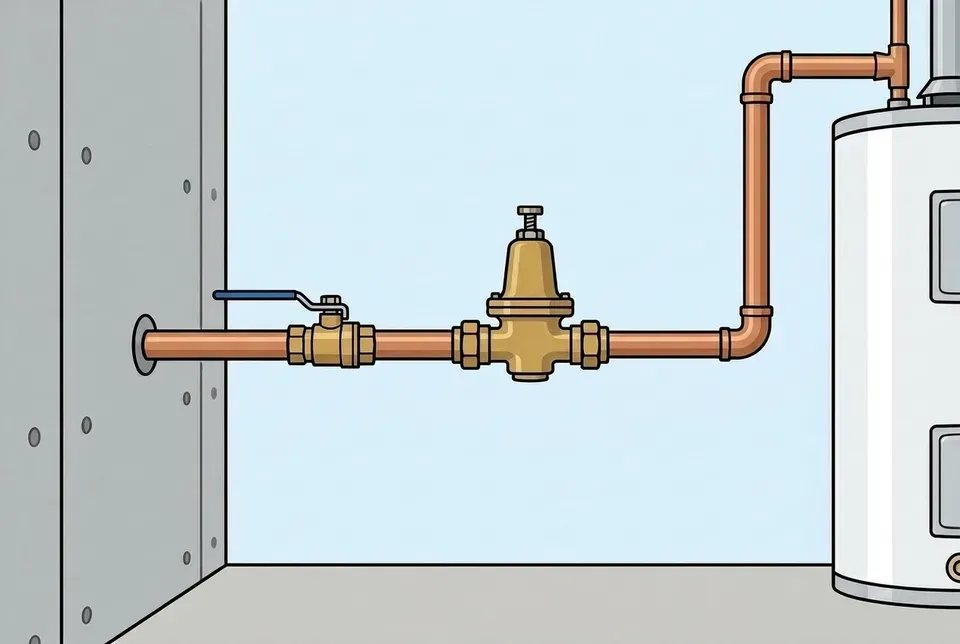
By finding one of the devices that can close a system on the water coming into your house. Bradford White’s installation manual for its atmospheric-vent gas water heaters gives, as examples of a closed water supply system, a cold-water supply with a backflow preventer, a check valve, a pressure-reducing valve or a water meter with a check valve, and it says not to run those heaters on a closed system without provisions for thermal expansion.
The main valve inside the foundation wall is where to start
Fairfax Water’s rules and regulations have the builder put the main valve inside the foundation wall, and the same rules date the Fairfax County code change that required pressure-reducing valves to December 4, 1972. In a Springfield house built after that date, a pressure-reducing valve on the incoming line is the first thing to look for, and it is one of the examples Bradford White gives of a closed system.
A check valve can also sit inside the water meter
That one you can’t see, and under the same rules the meter belongs to Springfield’s water utility, Fairfax Water. So if the pipes on your side show no such device and you’re still seeing the signs below, Fairfax Water is the one to ask about the meter.
When Does Virginia’s Code Call for an Expansion Tank in a Springfield Home?
When a one-way device closes a system with a storage water heater and expansion raises the pressure, or when expansion pushes your house pressure past a pressure-reducing valve’s setting.
Under section P2903.4 of the 2021 Virginia Residential Code, the edition Fairfax County’s Land Development Services requires on permit applications, a home needs a means of controlling the pressure thermal expansion creates wherever a backflow prevention device, check valve or other device sits on a water supply system using storage water heating equipment, such that thermal expansion causes an increase in pressure (P2903.4.2). The same section sets a second case for water services of 2 inches or smaller: wherever thermal expansion pushes the pressure on the downstream side of a pressure-reducing valve above the valve’s setting (P2903.4.1).
Where it applies, the code asks for a device for controlling pressure without naming a product, and an expansion tank is the device made for that job.
A tankless heater isn’t automatically off the hook
The backflow clause is written around storage water heating equipment, so a tankless heater can look exempt. But the pressure-reducing-valve clause doesn’t mention the type of heater, and Rinnai’s installation manual for its RE-series tankless water heaters says that if one is installed in a closed water supply system, such as one with a backflow preventer in the cold water supply line, means shall be provided to control thermal expansion. So it deserves the same question, not an assumed pass.
What Signs Say a Springfield Water Heater Has Nowhere for Expansion to Go?
Three signs, starting with the one you can see without any tools.
The relief valve lets out a little water after the heater runs
A wet discharge pipe, or water in the drain pan, after the heater has been heating is the first giveaway. It can look like a leak, but it comes and goes with the heating; the next section takes that drip apart.
The pressure climbs while nobody is using water
A pressure gauge on a hose connection or a whole-house water monitor can show this. A reading that rises above your pressure-reducing valve’s setting while the heater runs and every tap is closed, then drops when someone opens a faucet, is expansion showing up on the gauge. Some homeowners only find out this way, when a smart water monitor or a gauge that holds its peak reading shows a jump they didn’t feel at the tap.
The heater itself shows the strain
The same Bradford White manual names pressure bulges and deformities as damage from thermal expansion, and it says its warranties exclude that damage. A bulge isn’t a sign to wait on; it’s the one you’d rather not reach.
Does a Dripping Relief Valve Mean a New Water Heater Failed in Springfield?
Not necessarily, and the timing of the drip is the clue. The new heater gets the blame because it’s the newest thing in the room, and some owners blame the brand. But Bradford White’s manual says that when the relief valve on its heaters discharges periodically, this may be due to thermal expansion in a closed water supply system. A drip that shows up after the heater has been heating fits that description.
The same State Water Heaters manual says a relief valve that weeps or discharges periodically may be due to one or more of three conditions: a valve that’s worn or clogged with lime or calcium, inlet water pressure above the 60 psi it recommends, or an expansion tank whose air charge isn’t set to match the incoming water pressure. The last two sit in the house’s water system, not in the heater.
A replacement doesn’t change the water system. A house that was closed before is still closed, and an expansion tank left from the old install may no longer match the house pressure, the third condition on that list.
The warning about what not to do to a relief valve, dripping or not, is in our guide to an Arlington home with no hot water.
What Tells You an Expansion Tank Has Failed in a Springfield Basement?
The same signs as having no tank at all. A tank that has lost its air charge has nothing left to squeeze, so the expansion goes straight back to the relief valve and the pipes.
The old symptoms come back
If the relief valve went quiet after a tank went in and has started weeping again, or the pressure readings described above are back, the tank is the place to look. A charge that has drifted from the house pressure is one of the three conditions above, and a technician can measure it.
Water on or under the tank deserves a closer look
The same State Water Heaters manual warns that the tank, its pipes and its connections may leak in time, and it says to put the tank where a leak from it or its connections won’t damage the area around it or the floors below. In a Springfield basement, what sits under your tank matters: a drip at the fitting or a wet spot below calls for a closer look before a slow leak ruins it.
When Should an Expansion Tank’s Air Charge Be Rechecked in Springfield?
Whenever the pressure it was matched to changes. The same State Water Heaters manual says the air charge must be adjusted to match the incoming water pressure, and its check is done with the main water supply off and the pressure in the lines relieved. In a Springfield house with a pressure-reducing valve on the main, that valve sets the number the tank should match. That gives you three natural moments:
- A new or readjusted pressure-reducing valve. Change the incoming pressure and the old charge no longer matches it.
- A water heater replacement. The water is already off for the swap, and a tank left on the line from the old install may not match the house pressure anymore.
- A relief valve that starts weeping again. A mismatched charge is one of the three conditions in the dripping-valve section.
It’s a hands-on job with the water off, best done by whoever handles your water heater work.
How Long Does an Expansion Tank Last on a Springfield Water Heater?
Years, if it’s set up right, but not forever. The same State Water Heaters manual says a properly installed and maintained tank should give years of trouble-free service, and it also warns that the tank, as all tanks, will eventually leak.
Neither line is a number of years, and we’d rather not invent one. What matters is whether the tank still does its job, which the signs and checks above will tell you.
The water heater’s own lifespan, and the anode rod’s part in it, is a separate subject that our Stafford guide to water heater lifespan takes on. Water heaters are part of what our family-owned company covers in Springfield and across Northern Virginia.
A Quick Recap
- An expansion tank gives expanding water a cushion of air to push against instead of your pipes.
- Bradford White’s manual for its atmospheric-vent gas water heaters gives a backflow preventer, check valve, pressure-reducing valve or a meter with a check valve on the cold supply as examples of a closed system.
- Under the 2021 Virginia Residential Code, expansion control applies where a one-way device on a system with a storage water heater lets expansion raise the pressure or where expansion pushes past a pressure-reducing valve’s setting on a service of 2 inches or smaller. A tankless heater isn’t automatically exempt.
- A relief valve that weeps after the heater runs can come from thermal expansion in a closed system, a worn or clogged valve, inlet pressure above the recommended level or a mismatched tank charge.
- A failed tank brings those symptoms back, and water on or under it deserves a look.
- The air charge is due for a recheck whenever the pressure it was matched to changes, with three natural moments: a new or readjusted pressure-reducing valve, a water heater replacement and a relief valve that starts weeping again.
- A properly installed and maintained tank should give years of service, but it will eventually leak.
If a water heater replacement is on your calendar, two questions settle most of this before the old tank goes out the door: is this house on a closed system, and will the expansion tank’s charge be set to the incoming pressure?