How Long a Water Heater Lasts in Stafford
Most answers to this question stop at a number, and the number is real enough: a conventional tank lasts roughly eight to twelve years, and a tankless unit considerably longer. What the number leaves out is that it describes an average, not your water heater. Two identical tanks installed on the same street in the same year can fail five years apart, and the difference usually comes down to water chemistry and to a single sacrificial part that almost nobody inspects. Our family has been installing and servicing these systems across Northern Virginia since 1956, and when we talk with a homeowner about water heater replacement in Stafford, the first thing worth establishing is not the brand. It is how old the unit actually is and what the water has been doing to it.
How Long Does a Stafford Water Heater Last, Tank or Tankless?
For a standard storage tank, eight to twelve years is the consensus across manufacturers, home inspectors and everyone who works on them. Some sources stretch the low end to six.
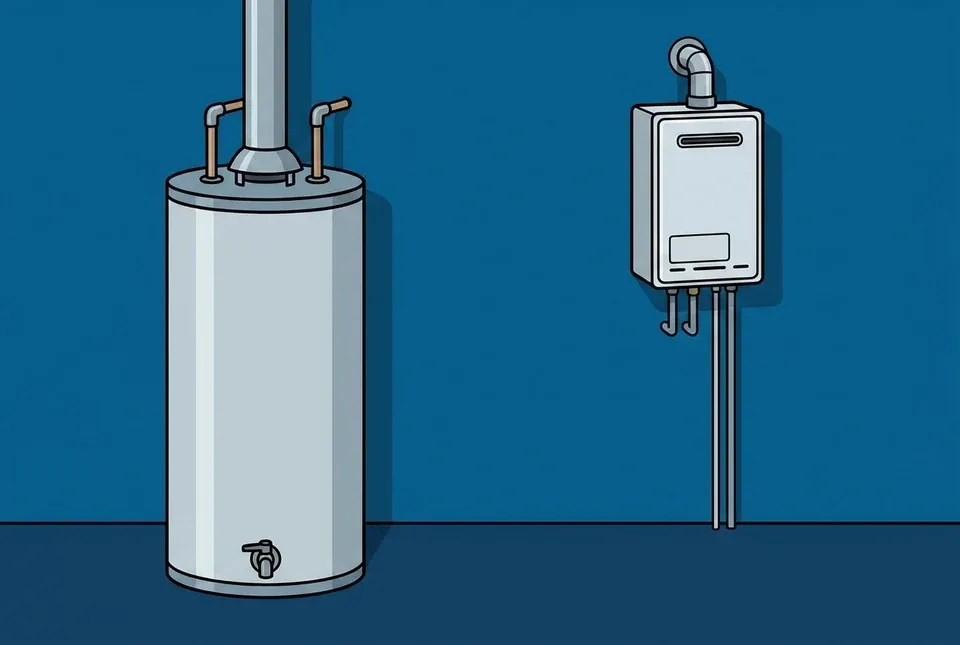
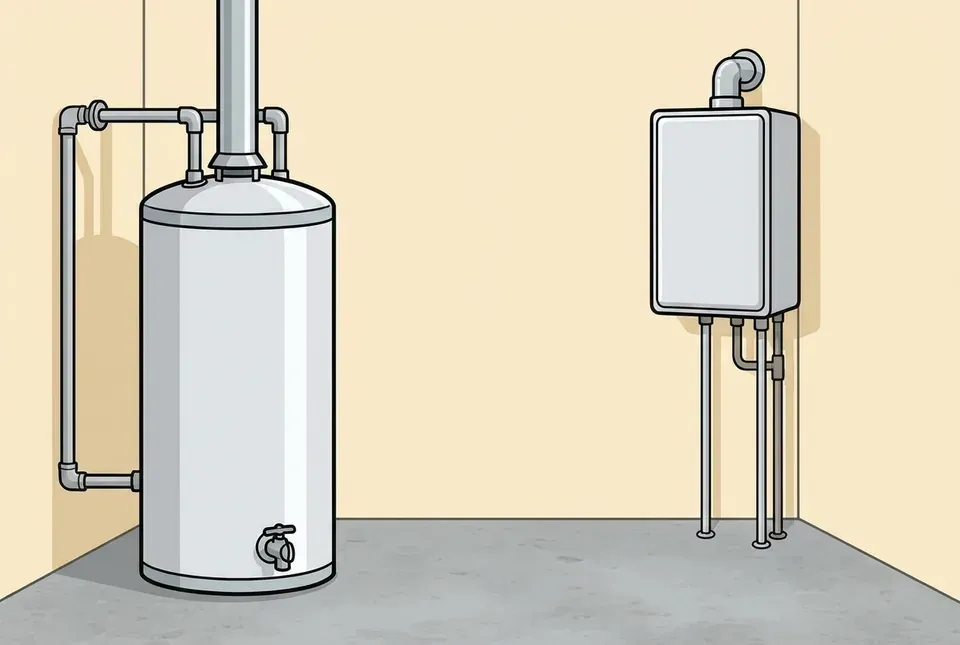
A tankless unit lasts substantially longer. ENERGY STAR puts the life expectancy of demand water heaters at twenty years, and This Old House puts the range at fifteen to twenty.
The reason for the gap is structural rather than a matter of build quality. A storage tank keeps forty or fifty gallons of hot water sitting against steel around the clock, so corrosion and sediment work on it continuously whether anyone is using hot water or not. A tankless system heats water only as it flows, and holds none in between, which removes the standing-water corrosion problem almost entirely.
One point of confusion worth clearing up, because it comes up constantly. “How long should a forty gallon water heater last” gets asked by two different people. If you mean years of service, capacity has no real bearing on it, and a forty gallon tank lives about as long as a fifty. If you mean how long the hot water lasts during a shower, that is a capacity and recovery question, not a lifespan one.
How Do You Find the Age of the Water Heater in a Stafford Home?
Almost nobody knows when their water heater was installed, particularly if they bought the house with it already there. The unit itself knows.
Look for the rating plate, a printed or foil label on the upper third of the tank’s side. On a tankless unit it is usually on the front panel or behind the cover. Some plates print a manufacture date outright, which ends the exercise. Most do not, and instead encode it in the serial number.
The encoding is brand specific, and this is where confident-sounding advice tends to go wrong. Bradford White uses a two-letter prefix, the first letter for the year on a repeating twenty year cycle and the second for the month, skipping the letter I. A.O. Smith and the American brand it owns lead with two digits for the year and two for the week. Rheem encodes the month and year near the start of the serial, but the exact digit positions have changed across production eras, and sources disagree about the current scheme, so for a Rheem we would check the lookup tool on the manufacturer’s own site rather than trust a chart.
If the plate is gone or unreadable, which happens on units that have lived in damp basements, a technician can usually date it from the burner assembly and fittings. Failing that, a home’s settlement paperwork or a permit record often gives you the year.
What Are the Signs a Stafford Water Heater Is Near the End of Its Life?
Water heaters rarely fail without warning. They just warn quietly.
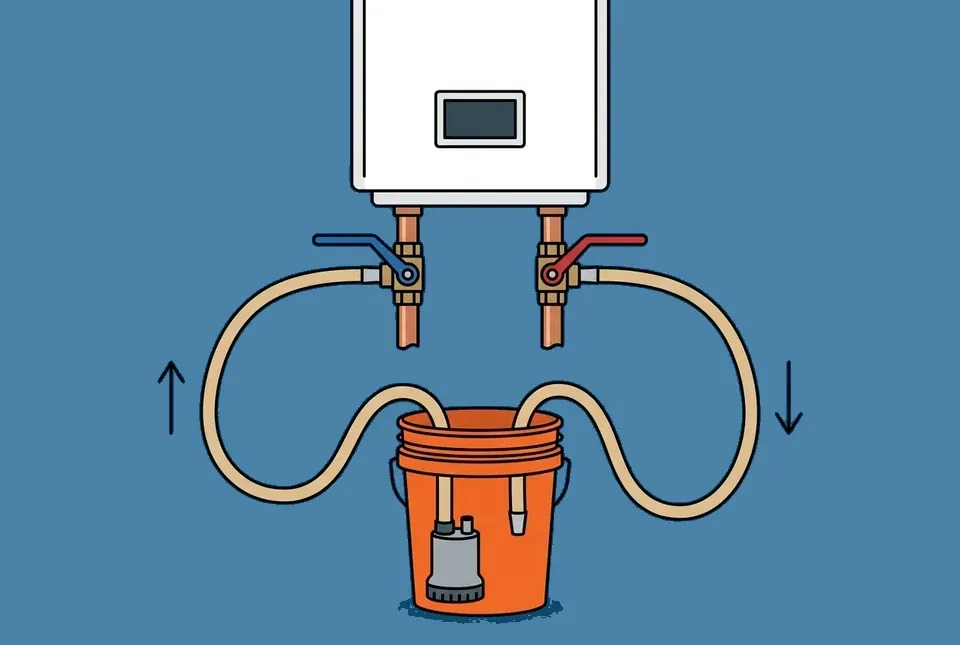
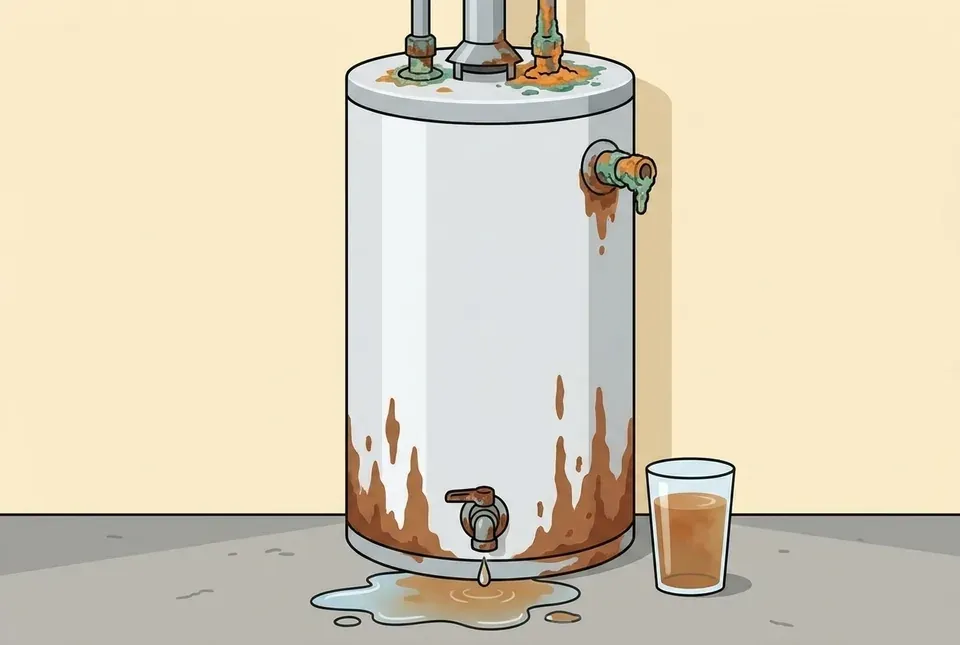
Watch for rusty or discolored hot water when the cold runs clear, a rumbling or popping sound as the burner works through a layer of sediment, moisture or rust staining around the base, and hot water that runs short earlier than it used to. On a tankless unit the equivalent signal is error codes that start appearing more often.
The most telling sign is not any single symptom but the pattern. A unit in its first decade that needs one part is having a bad day. A unit past ten years that has needed attention twice in a season is telling you something about its remaining runway.
If your hot water has stopped entirely rather than degraded gradually, that is a different problem with a different set of checks, and we walk through why a home suddenly has no hot water separately.
Do Rusty Water and Rumbling Always Mean a Stafford Tank Needs Replacing?
No, and we would rather say so than let two fixable symptoms sell a replacement.
Rumbling and popping is the sound of water boiling underneath a bed of sediment on the tank floor. That is a flush, not a funeral. If draining the tank until it runs clear quiets it down, the tank was dirty rather than dying. If the noise returns quickly after a proper flush, or never stops, then the deposits have hardened and the picture changes.
Rusty hot water is the more interesting one, because it has two possible causes with very different implications. It can mean the anode rod has been consumed and is no longer protecting the steel, in which case replacing the rod addresses it. Or it can mean the tank lining itself has failed and the steel is corroding, in which case nothing repairs it. Telling those apart is worth doing before anyone quotes you a new unit, and it is a genuinely quick check.
The honest caveat: on an older tank, both are often true at once. A rod that ran out years ago is usually why the lining is going now.
Why Does Hard Water From Stafford Wells Shorten a Tank’s Lifespan?
This deserves a more careful answer than it usually gets, because the easy version of it is wrong.
We are not going to tell you Stafford has the region’s hardest water, because that is not established. Stafford County Utilities draws the public supply from Smith Lake and Lake Mooney and publishes no hardness figure at all, and no source puts Stafford’s water above its neighbors’. Even next door in Prince William County, a Virginia Cooperative Extension program that tested around five hundred private wells found only seventeen percent flagged for hard water, with sodium and bacteria more common. Well water varies street by street.
What is genuinely different about Stafford is how many households are on wells at all. The county’s own Groundwater Resource Protection Plan estimated that somewhere between roughly a quarter and half of residents historically relied on private wells, depending on the counting method, well above the pattern in the region’s more urbanized jurisdictions. That same county document notes elevated turbidity, iron and a basic, somewhat corrosive pH in the deep Middle Potomac production aquifer, though it describes household wells as shallower Aquia or Piedmont fracture wells.
Hardness is still the mechanism that matters. USGS explains that when hard water is heated, calcium carbonate forms solid deposits that reduce the life of equipment and lower efficiency. Iron and corrosivity add their own attack on the steel. And because the EPA notes that private wells are not regulated under the Safe Drinking Water Act, nobody is monitoring any of this on your behalf. If you are on a well, testing your water tells you what your tank is up against, and whole home water treatment is the lever that changes it.
When Does the Anode Rod Decide How Long a Stafford Tank Lasts?
Here is the part that actually determines the number, and the part almost nobody looks at.
Inside every steel tank hangs a long rod of magnesium or aluminum, and its entire job is to corrode so the tank does not. Electrochemically it is more attractive to corrosion than the steel around it, so it gets eaten first. It is a consumable, like brake pads, and it is meant to be replaced.
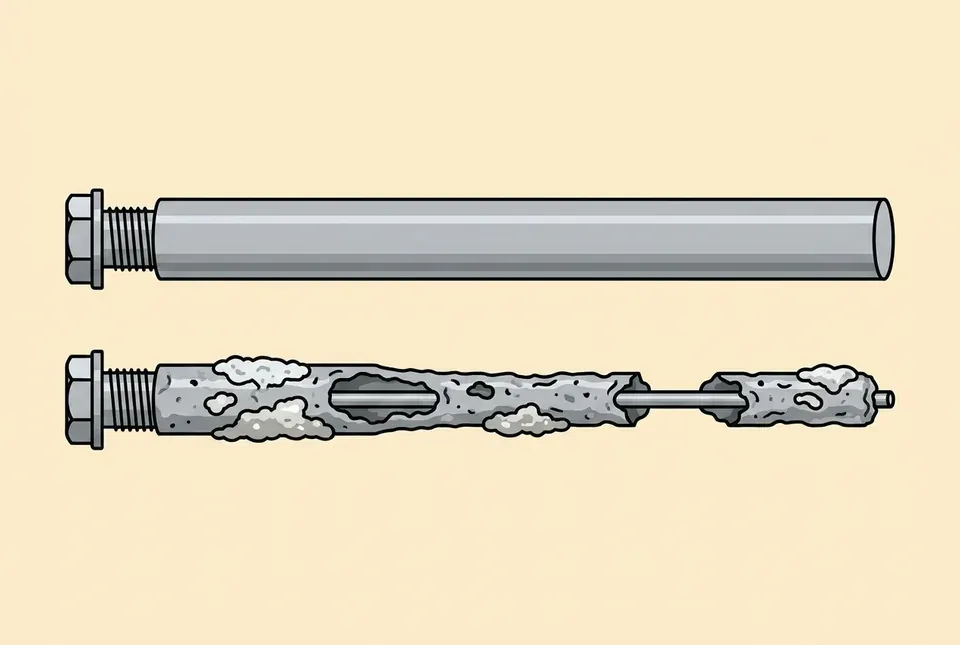
The trouble is that once it is fully consumed, nothing announces it. The tank simply begins corroding from the inside with no protection, and the countdown to a leak starts. Inspect it every few years and plan on replacement somewhere in the three to five year range, sooner where the water is aggressive. Penn State Extension notes that scale builds up on water heaters and decreases their useful life, and a rod fighting mineral-heavy well water is spent faster than one in treated municipal supply.
Two symptoms point straight at it. Rusty hot water, as above. And a rotten egg smell in the hot water only, which comes from the rod reacting with sulfur bacteria. That smell is worth knowing because it is common in well systems and it is one of the few times the rod tells you anything at all.
It is fair to note that not everyone in the trade thinks proactive rod replacement is worth it on every unit, particularly where a seized fitting risks damaging a tank that is working fine. We think it is worth inspecting. Whether to replace is a judgment call on what you find.
When Should You Replace a Stafford Water Heater Instead of Repairing It?
Set cost aside for a moment, because the age and failure mode usually answer this before money enters the conversation.
Repair is generally the right call when the unit is comfortably inside its expected life, the failure is one replaceable component such as a thermostat, element, thermocouple or valve, and the tank itself shows no corrosion or seepage. Those are ordinary maintenance events on a healthy appliance.
Replacement moves ahead when the tank is leaking from its body rather than a fitting, since that cannot be repaired at any price, or when a unit past its expected life has started needing attention repeatedly. Two service calls in a year on a twelve year old tank is a pattern, not coincidence.
One thing worth checking before you decide either way is what your existing coverage says, because parts and labor are frequently covered on different terms and for different lengths of time. We explain how a parts warranty differs from a labor warranty and why the fine print decides more than people expect.
Should You Replace a Stafford Tank Before It Fails?
This is the question behind the question, and it is different from the one above. That one asks what to do when something has broken. This one asks whether to act while nothing has.
The argument for planning ahead is not that a tank is about to fail. It is that tanks fail on their own schedule, and a storage tank that lets go releases its full volume onto whatever is underneath it. If yours sits in a finished basement, above living space, or near anything that would be expensive to dry out, the consequences of being surprised are worse than the inconvenience of choosing your own timing.
The argument against replacing early is just as real. A well maintained tank with a healthy anode rod and clean water may have years left that a calendar cannot see.
Which is why the anode rod matters more than the birthday. Pull it, look at it, and you have replaced a guess with evidence. A rod with life left buys you confidence to wait. A rod consumed to its core tells you the tank has been unprotected for a while, and that the clock is further along than the install date suggests.
If you would rather have someone look at yours and tell you honestly where it stands, we can do that. Same day service, a technician who will show you the rod they pulled, and no interest in selling you a tank you do not need yet. That is why families across Northern Virginia have trusted us for three generations.