Why There Is No Hot Water in Your Arlington Home
A water heater that has stopped making hot water is usually telling you one of about six things. It has lost power or fuel, the pilot or igniter is out, a heating element has failed, sediment has crowded out the water you are paying to heat, the thermostat has drifted, or the tank is leaking away what it heats. Which of those six is even possible depends on something most articles bury near the bottom: whether you own a gas tank, an electric tank, or a tankless unit. Those are three different machines that fail in three different ways. Our family has looked after Northern Virginia homes since 1956, and a call for water heater repair in Arlington usually narrows in the first ten minutes, once we know which of the three we are standing in front of.
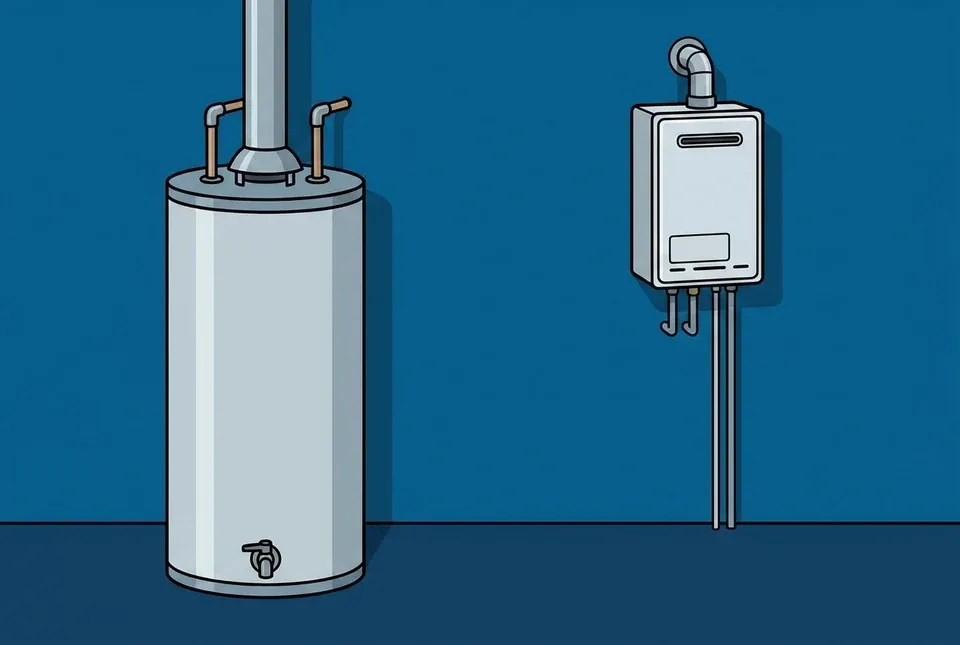
How Do You Tell If an Arlington Water Heater Is Gas, Electric, or Tankless?
Start here, before you touch anything. Every step below depends on the answer.
A gas tank is a tall cylinder with a control box mounted on the front near the floor, usually with a dial on it, and a metal flue pipe leaving the top of the tank toward a chimney or a vent. That flue is the giveaway. Anything burning fuel indoors has to send its exhaust somewhere.
An electric tank is the same cylinder with neither of those. No dial on the front, no flue out the top. Instead you will find one or two small rectangular access panels screwed to the side of the jacket, and an armored electrical cable entering near the top.
A tankless unit is not a cylinder at all. It is a rectangular box mounted on the wall with slim pipes running down from underneath. Most have a small display, and when something is wrong it shows a code rather than going quiet. Write that code down before anything else, because it is the quickest route to a diagnosis you have. Our tankless water heater installation and service starts from the same code, and it usually tells us what to bring.
One consequence worth knowing: an electric tank takes roughly twice as long as a comparable gas tank to reheat once fully drained. If your hot water returned on its own after a couple of hours, that is not a repair. That is recovery time.
Should You Check the Breaker When an Arlington Home Loses Hot Water?
Yes, and on an electric tank it is the first thing to check. It is also worth a glance on a gas unit, because many modern gas heaters still need power for their controls and igniter.
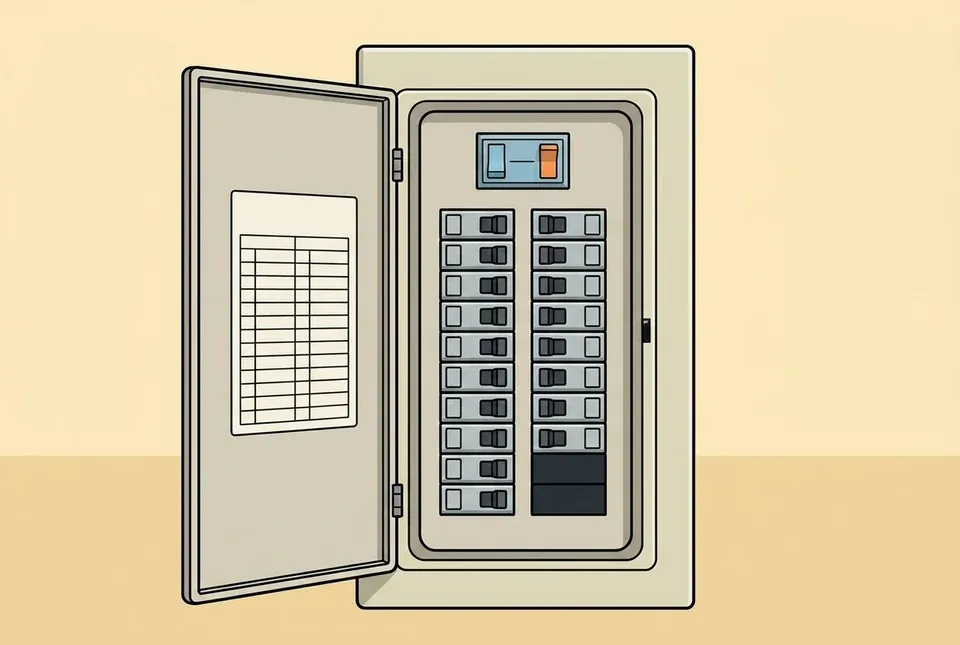
At the panel, look for a double breaker, since an electric water heater draws 240 volts and occupies two slots. A tripped breaker does not always look obviously off. It often sits in a middle position, neither fully on nor fully off. Push it firmly all the way to off, then back to on.
If it trips again immediately, stop there. That is the breaker doing its job, and something downstream is drawing current it should not.
One more reset is worth knowing about. Behind the upper access panel on an electric tank sits a small red button, the high-limit reset, which trips when the water gets too hot. Turn the breaker off before you remove that panel. If pushing it restores hot water, note the date. A reset you find yourself pushing again a month later is a symptom, not a fix.
How Do You Relight a Gas Water Heater Pilot in an Arlington Home?
Before any of this, one rule that overrides everything else in this article.
If you smell gas, do not relight anything. Natural gas is odorized to smell like rotten eggs precisely so you notice it. Leave the building first, then call 911 and the emergency line for Washington Gas, which serves Arlington. Do not flip a light switch on your way out, do not use a phone inside, and do not strike a match to see better. The American Gas Association is blunt about what not to do when you suspect a leak: nothing that could make a spark, including devices you would never think of as an ignition source.
With no gas smell present, check the label before you look for a pilot at all. Many newer gas water heaters have no standing pilot. They use a spark igniter or a glow plug, and there is nothing for you to light.
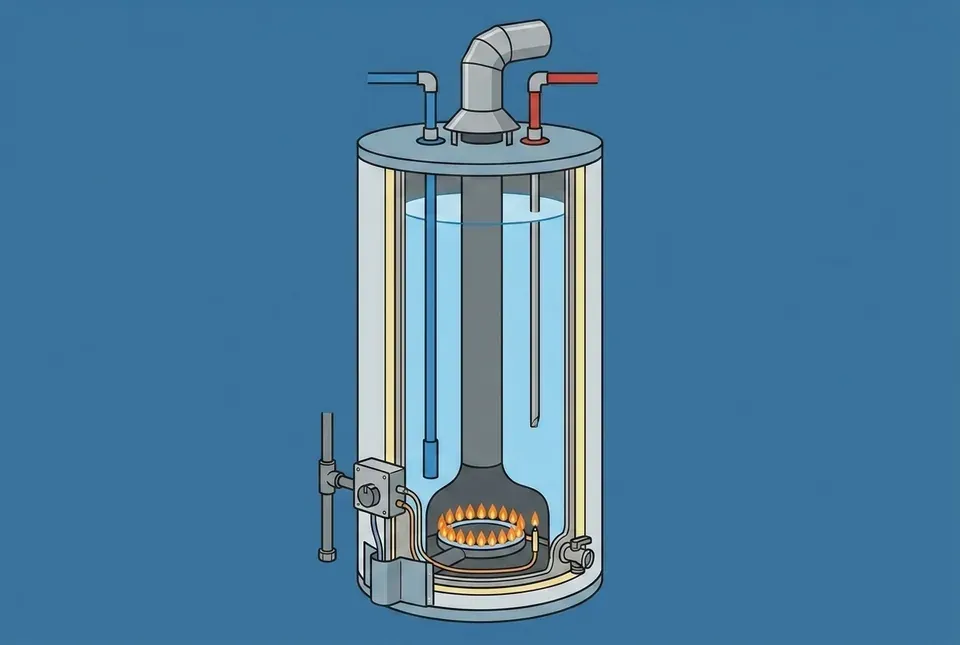
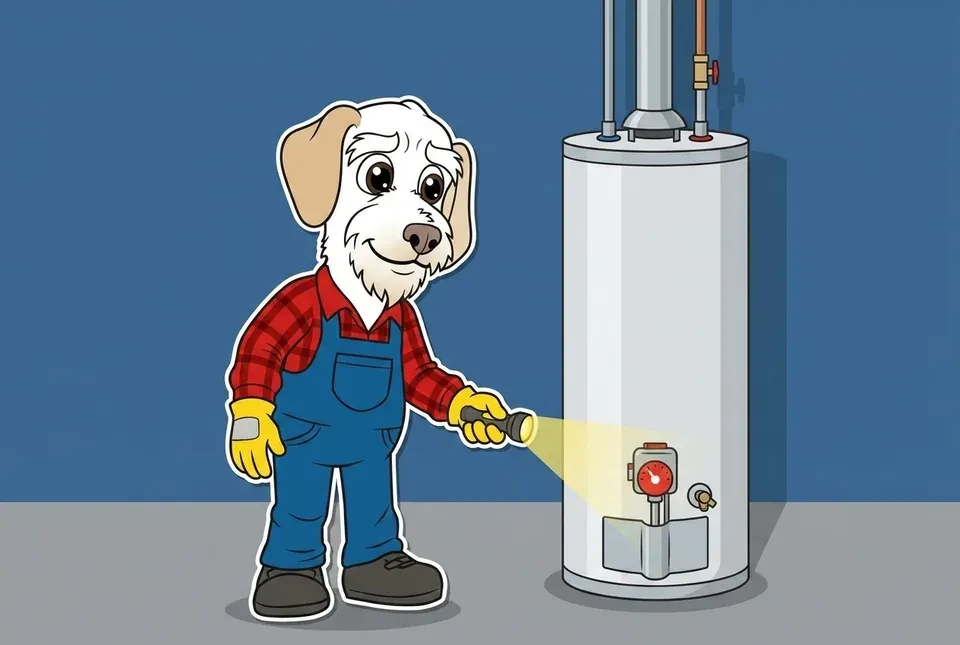
If yours does have a pilot, the manufacturer’s sequence is printed on the tank and it is the only sequence to follow. Broadly it means turning the gas control off, waiting several minutes for gas to clear, turning it to the pilot setting, and holding the knob down while the pilot ignites and for a period afterward, so the thermocouple warms up and proves the flame.
Two or three honest attempts is the limit. A pilot that lights and then dies once you release the knob is usually a thermocouple or a thermal cutoff, and telling those apart is a service call rather than a fourth try. The same flame-proving mechanism appears on heating equipment, which is why a furnace burner that will not stay lit fails in such a familiar way.
How Do You Check an Arlington Water Heater’s Element for Failure?
Turn the breaker off first. Every time, before the panel comes off.
With the power off, what you can safely do is look. Pull the access panel and the insulation behind it and check for scorch marks around the element flange, corrosion, or water where there should be none. Water in that compartment means the gasket is leaking and the panel should go straight back on.
What we will not tell you to do is test it. Plenty of videos walk you through checking continuity or current draw on a 240 volt element, sometimes with the power live. That is genuinely dangerous, and it is where this stops being a homeowner job and becomes ours.
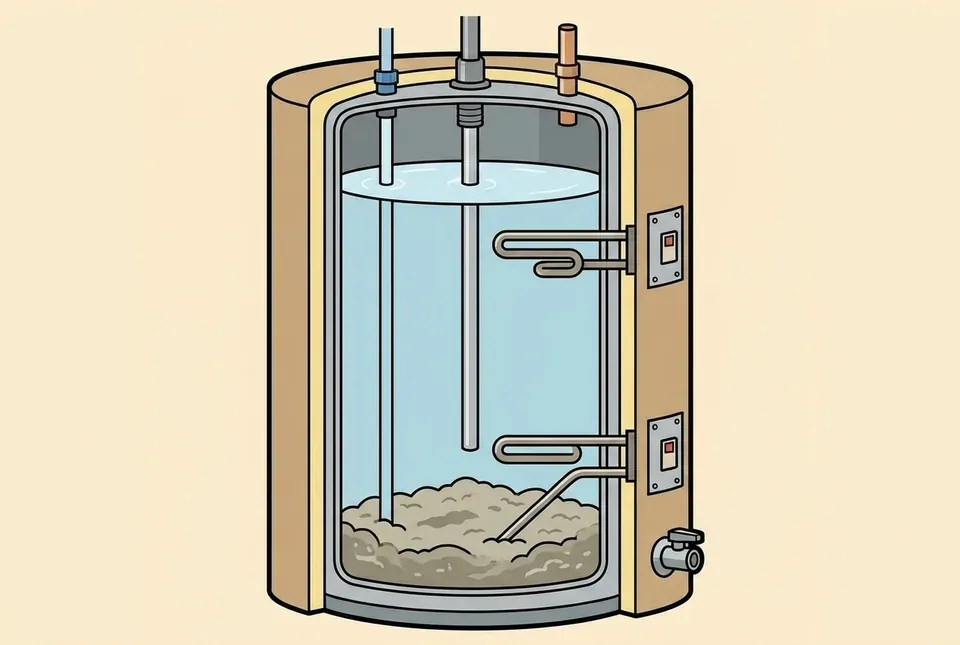
The symptom pattern is more useful than a meter anyway. Most electric tanks have two elements. When the upper one fails you get little or no hot water. When the lower one fails you get a modest amount that disappears far sooner than it used to, because only the top of the tank is heated.
While that panel is open you can also see the thermostat setting. The Consumer Product Safety Commission urges households to lower water heaters to 120 degrees Fahrenheit, noting that most adults suffer third degree burns after two seconds in 150 degree water.
How Do You Fix Lukewarm Water From Sediment in an Arlington Tank?
Water that is warm but never truly hot, often with a rumbling or popping sound from the tank, usually means sediment.
Minerals settle out of the water and collect on the bottom of the tank. On a gas unit that layer sits between the burner and the water, so the burner runs longer and heats less. On an electric unit it can build high enough to bury the lower element completely.
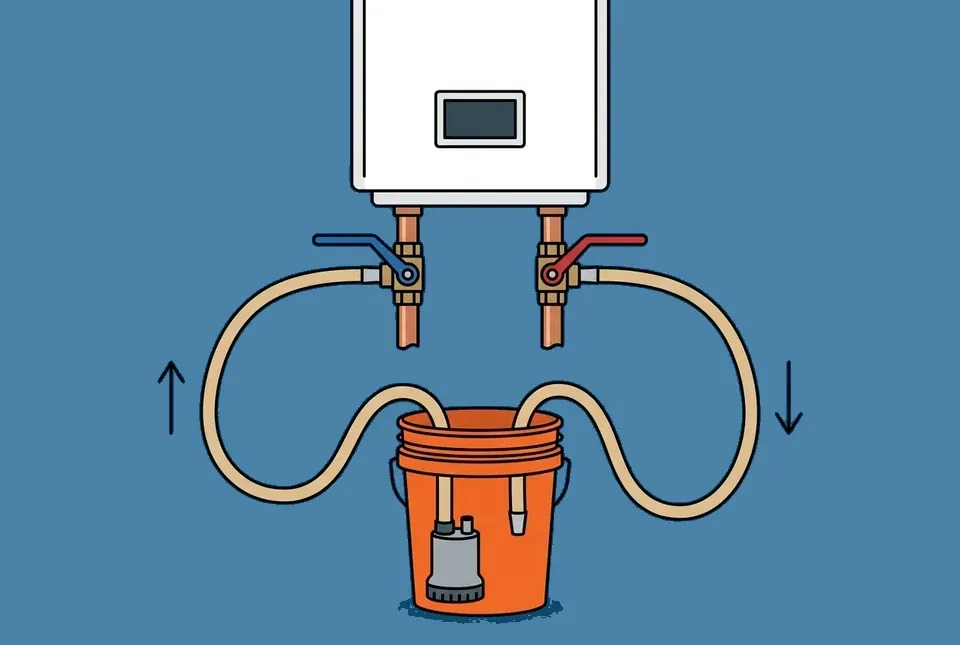
Flushing is the fix, and it is homeowner work. Shut off the power or the gas, connect a hose to the drain valve at the base, run it to a drain or outside, and let it flow until what comes out is clear rather than cloudy or gritty. University of Maryland Extension recommends draining a small amount of water from the bottom of the tank once or twice a year to remove mineral deposits, and notes this matters most in hard water areas.
Northern Virginia water leaves plenty behind, which is why we often pair this with whole home water treatment. If a full flush does not restore your hot water, the deposits have hardened into a layer that will not rinse away.
What Should You Check When an Arlington Tank Runs Out of Hot Water Fast?
This is a different complaint from no hot water at all, and it points somewhere else.
A standard residential tank should give you roughly half an hour of continuous hot water before it needs to catch up. If yours quits well short of that and it used to manage fine, the tank has effectively gotten smaller. Sediment is the usual reason, because every inch of buildup on the bottom is volume that no longer holds hot water.
On an electric unit, a single failed lower element produces exactly this complaint, since the upper element heats only the top of the tank. Also worth checking: whether the thermostat has been turned down, and whether household demand has changed. Back to back showers and a dishwasher will empty a tank that was perfectly adequate last year, and no repair changes arithmetic.
How Does a Leaking Tank Leave an Arlington Home Without Hot Water?
It is easy to treat a leak as a floor problem rather than a hot water problem. They are the same problem.
Water pooling around the base means heated water is escaping, and the tank refills automatically with cold water to replace it. The burner or elements then spend all day reheating a tank that keeps getting diluted, so what reaches your shower is lukewarm at best.
Where the water comes from matters. A drip from the temperature and pressure relief valve, the fitting with a lever near the top or side, means that valve is either doing its job or has failed. Never cap it, plug it, or screw anything onto its outlet. University of Maryland Extension describes the relief valve as a critical safety feature and recommends testing it annually. Water at a threaded fitting is often just a fitting. Water seeping from the body of the tank is not something that gets patched.
How Long Can You Put Off a Water Heater Repair in an Arlington Home?
Nobody else writing about this seems willing to answer it, so here is ours.
If you own the home, this is your call, and the honest answer is that no hot water is an inconvenience while a leak is a deadline. A tank that is not leaking can wait for a weekday appointment. One putting water on a finished floor cannot, because the damage compounds every hour and is rarely covered as neatly as people expect.
If you rent in Virginia, start with the statute, and note that we fix water heaters rather than practice law, so treat what follows as a signpost.
Section 55.1-1220 of the Code of Virginia requires a landlord to supply running water and “reasonable amounts of hot water at all times.” The duty carries an exception worth knowing: it does not apply where the unit is built so that heat, air conditioning or hot water is generated by an installation within the tenant’s exclusive control, or supplied by a direct public utility connection. That is narrower than it sounds, because the same section separately requires a landlord to keep any appliance he supplied in good and safe working order. The statute names no number of days, which is not the same as a landlord having no time at all.
Legal Services of Northern Virginia, which serves Arlington renters directly, lays out what to do when living conditions are not maintained: put the request in writing, allow a reasonable time, and if nothing happens, file a Tenant’s Assertion in General District Court, where rent is paid into escrow until a judge sorts it out. Their warning matters as much as the remedy. “Do not stop paying rent until your landlord makes the repairs. This is illegal in Virginia, and your landlord may evict you for it.”
When Should an Arlington Homeowner Stop Troubleshooting a Water Heater?
Four signals, and the first three are not judgment calls.
Any smell of gas means you leave and call from outside, before anything else. Water pooling around the base means the checking is over. Anything electrical that looks wrong, meaning scorch marks, a burning smell, or a breaker that refuses to stay on, means the panel goes back on and the power stays off.
The fourth is quieter and gets ignored most. If you keep having to relight the pilot or push the reset button, stop resetting it. Those buttons exist to interrupt a fault, so needing them repeatedly means the fault is still there and you are clearing the alarm rather than the cause. Once or twice is troubleshooting. Weekly is a diagnosis waiting to happen.
If you are wondering whether age is the real answer, that is a fair question and a separate one. We cover how long a water heater lasts and when replacing beats repairing on its own.
If you would rather not spend a Saturday on this, we can come out today. Same day service, a real person on the phone, and a technician who will show you what they found. That is why families across Northern Virginia have stayed with us for three generations.