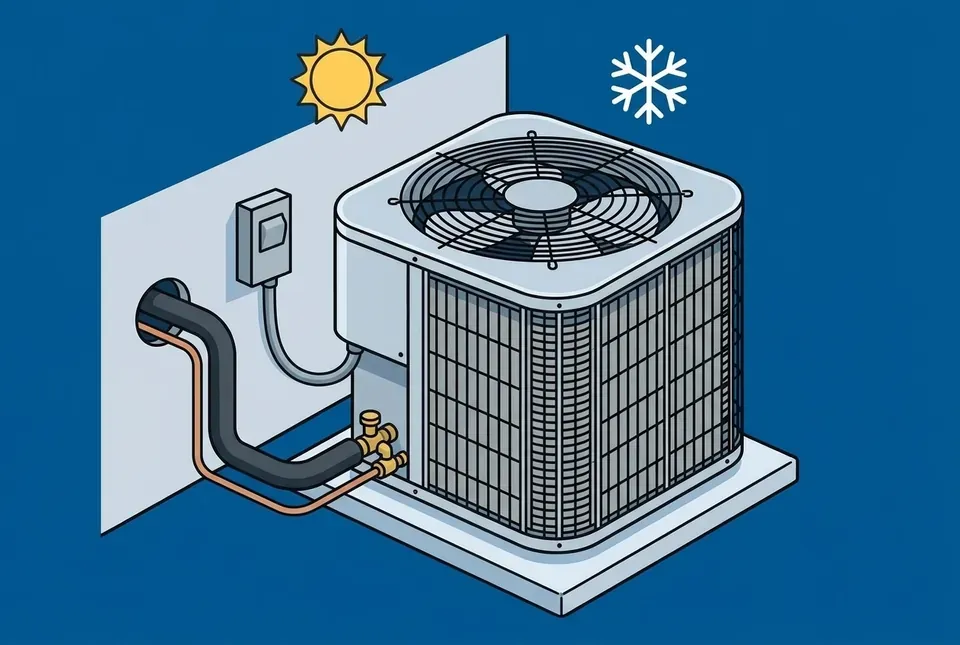
Should Stafford, VA Homeowners Cover the AC Unit for Winter?
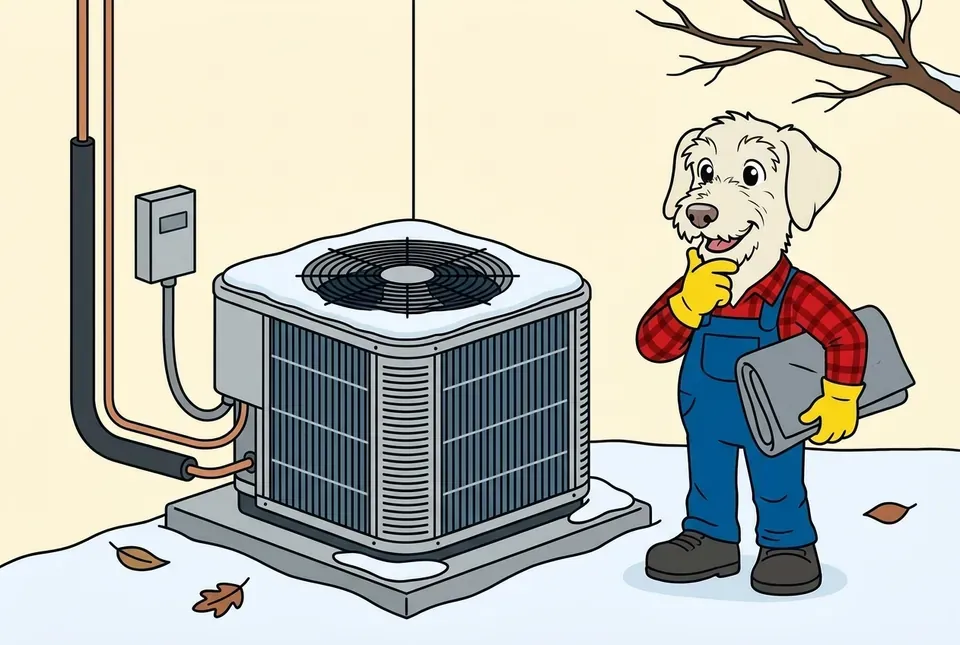
Are you having issues with a fall chore you aren’t sure is worth doing: should you cover your AC unit in winter in Stafford, VA? This article will help you figure that out. In this article we’re going to cover full wraps, top-only covers, how to spot a heat pump, and the fall care that works better. Let’s get into it.
For most outdoor units, the short answer is no. Lennox’s guide to covering an AC unit in winter says modern air conditioners are designed to live and operate outdoors and typically don’t require winterization, and that covering one completely, especially with plastic or vinyl, can do more harm than good. If your outdoor unit is a heat pump, the answer is a firmer no, for reasons we get to below. What protects the unit is fall care, plus professional AC maintenance if you’d like a technician’s look before winter.
Does an AC Unit Need a Winter Cover in Stafford?
Not to get through the weather. Whether a unit needs any protection depends on where it sits and what is likely to land on it over the winter.
What lands on the unit matters more than the cold
In a Stafford yard, the hazards are things that fall or pile up: leaves and branches, ice off a roof edge, and snow. The other factor is the kind of unit: a straight air conditioner sits idle once the heat comes on, so a top-only cover is at least an option, while a heat pump is heating your home.
When Does a Full Wrap Trap Moisture Inside a Stafford Condenser?
From the day it goes on, more or less. Mitsubishi Electric’s guide to preparing a condenser for winter explains why: wrapping a condenser in plastic or any other material does not make it airtight, moisture will always seep in from underneath, and the wrap impedes evaporation and promotes rust and other structural damage.
A wrap holds the damp against the unit all winter
Lennox’s cover guide lists what that trapped moisture can do: lead to rust and corrosion on the unit’s components and finish, damage electronic components with the humidity that comes with it, invite mold and mildew where air can’t move, and even leave it colder under the cover than outside, possibly freezing the coils.
Why Do Mice Find a Covered AC Unit So Inviting in Stafford?
Because a cover turns the cabinet into shelter just as mice go looking for it. Lennox’s cover guide notes that covered AC units can attract rodents and other small animals trying to escape the cold, and the University of California’s Statewide IPM Program says house mice that live outdoors frequently move into homes in the fall as nighttime temperatures get colder.
Mice nest in sheltered spots and gnaw on wires
The UC program also says house mice build their nests in sheltered locations and can damage structures and vehicles by gnawing on electrical wires, and an outdoor unit keeps its wiring inside the cabinet. So skip the wrap and keep leaf piles and clutter away from the unit, in line with the program’s advice to clean up debris and remove shelter. If you find a nest or chewed wiring under an old cover, leave it for a technician.
When Is a Top-Only Cover the Safer Choice for Stafford Homeowners?
When a straight air conditioner needs protection from something falling on it. Lennox’s cover guide names two cases where a cover is worth considering: a unit that could be damaged by falling debris or collect leaves from nearby trees, and one your HVAC technician advises you to protect based on your location or coming weather. Mitsubishi’s condenser guide adds that, if necessary, a condenser may be covered with a piece of plywood weighted with bricks on the corners ahead of heavy storms, or against icicles or ice-burdened branches that may fall.
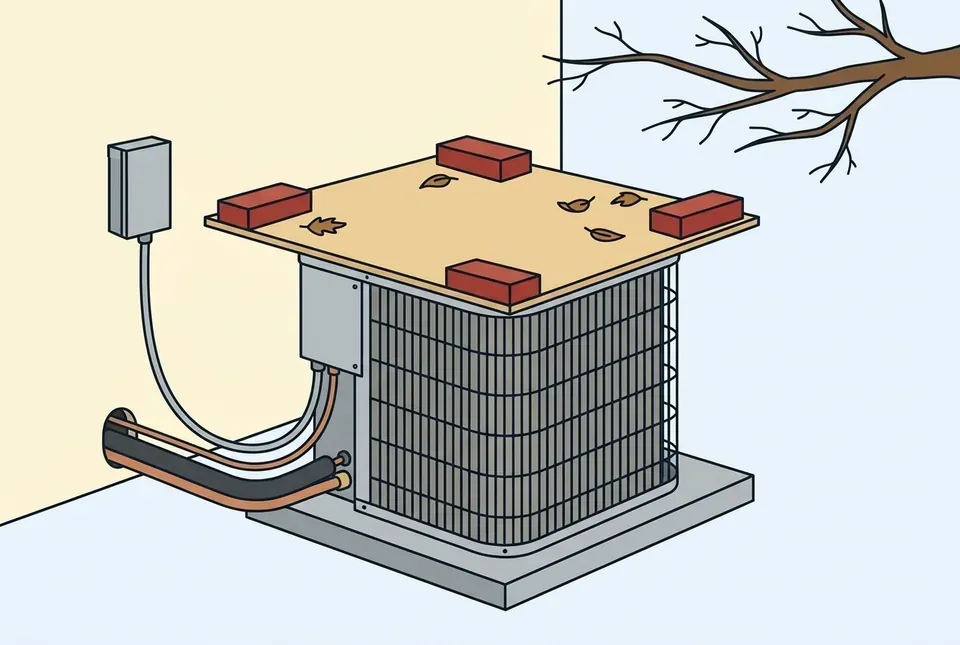
Keep the cover on top and the sides open
Among the ways Lennox’s cover guide lists to protect a unit without preventing proper ventilation are plywood secured to the top, a lightweight, breathable cover that won’t collect water or restrict airflow, and a shade or extended awning that leaves the airflow above the unit unrestricted. So a roof can work, as long as the air above the unit stays open. Check your warranty first, too: Lennox’s cover guide notes that, depending on the manufacturer, covering a unit may void its warranty.
Clear the fins with the power off before the cover goes on
Before a cover goes on, set the thermostat to off, then switch off the power at the outdoor disconnect switch, the step Lennox’s homeowner guide for its air conditioners calls for before any service or maintenance. Then clear leaves and debris off the fins and from around the base, the kind of care that guide gives the homeowner before it leaves the rest to a licensed professional. If debris has dropped inside the cabinet, leave it for a technician, and don’t lift the fan guard or any panel. Unless your technician has told you otherwise for your model, restore the power afterward, but only with every access panel in place: the same guide says the filter and all access panels must be in place any time the unit is in operation. Then set the thermostat back to heat, keep it out of cooling mode while the cover is on, and take the cover off before you need cooling in spring.
How Can You Tell Whether a Stafford Outdoor Unit Is a Heat Pump?
Watch it on a cold day while the heat is running. Mitsubishi Electric’s comparison of heat pumps and air conditioners says an air conditioner only cools and cannot reverse its operation to provide warmth, while a heat pump captures heat from outdoor air, even in cold weather, and transfers it indoors.
An outdoor unit that runs while the house heats is a heat pump
If the unit runs while your heat is on in January, you have a heat pump. If it sits silent all winter while a furnace does the work, it’s most likely a straight air conditioner. Lennox’s guide to the heat pump defrost cycle adds a clue you can see: a heat pump periodically melts frost off its outdoor coil, and you may see steam rising from the unit while it does, which is normal.
The thermostat can point the same way. Lennox’s emergency heat guide describes “Emergency Heat” or “EM Heat” as a mode that shuts the heat pump off and runs only the backup heat, which in some dual-fuel systems is a gas or oil furnace, so a furnace in the basement doesn’t rule a heat pump out. Still unsure? Ask your technician to check the model number on the unit’s nameplate.
Why Does a Heat Pump Need Open Air All Winter Long in Stafford?
Because outdoor air is where its heat comes from. Mitsubishi Electric’s winter-weather guide says that since heat pumps pull heat from ambient air, it’s important to keep the outdoor unit’s surface clear of snow and ice buildup, and that your HVAC contractor should consider average snowfall and mount your heat pump above your snow line. When we install a system, we set a new equipment pad and elevate the outdoor unit.
Snow does come here, if unevenly: the National Park Service’s weather page for Fredericksburg and Spotsylvania National Military Park, last updated in February 2023, says snowfall in the Fredericksburg area averages 16 inches a year, but yearly amounts are extremely variable. Even so, Lennox’s cover guide says heat pumps that run year-round should never be covered, though the winter tips in its frozen heat pump guide suggest considering a protective cover for the top only, such as a snow guard, and never covering the sides, which blocks airflow.
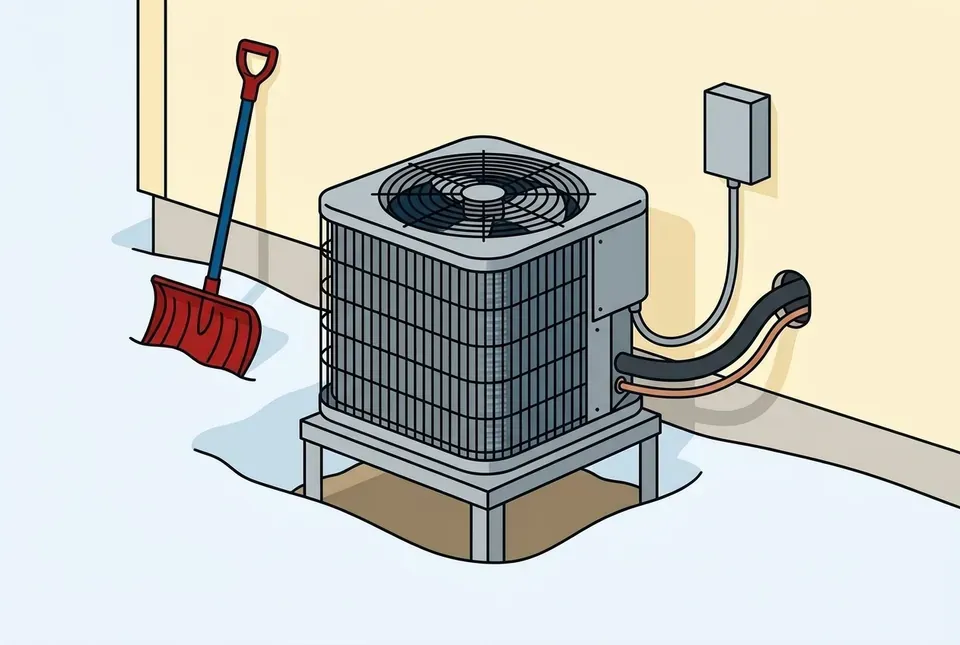
Clear snow with the power off and a light touch
If you’ve ever gone out with a broom while the unit was still running, here’s the safer way, using the winter tips in Lennox’s frozen heat pump guide:
- Set the thermostat to off, then switch off power at the outdoor disconnect switch, which Lennox’s HPX15 heat pump manual says to do before any maintenance, warning that the unit may have multiple power supplies.
- Shovel snow away from the unit without piling it against the sides.
- Brush light snow off the top gently with a broom, never a sharp tool.
- Never pour hot water on the unit or chip at ice; Lennox’s frozen heat pump guide warns that the sudden temperature change can crack components and that tools can damage the coils, fins and fan blades.
- Once you’re clear of the unit, restore the power and set the thermostat back to heat.
The same Lennox guide also suggests watching the system during extreme cold snaps and heavy, wet snow. If the unit is already encased in ice or has stopped heating, our post on common heat pump problems and how to fix them covers what to check.
What Fall Care Does a Stafford Outdoor Unit Need Instead of a Cover?
Mostly room to breathe, for an air conditioner and a heat pump alike:
- Set the thermostat to off, then switch off power at the outdoor disconnect before any hands-on step, the disconnect step both Lennox’s air conditioner guide and its HPX15 manual call for before maintenance.
- Remove leaves, grass clippings and anything else pulled against the fins.
- Trim plants back to leave about two feet of clear space on all sides, where Mitsubishi’s condenser guide says a condenser operates at optimal capacity.
- Look up, and make sure gutters and downspouts don’t drain onto the unit.
- Restore the power and set the thermostat back where you had it when you’re done, unless your technician has told you otherwise for your model.
Ask before you switch an AC’s power off for the winter
Should an air conditioner’s power go off for the winter? There’s no single rule. Whether your unit’s power should stay on through the winter is a question for your technician. A heat pump stays powered, of course, since it’s heating your home.
Our post on what a real AC tune-up checklist includes covers the professional side.
Your Key Takeaways
- Most outdoor units don’t need a winter cover, and covering one completely, especially with plastic or vinyl, can do more harm than good.
- Moisture seeps in under a full wrap and has trouble drying out, so it can lead to rust and corrosion, damage electronic components, invite mold and mildew, and even leave it colder under the cover, possibly freezing the coils.
- A covered unit can draw mice and other small animals escaping the cold, and house mice can gnaw on electrical wires.
- A top-only cover suits a straight air conditioner under falling debris or ice: sides open, leaves cleared off the fins with the power off, anything inside the cabinet left to a technician, no cooling while it’s on, and the cover off before spring cooling.
- An outdoor unit that runs while the heat is on is a heat pump, so leave its sides open all winter.
- Clear snow from a heat pump with the power off first: shovel it away from the sides, brush the top gently with a broom, and skip the hot water and the ice chipping.
- For fall care, switch the power off, clear leaves and clippings from the fins, trim plants back to about two feet of clear space, the figure in Mitsubishi’s condenser guide, keep gutters from draining onto the unit, and restore the power unless your technician advises otherwise.
Do that and spring starts simply: no wrap to peel off, no nest to find, just a unit that spent the winter in the open air it was designed for. We’re a family-owned company founded in 1956, and Stafford is one of the places we cover in Northern Virginia.