Heat Pump vs. Furnace in Northern Virginia: Which Should You Choose?
Quick answer
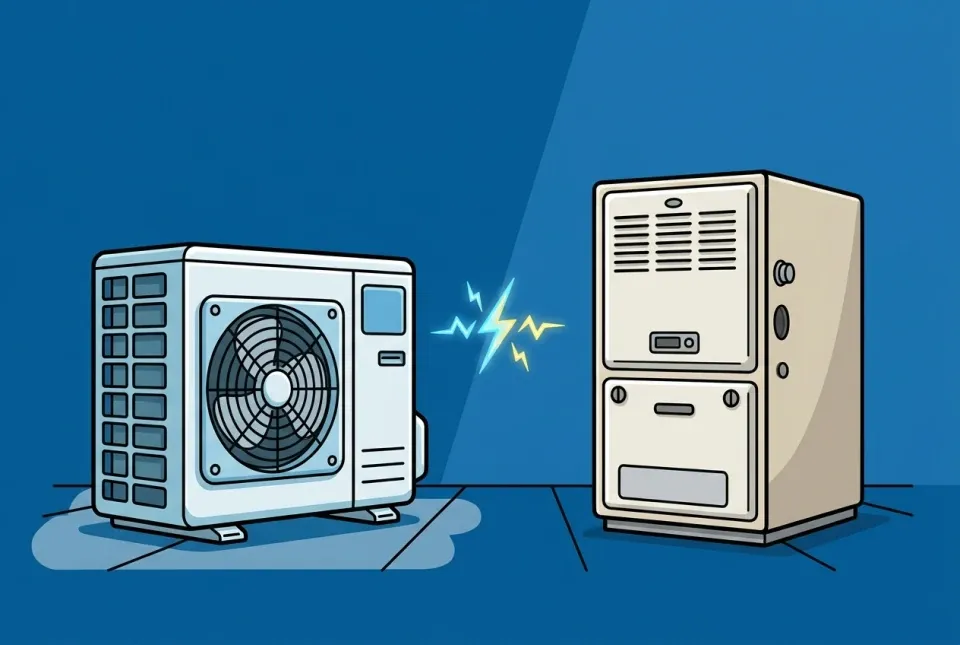
For most Northern Virginia homes, a modern heat pump is the more efficient choice because our winters are mild more often than they’re brutal, and one system handles both heating and cooling. A gas furnace still wins for homes with cheap natural gas service that prioritize powerful, fast heat on the coldest nights. And a dual-fuel system, a heat pump paired with a gas furnace backup, gives you both and is the option we find ourselves recommending most.
How each one actually works
A furnace makes heat by burning gas (or running electric elements) and blowing the warm air through your ducts. Simple, powerful, fast.
A heat pump doesn’t make heat, it moves it, pulling warmth out of the outdoor air (yes, even cold air holds heat) and delivering it inside. In summer it runs in reverse and becomes your air conditioner. Because moving heat takes far less energy than making it, heat pumps deliver two to three units of heat for every unit of electricity they consume.
The Northern Virginia climate factor
This decision is mostly about your winters, and ours are the heat pump’s home turf. Most of the heating season here sits in the 25–45°F range where modern heat pumps are extremely efficient. We get genuinely bitter stretches, but they’re measured in days, not months.
Older heat pumps earned a bad reputation on those cold snaps, falling back on expensive electric resistance heat. Modern cold-climate inverter units hold their capacity much deeper into the cold than the systems people remember from the 1990s.
Side by side
| Heat pump | Gas furnace | |
|---|---|---|
| Typical installed cost | $8,000 – $16,000 | $5,500 – $12,000 |
| Also cools your home | Yes (replaces AC) | No (separate AC needed) |
| Efficiency in mild cold | Excellent | Good |
| Output in bitter cold | Reduced (backup helps) | Full power regardless |
| Fuel | Electricity | Natural gas or propane |
| Typical lifespan | 12 – 15 years (runs year-round) | 15 – 20 years |
| Best fit | All-electric homes, mild-winter efficiency | Cheap gas service, cold-night muscle |
A note on lifespan: heat pumps run in both seasons, so they log roughly double the hours of a furnace-and-AC pair. That’s not a defect, it’s one machine doing two jobs.
The dual-fuel option most people overlook
A dual-fuel system pairs a heat pump with a gas furnace and switches between them automatically: the heat pump carries the efficient middle of winter, and when the temperature drops below its economic sweet spot, the furnace takes over. You get heat-pump bills most of the year and furnace muscle on the handful of nights that matter. If you’re replacing both a furnace and an AC at the same time, dual-fuel deserves a serious look.
What we’d actually recommend
- Your furnace and AC are both old: consider a heat pump or dual-fuel system, one project, one modern system.
- Your furnace is young but the AC died: replace the AC, keep the furnace, and revisit later.
- No gas service at your home: a cold-climate heat pump beats electric resistance heat by a wide margin.
- You have gas and love blast-furnace heat: a high-efficiency furnace with a conventional AC is still a solid setup.
The right answer depends on your home’s insulation, ductwork, gas service, and how you actually live in it, which is why we size every recommendation with a load calculation rather than a rule of thumb.
Frequently asked questions
Do heat pumps really work in a Virginia winter? Yes. Modern units stay efficient well below freezing, and a dual-fuel or backup-heat setup covers the rare deep-cold stretches.
Will a heat pump raise my electric bill? It shifts heating cost from your gas bill to your electric bill, but the total is usually lower than resistance heat and competitive with gas, especially across our mild shoulder seasons.
Can I keep my radiators or boiler and still add a heat pump? Often, yes. Plenty of older Northern Virginia homes pair their existing radiant heat with ductless heat pumps for cooling and shoulder-season heating.
Weighing the switch? Leonard Splaine installs high-efficiency heat pumps, furnaces, and dual-fuel systems across Northern Virginia, with free estimates and honest math on which one your home actually needs. Call 703-494-2855 or learn more about heat pumps.