Why Does Your Furnace Smell Like Burning in Lorton, VA?
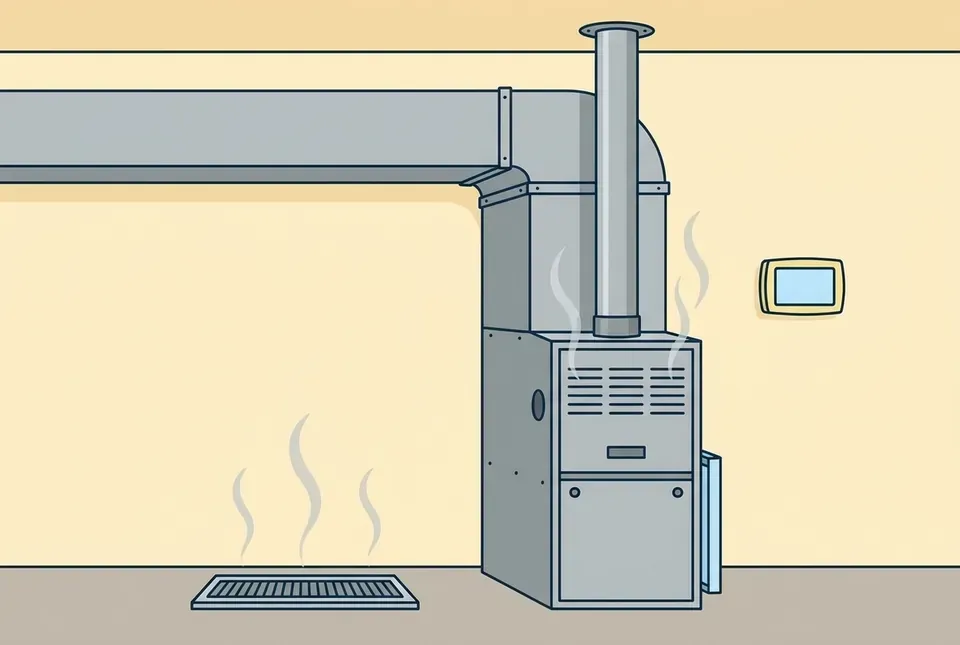
Are you having issues with a smell from the vents that leaves you asking, why does my furnace smell like burning in Lorton, VA? This article will help you figure that out. In this article we’re going to cover what causes the first-heat burning smell, how long it should last, what can keep it going, what an oil furnace should and shouldn’t smell like, what soot after a puffback means, and when a smell is a reason to shut the furnace off. Let’s get into it.
On the first cold night of the season, the answer is usually dust that settled inside the furnace over the warmer months, burning off as the heat comes back on, and that smell should not last long. When it hangs around for days, keeps getting stronger, smells like heating oil or leaves soot behind, it has stopped being a seasonal quirk and become a furnace repair question. Here is how to tell which one you have.
What Makes a Lorton Furnace Smell of Burning Dust on the First Cold Night?
Months of sitting idle. Lennox’s guide to heater smells calls accumulated dust and debris the most common cause of a burning smell from a heating system: a furnace left off through the warmer months collects dust, the dust builds up inside the unit, and it ignites when you first turn the heat back on.
The burning is happening inside the furnace, not in your rooms
That is also why a house can smell as if something is burning when nothing in the rooms is. What is burning is the dust inside the furnace, and the blower carries the smell to every room the system heats.
If that smell is part of your fall routine, you’re in good company. In an October 2023 thread on r/nova, the Northern Virginia subreddit, the person who started it admitted to giving in and switching the furnace on, asked neighbors whether they had too, and summed up the moment as “that sweet smell of the dust burning off.”
How Long Should the Burning Dust Smell Last in a Lorton Home?
Not long. Lennox’s advice for the dust smell is to let the furnace run for an hour or two, after which the smell should subside or disappear. In other words, normal first-heat dust needs nothing from you except a little patience.
A smell that outlasts the first runs has another cause
The dust burns off once. If the smell is still there well after those first hours, or comes back each time the heat cycles on, it is no longer the one-time burn-off described above. Something is feeding it. The next section covers what can keep a smell going, the one after it covers where to trace it, and the last one covers when to stop running the furnace altogether.
Can a Dirty Filter Keep a Lorton Furnace Smelling Burnt for Days?
It can help keep a smell going, though a filter is only one suspect. Lennox’s guide says dirty filters or blocked vents can cause overheating and odor issues, and that a filter loaded with dust becomes less effective and can contribute to odors.
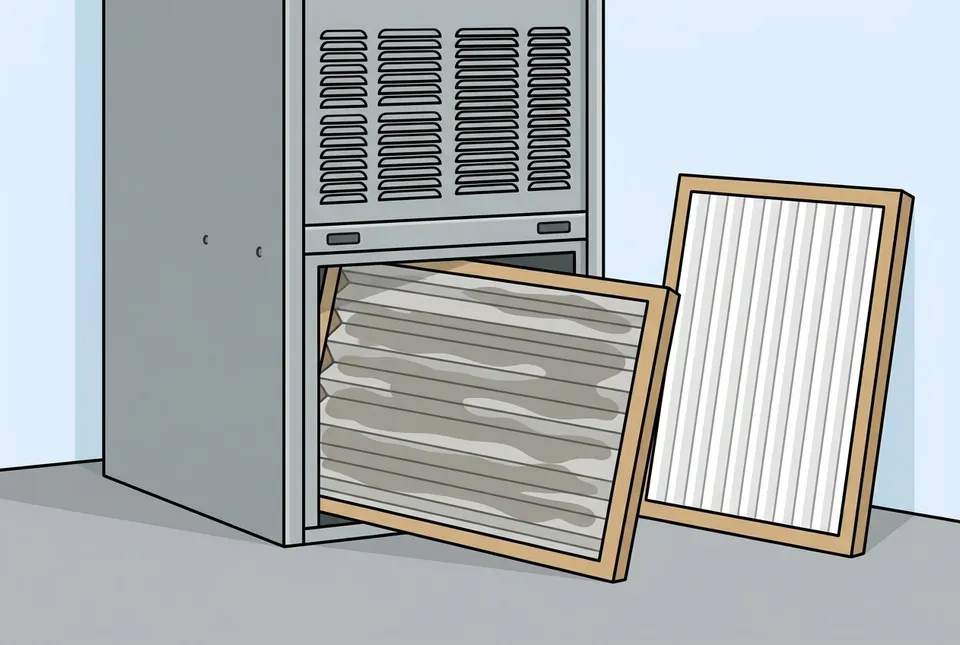
The same guide says to turn off the unit and then check your air filters and vents to make sure they are clean, and with the unit off, the filter is the simplest thing to rule out when a smell lingers for days, along with any supply register or return grille buried under a rug or behind furniture. Lennox’s owner manual for its EL296DFV gas furnace, linked in the shut-off section below, goes further for that model: it says to turn the electrical power to the unit off at the disconnect switch before attempting any maintenance, and that a filter must be in place when the unit is operating. How often yours needs changing depends on the filter and the household, and our guide to how often to change a furnace filter walks through both. If the filter is fresh and the smell is still there, the cause is somewhere a technician needs to look.
Anything stored against the cabinet should move anyway
Look around the furnace, too. NFPA’s report on home heating fires lists keeping anything that can burn at least three feet away from heating equipment among its safety practices, and boxes, laundry or paint cans pushed up against a furnace sit well inside that distance whether or not they are behind the smell.
Does a Burning Smell Come From the Vents or the Furnace Cabinet?
It can be either, and the furnace is where the first-heat smell starts. A forced-air furnace heats air as it passes through the cabinet, and the blower pushes that air through the ductwork and out of every supply register, so a smell made inside the furnace comes out wherever the warm air does. The dust from the first section sits inside the unit, which is why the vents get the blame for a smell that started in the cabinet.
The spot where the smell is strongest tells you where it starts
If the smell is strongest next to the furnace and fainter in the rooms, the source is most likely in or around the cabinet. If one register smells and the others don’t, the cause is more likely at or near that register than inside the furnace. And if you smell something right at the furnace as the burner lights, but not through the vents, that points at the burner and its flue rather than at the air the blower moves, which is the pattern in the oil-furnace example in the next section. When you do call someone, it helps to say where the smell is strongest and whether it shows up only at startup or the whole time the heat runs.
What Should an Oil Furnace Smell Like at Startup in Lorton?
Ideally, not much at all. If your Lorton home heats with oil, Oilheat America, a consumer site sponsored by the National Oilheat Research Alliance, says a new oil system that is properly adjusted and maintained creates no soot, dirt or odors in the home. In the same site’s answer about oil tanks, an oil smell in the building is treated as a possible sign of a problem with the tank, the piping or the heating appliance, something to raise with your oil dealer.
The dusty first-heat smell can still happen on an oil furnace, because it comes from dust inside the unit rather than from the fuel. A smell of oil or exhaust is a different matter.
An oil or exhaust smell at startup is worth a service call
It can be subtle. In one r/hvacadvice thread, an oil-furnace owner described a diesel-like exhaust smell at the furnace each time the burner fired, one they could not smell through the ducts, and later reported that their technician had found a downdraft, outside air pushing back down the chimney. If you need someone to call, we still service and deliver home heating oil.
Is Soot After an Oil Furnace Puffback in a Lorton House a Warning Sign?
Yes, and so is fresh soot without one. R.W. Beckett Corporation’s manual for its AF and AFG oil burners warns against starting the burner when excess oil has accumulated in the appliance, when the appliance is full of vapor or when the combustion chamber is very hot, and it lists hot gas puff-back alongside heavy smoke, soot-up, fire and asphyxiation hazards among the possible results of not following its start-up instructions.
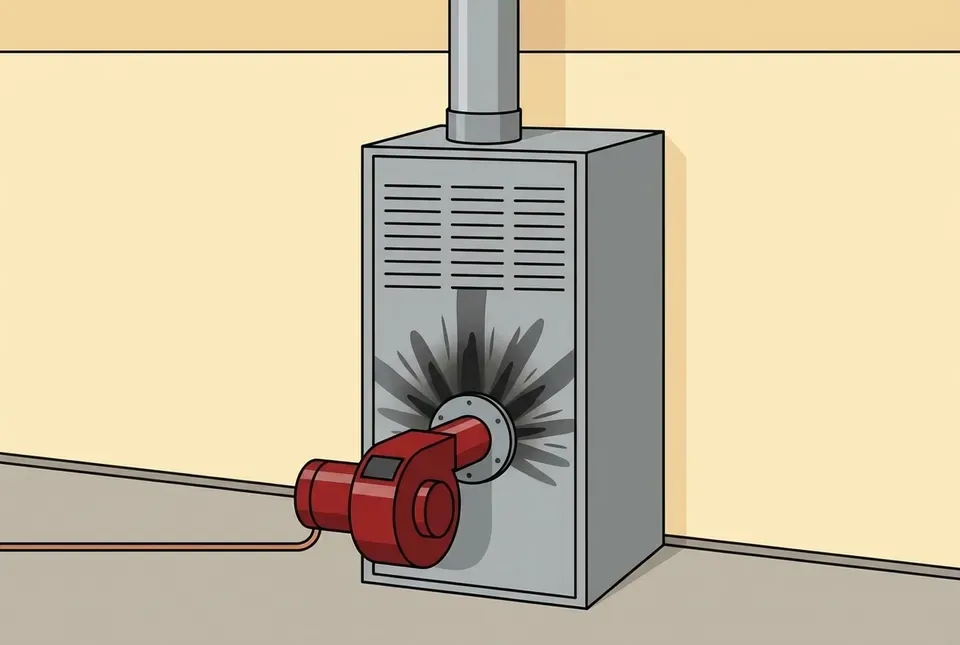
The aftermath can reach well beyond the furnace room. In one r/hvacadvice thread, the owner of an oil-fired boiler found the first floor coated in soot, down to the dishes inside the kitchen cabinets, after a puffback the service company blamed on an oversized nozzle.
After a puffback, the restart belongs to a technician
Pressing the burner’s reset button to see whether it lights is the tempting next step. Beckett’s manual says the appliance must be free of oil and oil vapor before the burner is started or reset, and it keeps its start-up checks in the part written only for qualified service technicians. You can’t confirm that from outside the furnace, so call your oil service company and don’t try to restart the burner until it has been checked.
When Is a Burning Smell From a Lorton Furnace a Reason to Shut It Off?
When it stops behaving like first-heat dust. Lennox’s guide says that if a burning smell persists or gets worse despite troubleshooting, there could be severe electrical problems, damage to the unit, or components that are worn out or malfunctioning, and that it is best to contact a qualified professional instead of attempting to fix it yourself.
If the smell is rotten eggs, which Lennox’s guide says can be the odor of natural gas, the front page of Lennox’s EL296DFV gas furnace manual says not to try to light any appliance, touch any electrical switch or use any phone in the building, but to leave the building immediately and call your gas supplier from a neighbor’s phone and follow its instructions, or call the fire department if you cannot reach the supplier; for hot plastic or scorched wiring, our post on burning and rotten-egg smells from an AC covers what to do for a furnace sharing the same air handler.
A Lennox homeowner manual lists the signs that call for a shutdown
Lennox’s user’s information manual for its EL296DFV gas furnace tells owners to shut the unit down and call for an inspection by a licensed service technician if they smell unusual odors, or see visibly burnt components or unusual dirt or rust on the vent pipe or in the unit. The shutdown steps themselves are written for each model, so use the ones in your own furnace’s manual; Lennox prints that model’s steps in the same document, along with a warning about what to close first if the furnace overheats. On oil heat, the signs from the last two sections are service calls too: an oil smell in the house goes to your oil company, and after a puffback the burner is not restarted until a technician has seen it.
Carbon monoxide needs its own check
Carbon monoxide is a separate question from any smell in this article, and our look at what a furnace tune-up checks covers it, including why it can’t be left to your nose.
The Bottom Line
A burning smell on the first cold night is most often dust burning off inside the furnace, and the window for that smell is short, as the second section explains. A smell that lingers well past it, grows stronger, smells of oil, or comes with a puffback or fresh soot is a reason to call for service rather than wait it out.
If your furnace has crossed that line, call us. We cover Lorton and the rest of Northern Virginia with same-day service, and we have been a family-owned company since 1956. Before you call, you can see how our family runs the company.