What Does a Blinking Light on a Stafford Furnace Mean?
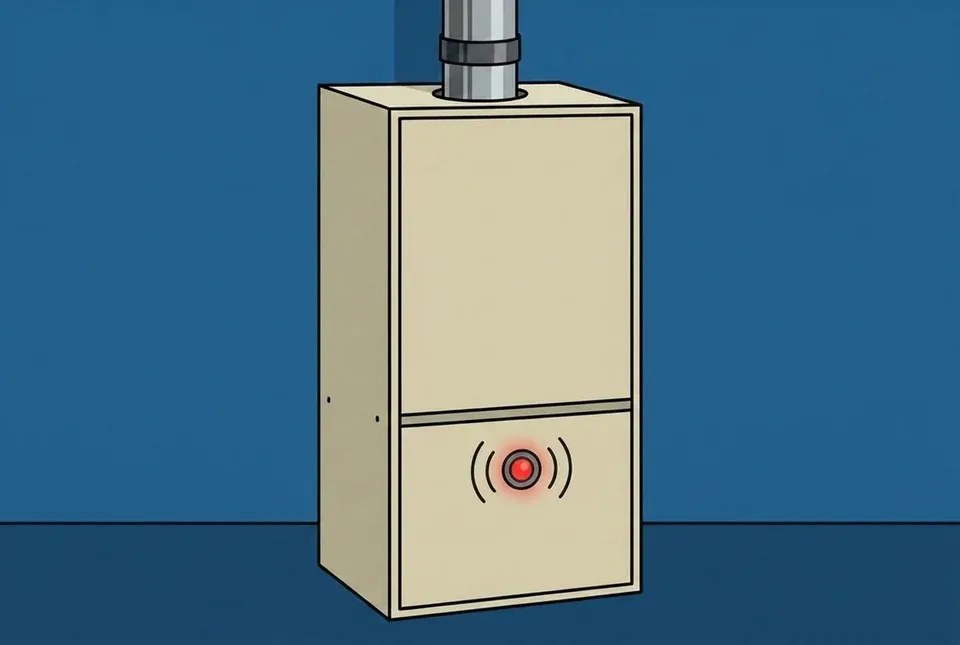
A blinking light on a furnace is not a warning lamp. It is a message. Modern furnaces run on a control board, and when the board shuts the system down it stores the reason as a pattern of flashes on a small diagnostic light. The pattern is the furnace naming which safety check it failed, and there is a legend printed inside the appliance that translates it. That makes the light genuinely useful, and it makes one small habit worth learning before anything else: count the pattern and write it down before you touch the power. Cutting power clears the stored fault, and a furnace with nothing left to report turns a short diagnosis into a long one. If the pattern points somewhere you should not go alone, furnace repair in Stafford is a call rather than a project. Our family has been reading these systems across Northern Virginia since 1956.
How Does a Stafford Furnace Use a Blink Code to Warn of a Fault?
A gas furnace does not simply turn on. It moves through a fixed sequence, and every step has to confirm itself before the next one is allowed to start. The draft inducer has to prove it is moving exhaust. The igniter has to reach temperature. The gas valve has to open, the burners have to light, and a sensor has to confirm a flame is actually present. If any of those confirmations fails, the board stops the sequence and holds the system there rather than continuing with gas flowing.
The blink code records which confirmation failed. As one technician put it in an HVAC trade forum, the codes exist “to help the actual tech with what basic state the furnace failed in,” which is a better description than most published explanations manage. They report on a sequence, not on a part. ENERGY STAR’s maintenance checklist describes the same idea from the service side, calling for a technician to “check the starting cycle of the equipment to assure the system starts, operates, and shuts off properly”. The light is that check running continuously, on its own, every time your Stafford furnace tries to fire.
That is why the pattern matters more than the color. A blinking light says a specific step failed. A homeowner who can report the pattern has already done the most valuable ten seconds of the diagnosis. The furnace is one part of a larger setup, and how an HVAC system works is our plain-language overview of the whole of it.
How Do You Find the Blink Code Legend Inside a Stafford Furnace?
The legend is almost always printed on a label inside the furnace, most often on the inside face of the front door panel or on the sheet metal directly behind it. It is a small table, and it is specific to your furnace. In one forum thread where a homeowner posted photographs of their own unit, a reader answered simply, “Fault condition legend is right there on the schematic. Read it.” The information people search the internet for is frequently sitting eighteen inches from the light they are trying to interpret.
Reading the pattern takes a little care. On many boards the code is two digits, encoded as long and short flashes: a run of long blinks for the first digit, then shorter blinks for the second. One long and three short is a thirteen, not a four. The light also pauses between repetitions, so watch through at least two full cycles before deciding what you saw.
Not every furnace encodes by counting. One commenter, correcting a thread that had assumed otherwise, pointed out that the legend in the photographs listed only whether the red or green lights were “flashing, solid, or off,” with no flash count anywhere on it. That is why the instruction is to find your own legend rather than to trust a number you read somewhere else. Your furnace publishes its own key, and it is the only one that applies to it.
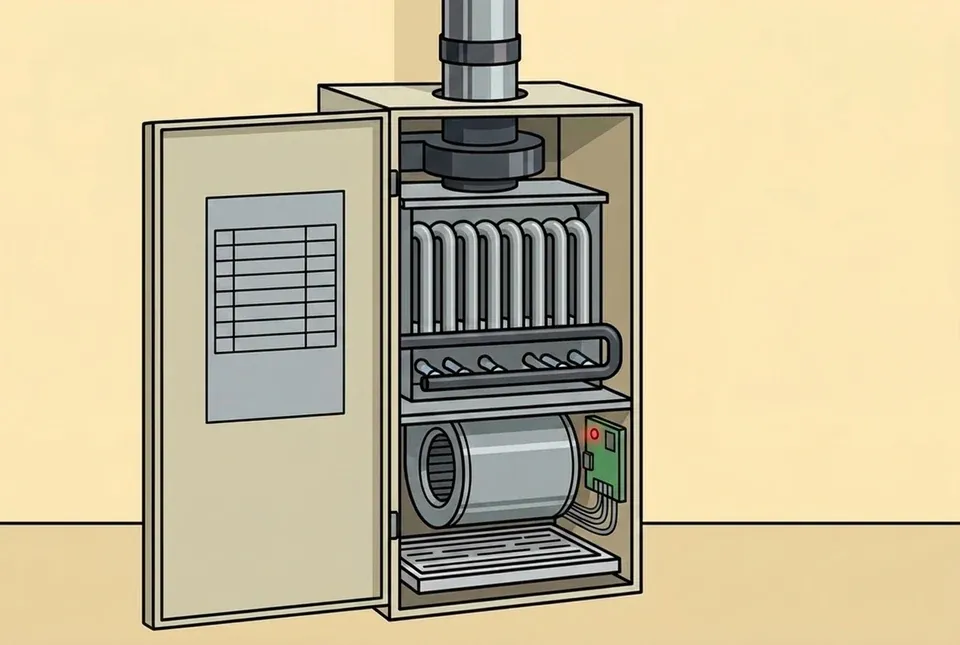
Why Does Resetting a Stafford Furnace Erase the Warning Code?
The stored fault lives in the board’s memory, and on most systems cutting power clears it. The furnace comes back, tries the sequence again, and if the fault is intermittent it may run for hours before failing a second time. The code you needed is gone.
This is not hypothetical. In one thread a homeowner with a furnace showing four repeating red flashes at eight degrees outside cut power to reset it, and reported the system then running with a single amber flash, which their manual listed as normal operation. The fault reading was gone, the service appointment was still a day away, and the technician would arrive to a furnace that had nothing left to say. Another thread opened with a homeowner explaining they had “rest a few times” already, and the most upvoted reply by a clear margin was the only question that mattered: “Need to know how many flashes.”
None of that means a reset is forbidden. Watching the light through a fresh start-up cycle is a legitimate thing to do, and some furnaces have manual reset buttons that are meant to be pressed with the power off. The rule is narrower and easier: read the pattern and write it down before you cut power. Once it is on paper, the information survives whatever happens next.
Which Blink Codes Point to Ignition Failure in a Stafford Furnace?
Ignition faults are the most common family of codes, and they cover the whole first half of the sequence. Depending on the furnace, separate codes distinguish a failure to ignite at all, a flame that lit and was then lost, and a lockout after several attempts. Some boards also carry a code for flame sensed when no flame should be present, which points at the gas valve rather than the ignition side.
Lockout is worth understanding because it looks like a different problem. After a set number of failed attempts the board stops trying and waits, often for an hour or more, before retrying on its own. To someone standing in the house, that reads as a furnace that works intermittently for no reason. The code is what reveals it was never random.
What we deliberately will not do here is walk you through the mechanical causes. A burner that lights and then drops out has its own set of answers, and we cover why a furnace burner will not stay lit separately rather than repeating it. If your code lands in the ignition family, that piece is the one to read next.
What Does a Pressure Switch Code Warn About in a Stafford Furnace?
A pressure switch code is the furnace saying it could not confirm that exhaust was moving. The switch exists to prove the draft inducer is doing its job before any gas is released, which makes it one of the few codes that is genuinely a safety interlock rather than a fault report. When it does not close, the furnace refuses to light. That refusal is the system working correctly.
These codes cluster at the start of heating season, which is when a lot of Northern Virginia furnaces get their first real test of the year. The mechanical reasons a switch stops confirming are a separate subject, and the faults that shut a burner down is where we work through them rather than here.
The reason to take this code seriously rather than reset past it is what sits behind it. The EPA lists poorly maintained combustion appliances among household sources of carbon monoxide, specifically “if the flue is improperly sized, blocked or disconnected” or leaking. A pressure switch code can be a stuck switch. It can also be a genuinely blocked vent, and the two are indistinguishable from the thermostat.
When Does a Limit Switch Code Mean a Stafford Furnace Overheated?
A limit switch code means the furnace got hotter inside than it is allowed to get, and shut itself down. On many systems the same code family covers the main limit, an auxiliary limit and the roll-out switch, which is a separate safety sitting above the burners and watching for flame coming out of the burner box rather than drawing into it.
That last one changes the urgency. A technician answering a limit fault in a trade forum spelled out the distinction plainly: the reader should have the unit inspected, because “flame roll out usually means a blocked vent or compromised heat exchanger.” Those are combustion problems, and the University of Nebraska Extension lists the visible clues alongside them, among them a loose or missing furnace panel or vent pipes, and streaks of soot around appliance service doors.
Why a furnace overheated in the first place is an airflow question rather than a code question, and it is the part a technician traces on site. For this article the point is narrower. A limit code is not a nuisance trip to be cleared. It is a shutdown that already happened once, and the thing worth knowing is which limit opened.
How Do You Tell If a Stafford Furnace Light Is Steady, Not Blinking?
A steady light usually means the opposite of a problem. On most boards a solid lamp indicates power and normal standby, and a slow steady pulse can indicate a normal call for heat rather than a fault. The homeowner above learned this the direct way when their furnace settled into a single repeating amber flash and the manual listed it as normal operation at low stage.
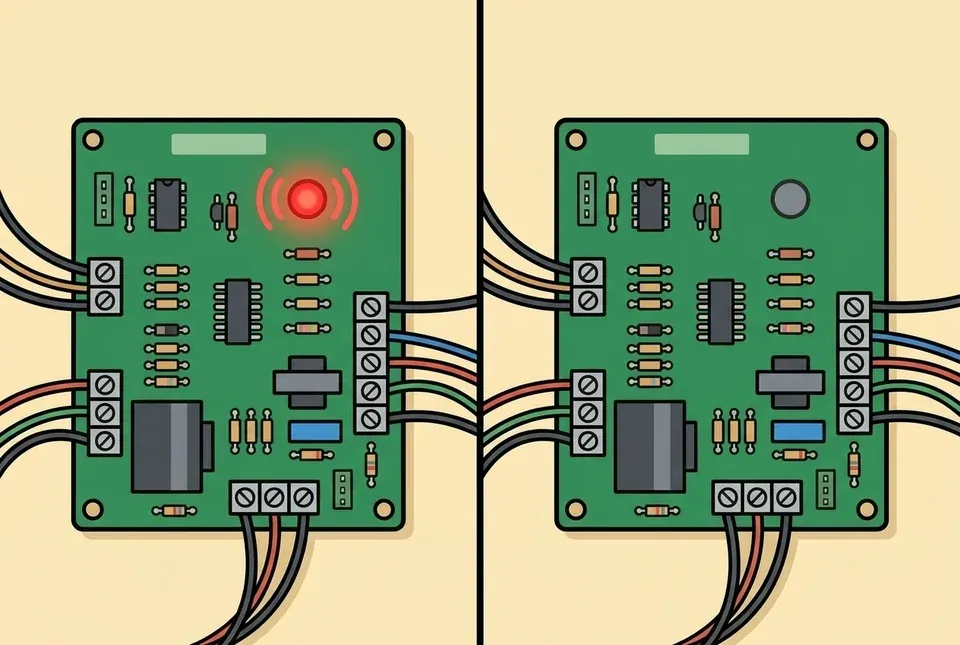
Color is doing real work here, and it varies by manufacturer, which is another reason the door legend outranks anything general. Some boards use separate red and green lights where the combination is the code, so a green light flashing while the red one stays dark is a specific fault rather than reassurance. A technician untangling one of those threads had to start by establishing which light was doing what before any interpretation was possible.
The practical version: note the color, note whether it is steady or repeating, note the count if there is one, and check all of that against your own legend. No light at all is its own signal and usually points at power rather than the furnace.
The Bottom Line on a Blinking Furnace Light in Stafford
A blinking light is the most useful thing a failed furnace can give you. It narrows a diagnosis from everything to one step in a sequence, and the key to reading it is printed inside the appliance. Count the pattern, note the color, write it down, and only then decide what to do next.
Some codes point at something small. Others point at a blocked vent or a heat exchanger that needs a real inspection, and the EPA’s advice on combustion appliances is to have a trained professional inspect and tune the heating system annually rather than wait for it to announce itself. If your code sits in the second group, or if you would simply rather not guess, our heating team reads these boards every day through a Northern Virginia winter, and we would rather see the furnace before it stops entirely. Being third-generation and family owned rather than private equity backed is who we are, and it is why we would rather tell you the code was harmless than sell you something you did not need.