What Is an HVAC System and How Does It Work? A Homeowner's Guide
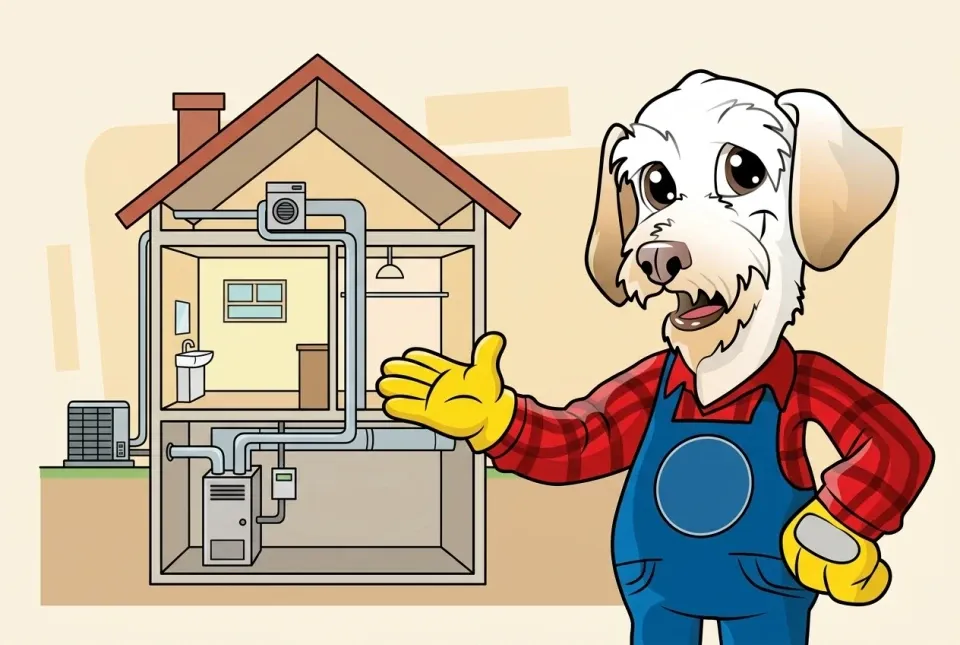
Most homeowners only think about their HVAC system twice a year: the first cold morning of fall and the first humid week of summer. The rest of the time it hums along in a closet, a basement, or beside the house, quietly doing one of the biggest jobs in the home.
Understanding what that equipment actually is, and how the pieces work together, makes every future conversation easier: what a technician means by “your coil is frozen,” why a tune-up matters, and when repair money should go toward replacement instead. Here is the plain-English version we give homeowners on service calls every day.
Quick answer
HVAC stands for heating, ventilation, and air conditioning. A home HVAC system is the connected set of equipment that heats your home in winter, cools it in summer, and moves filtered air through your ductwork all year. In a typical Northern Virginia house that means a furnace or air handler inside, an air conditioner or heat pump outside, an evaporator coil that joins the two, ductwork to carry the air, and a thermostat that runs the show.
Here is what each piece does and how they work together.
The main components of a home HVAC system
Thermostat. The part you actually touch. It reads the indoor temperature, compares it to your setting, and tells the rest of the system when to run. Modern smart thermostats add schedules and remote control, but the job is unchanged: it is the brain, and everything else is muscle.
Furnace or air handler. The big indoor unit, usually in a basement, utility closet, or attic. A gas furnace burns natural gas or propane in a heat exchanger to warm the air. An air handler has no burner; it holds the blower fan and, in a heat pump system, the electric backup heat strips. Either way, this is the component that pushes air through your ducts.
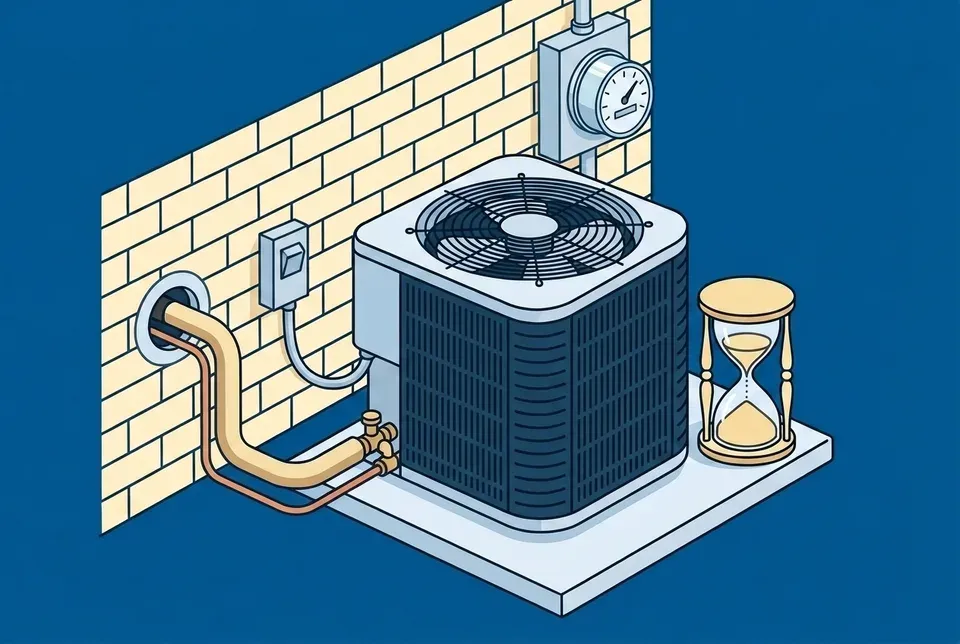
AC condenser. The outdoor unit. In cooling season it takes the heat your refrigerant collected indoors and dumps it outside, using a compressor and a big fan. This is why the air blowing off the top of the unit on a July afternoon feels hot: that is the heat that used to be in your living room.
Evaporator coil. A pyramid of cold refrigerant-filled tubing that sits on top of or inside the furnace or air handler. Warm indoor air passes over it, the refrigerant absorbs the heat, and the air comes off the coil cool and dehumidified. It is the piece that actually makes cold air, and the piece most likely to freeze when a filter goes too long unchanged.
Refrigerant lines. Two copper lines that connect the indoor coil to the outdoor condenser, carrying refrigerant back and forth as it cycles between liquid and gas. A leak here is why an AC “loses” refrigerant; a healthy system never uses it up.
Ductwork and vents. The delivery network. Supply ducts carry conditioned air to each room, return ducts pull room air back to be filtered and reconditioned. Leaky or undersized ducts are one of the most common reasons a perfectly good system still leaves rooms uncomfortable, especially in older Northern Virginia colonials with additions built onto the original duct plan.
Ventilation. The V in HVAC. Bath fans, kitchen exhaust, fresh-air intakes, and the filtration built into the return side all exchange stale indoor air for fresh. Newer, tightly sealed homes depend on deliberate ventilation because the house no longer “breathes” through gaps the way a 1970s build did.
How the heating cycle works
When the thermostat calls for heat, a gas furnace ignites its burners and warms a metal heat exchanger. The blower pulls air from your return ducts, pushes it across that hot exchanger, and sends it back out through the supply vents, typically at 120°F – 140°F. Combustion gases exhaust safely outside through a flue, which is one of the things we check at every fall tune-up.
A heat pump heats differently: it runs the refrigeration cycle in reverse, pulling heat out of the outdoor air (yes, even cold air holds heat) and releasing it indoors. It is very efficient in our climate until temperatures drop toward freezing, at which point electric backup strips or, in a dual fuel setup, a gas furnace takes over.
How the cooling cycle works
Cooling is heat moving, not cold being made. The blower pulls warm, humid indoor air across the evaporator coil, where refrigerant absorbs the heat and the moisture condenses out (that is the water you see at the condensate drain). The now-warm refrigerant travels out to the condenser, the compressor squeezes it to concentrate that heat, and the outdoor fan blows it off into the yard. The refrigerant cools back down and returns inside to do it again, over and over, until the thermostat is satisfied. In a typical Northern Virginia August, that cycle also removes gallons of water a day from your air, which is half of what makes the house feel comfortable.
Common HVAC system types in Northern Virginia
Split systems. The standard around here: a gas furnace inside paired with an AC condenser outside, sharing one set of ducts. Most single-family homes in Prince William and Fairfax counties with natural gas service have some version of this.
Heat pumps. One outdoor unit that both heats and cools, paired with an indoor air handler. Common in townhomes and in neighborhoods without gas service, and increasingly popular everywhere as cold-climate models have improved and electric utility rebates have grown.
Ductless mini-splits. Small wall-mounted indoor units fed by a compact outdoor heat pump, no ductwork required. The go-to answer for finished basements, sunrooms, garages, and additions where extending the existing ducts is impractical.
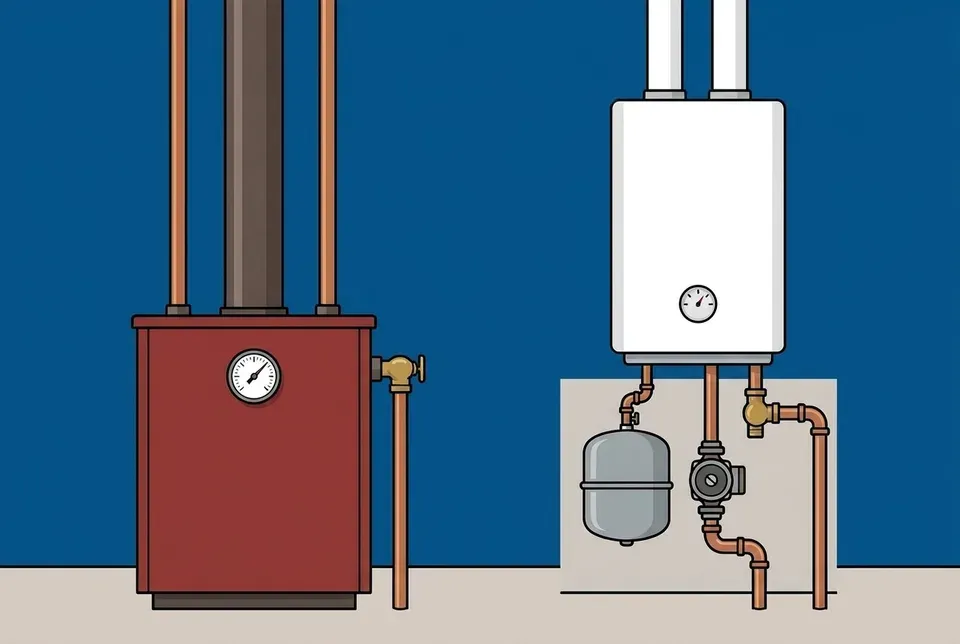
Boilers. Instead of blowing warm air, a boiler heats water and sends it to radiators or baseboards. We still service plenty of them in older Northern Virginia homes; they heat beautifully but need a separate solution for cooling.
Dual fuel. A heat pump paired with a gas furnace as its backup. The heat pump handles mild weather cheaply, and the furnace takes over during cold snaps when gas heat wins on both comfort and cost. For homes that already have a gas line, this is often the best of both worlds in our up-and-down winters.
How long an HVAC system lasts, and when to replace
Most furnaces and air conditioners last 15 – 20 years, heat pumps closer to 12 – 15 because they run year-round, and boilers often longer. Maintenance is the swing factor: annual tune-ups routinely add years, while a decade of neglected filters subtracts them.
Age alone is not a reason to replace. We tell homeowners to start doing the math when a system is past 12 – 15 years old and any of these show up: repairs arriving back to back, an R-22 refrigerant system with a leak (that refrigerant is phased out and expensive), rising utility bills with no change in habits, or a repair quote that exceeds a third of replacement cost. Before that point, fixing is almost always the right call.
Frequently asked questions
Is HVAC the same thing as air conditioning? No. AC is just the cooling half. HVAC covers heating, ventilation, and air conditioning together, so a furnace, a heat pump, and your ductwork are all part of the HVAC system.
Does every home have all of these components? Not necessarily. A boiler home has no ducts, a heat pump home has no furnace, and a mini-split home has no central air handler. The heating, cooling, and ventilation jobs still get done; the equipment mix just differs.
What maintenance does an HVAC system actually need? Change the filter every one to three months, keep the outdoor unit clear of leaves and shrubs, and have a professional tune-up twice a year: cooling in spring, heating in fall. That schedule catches most failures while they are still small.
Which HVAC brands are best? Installation quality matters more than the badge on the cabinet. That said, we install Lennox, Trane, and Carrier because all three have long track records for reliability, efficiency, and parts availability in our area.
Thinking about a new system, or just want the one you have checked out? Leonard Splaine has installed and serviced HVAC systems across Northern Virginia for three generations. Call 703-494-2855 or request service online.