Why Your AC Short Cycles in Manassas
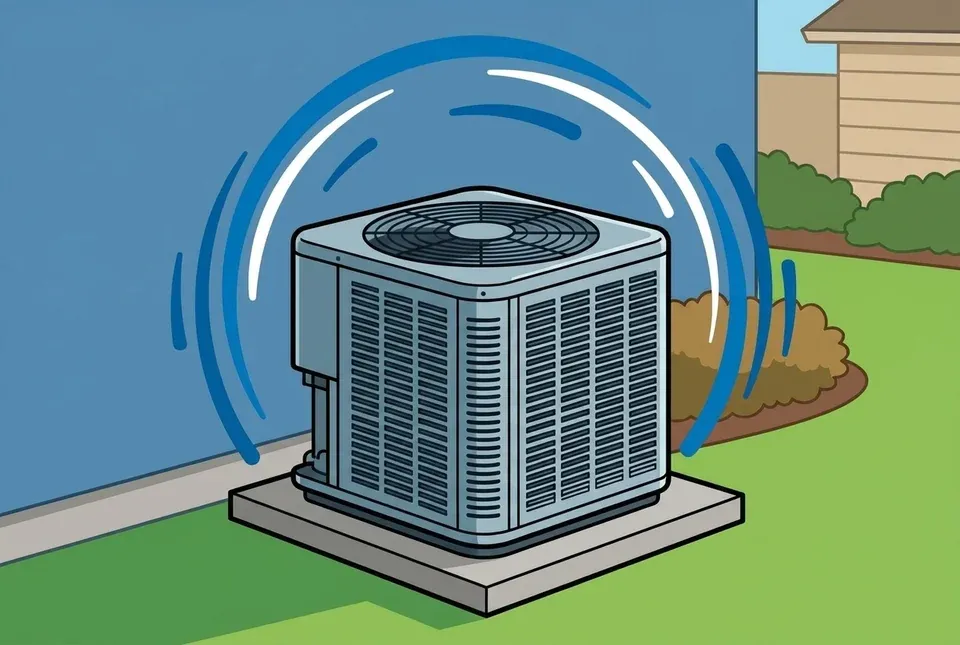
A healthy air conditioner runs in long, unhurried stretches, something like ten to twenty minutes at a time, a couple of times an hour, with the house holding steady in between. Short cycling is when that pattern breaks down into bursts: the system kicks on, runs for two or three minutes, shuts off, and starts again a few minutes later. It is worth taking seriously, because the damage is cumulative and lands on the most expensive component you own. The usual causes are a clogged filter, a thermostat in the wrong spot, low refrigerant, dirty coils, or a system sized too large for the house. Our family has looked after homes here since 1956, and a call for AC repair in Manassas that starts with rapid cycling usually comes down to one of those five.
How Does the Three Minute Rule Work for AC Cycling?
The three minute rule is the reason short cycling is more than an annoyance, and it is worth understanding rather than just obeying.
When your compressor shuts off, the refrigerant pressures on either side of it are badly out of balance. They need roughly three to four minutes to equalize. Restart it before that has happened and the motor has to start against that leftover pressure, which is far harder work than starting from rest. One commenter in an r/hvacadvice discussion put it in terms that stick: it is like stopping a manual transmission car halfway up a steep hill and then trying to pull away again. The same commenter drew the conclusion that matters, that the extra load falls on the compressor windings, and a compressor made to do that repeatedly tends to fail early.
That is the actual cost of short cycling. Not the noise, not even the electricity, but the slow shortening of the life of the one part nobody wants to replace.
Most modern thermostats enforce a minimum off time to prevent exactly this, listed in the settings as compressor protection or as a cycles-per-hour figure. One commenter recommended around three cycles per hour with a five minute minimum off time, which is a reasonable starting point rather than a universal standard. Some older thermostats do not have the setting at all.
A compressor that struggles to start is its own subject, and we cover what a hard start kit does and does not fix separately. Be clear on one thing first: a hard start kit is not a cure for short cycling. At best it masks a symptom while whatever is cycling your system carries on.
Which Same Day Checks Stop a Manassas AC From Short Cycling?
Four things, all of which you can do this afternoon without tools.
Start with the air filter, covered in its own section below, because it is the most common cause and the cheapest to rule out. Then check that supply registers are open and not blocked by furniture or rugs, and that return grilles are clear. A system starved of return air behaves much like one with a blocked filter.
Next go outside to the condenser. It needs clear space on every side to dump heat, and in a Manassas backyard that usually means cutting back what has grown into it since spring and clearing the clippings, leaves and cottonwood fluff matted into the fins. A unit that cannot shed heat builds pressure until a safety control shuts it down, which is short cycling by another route.
Last, look at where your thermostat is and what is happening around it, which gets its own section below because it is the cause people most often walk past.
If the cycling continues after all four, you have ruled out the easy half and the next steps belong to a technician.
Should You Check the Air Filter First When an AC Cycles Every Few Minutes?
Yes, always, and here is the mechanism rather than just the instruction.
Your system is designed around a specific volume of air moving across the evaporator coil. A filter packed with months of dust chokes that airflow, and the coil, with too little warm air passing over it, drops below freezing. Ice forms, airflow falls further, and the system either trips a safety control or cannot hold a stable cycle. It looks like short cycling from the thermostat, but the cause is a filter.
Pull it out and hold it up to a light. If you cannot see light through it, it is done. If you cannot remember when you last changed it, it is also done.
There is a second effect. Restricted airflow means the little air that does get through comes out unusually cold, so the space nearest the register cools fast and the thermostat satisfies early while the rest of the house lags. The system shuts off, the house re-warms, and it starts again. If your AC is also failing to keep up on hot days, we walk through seven reasons an AC runs without cooling.
How Do You Check Thermostat Placement in a Manassas Home for Short Cycling?
You check what the thermostat is feeling rather than what the house is feeling, because those are not always the same thing.
A thermostat measures the air immediately around itself and assumes it represents the whole house. Put it somewhere unrepresentative and it will make bad decisions with perfect consistency. The usual offenders are direct afternoon sun on the wall, a supply register blowing across it, a lamp or television beneath it, an exterior wall, or a spot near the kitchen. A thermostat warmed by sunlight reads the house as hotter than it is, calls for cooling, gets satisfied quickly once the compressor starts, and shuts off. Twenty minutes later the sun has warmed it again and the cycle repeats.
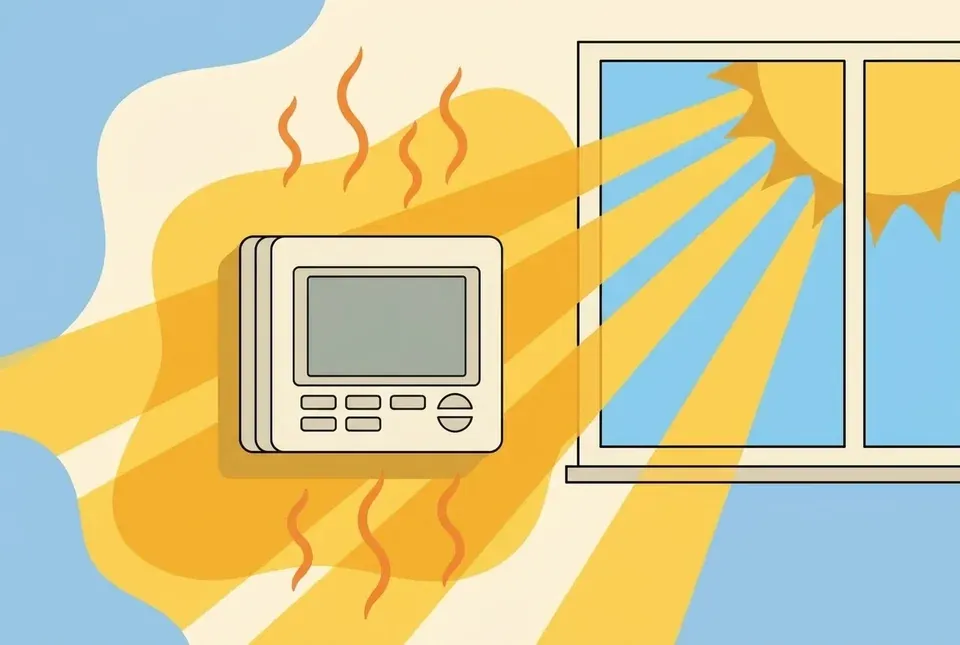
Checking it takes a day rather than a minute. Note where the sun lands on that wall through the afternoon, feel for a draft off a nearby register, and notice whether the cycling has a time of day to it. Cycling that happens only between two and six and stops in the evening points at solar gain rather than at your equipment.
Relocating a thermostat means running new low-voltage wire to an interior wall away from vents and heat sources, but that is a far better outcome than replacing parts that were never broken.
Can Any Repair Fix an Oversized Manassas AC That Short Cycles?
No, and this is the section where we would rather be straight with you than sell you something.
An oversized system does exactly what it was built to do, just too well. It has more capacity than the house can absorb, so it drives the temperature to setpoint quickly, satisfies the thermostat, and shuts off long before completing a normal cycle. Then the house warms and it starts again. Lennox, whose equipment we install as a Premier dealer, lists an oversized unit among the common causes of short cycling alongside dirty filters and thermostat problems. It also tends to leave a house cool but faintly humid, because pulling moisture from the air takes runtime the system never gets.
Here is the part almost nobody writes down. Capacity is decided once, at installation. There is no part to replace, no adjustment to make, and no amount of service that turns an oversized system into a correctly sized one. If a contractor proposes repairs for a system whose real problem is that it is too big, those repairs will not fix the cycling, and you will have paid for them anyway.
Correct sizing comes from a room-by-room load calculation based on the actual house, its insulation, windows and orientation, not from the size of the old unit or a rule of thumb about square footage. Those methods come from the trade association that publishes the technical standards for this work. That calculation is the first thing we do on an AC installation, and it is a fair question to ask any contractor quoting a replacement.
How Do You Tell If Low Refrigerant Is Short Cycling a Manassas Home’s AC?
By the company it keeps. Low charge rarely arrives on its own.
When the charge drops, pressure on the low side falls with it, and a safety control shuts the system down to protect the compressor. After a few idle minutes the pressure creeps back up, the control resets, and it starts again, only to trip a few minutes later. The pattern gets worse on the hottest days.
The tells alongside it are cooling that has got gradually worse rather than failing all at once, ice on the copper line set or the indoor coil, and sometimes an oily film where refrigerant has escaped.
Refrigerant is not consumed. It circulates in a sealed loop, so a system that is low is a system that is leaking, and adding more without addressing that is temporary by definition. What a leaking evaporator coil looks like is covered in our article on the signs an evaporator coil is leaking.
Leave this one alone. Do not attach gauges, do not remove a service cap, and do not press anything on the refrigerant lines to test them. Escaping refrigerant can cause frostbite and venting it violates federal clean air rules. Diagnosis here is certified technician work.
How Does Coil and Filter Maintenance Stop Short Cycling in a Manassas Home?
By keeping air moving freely across both coils, which is most of what a maintenance visit actually is.
There are two coils and they fail differently. The indoor evaporator coil ices up when airflow across it drops, which is the filter problem above. The outdoor condenser coil does the opposite job, shedding heat outside, and cannot when its fins are packed with dirt, grass and pollen. High-side pressure climbs, the safety control cuts the compressor out, and the system settles into tripping and resetting through the hottest part of the day.
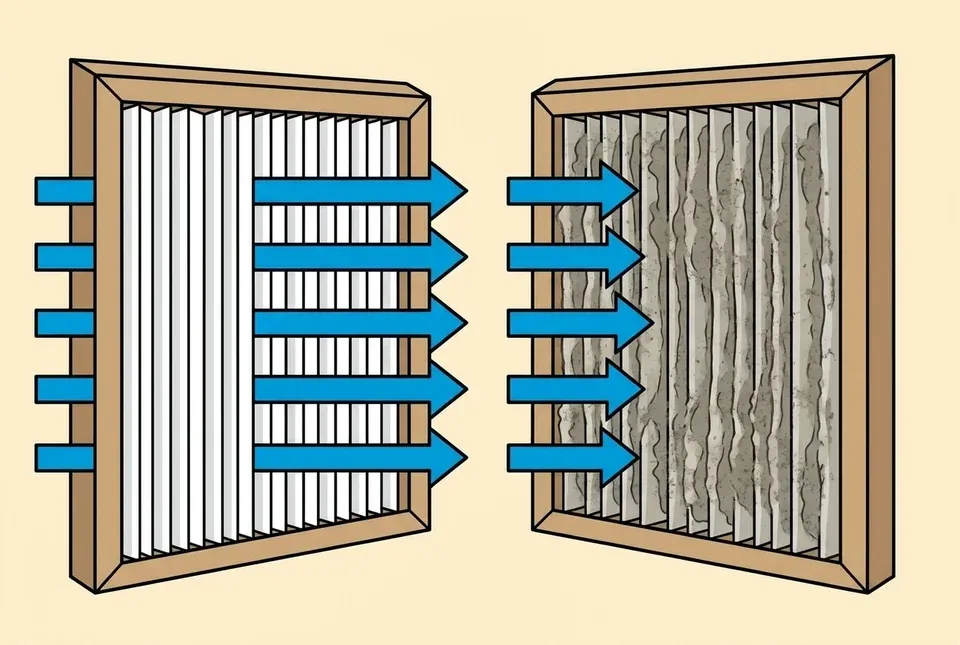
ENERGY STAR’s maintenance checklist puts cleaning the evaporator and condenser coils on the standard list, noting that dirty coils reduce the system’s ability to cool your home and cause it to run longer, increasing energy costs and reducing the life of the equipment. Its filter guidance is similar, that a dirty filter can increase energy costs and damage your equipment, leading to early failure. Neither line is about cycling specifically, but both describe the same problem: a system fighting its own airflow wears out sooner.
Cleaning both coils, checking airflow and verifying the charge is what our seasonal AC maintenance visits are for. A coil cleaned in April does not trip a pressure switch in July.
When Should You Stop Troubleshooting a Manassas AC’s Short Cycling?
When you reach the end of the checks that need no tools, which is sooner than most articles admit.
Your side of the line is the filter, the registers and returns, the space around the outdoor unit, the thermostat’s location and cycle settings, and the breaker. That list resolves a real share of cycling complaints. Past it, the work involves line voltage, sealed refrigerant circuits and safety controls whose readings only mean something with gauges on the system. Capacitors in particular hold a dangerous charge after the power is off.
Stop and call if the system trips the breaker, if you smell burning, if there is ice on the refrigerant lines, or if the compressor hums without starting.
And if the answer turns out to be that the system is oversized, stop buying repairs. That is the most useful thing we can tell you in this article, because it is the one cause where persistence costs money and changes nothing.
If your AC has been starting and stopping every few minutes and you would rather have someone measure it properly than keep guessing, we can do that. Same-day service, a real person on the phone, and a technician who will tell you honestly whether the problem is the equipment or its size. That approach is why families here have stayed with us for three generations.