Why Is My Outdoor AC Fan Not Spinning? Causes, Costs & a Safe Test
Quick answer
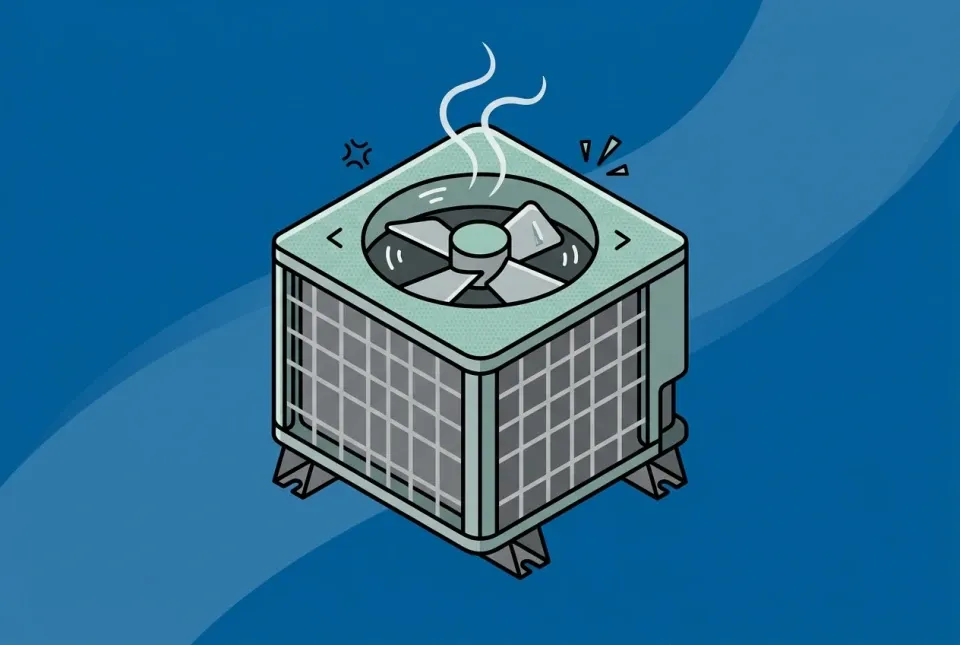
If your outdoor unit is humming but the top fan won’t spin, the culprit is almost always a failed capacitor, a cheap part that gives the fan motor its starting jolt. If the whole outdoor unit is silent (no hum at all), you’re usually looking at a power problem or a bad contactor. Either way, turn the system off. Running an AC whose fan won’t spin is the fastest way to overheat and kill the compressor, the most expensive part in the system.
Let’s sort out which one you’ve got.
First, which situation are you in?
Walk out to the outdoor unit (the condenser) and listen:
- Scenario A: you hear a hum or buzz, but the fan blade isn’t turning. The unit has power; something is stopping the fan itself.
- Scenario B: dead silence, no hum. Power isn’t reaching the unit, or a control part isn’t closing the circuit.
Scenario A: It hums, but the fan won’t spin
The likely cause: a bad capacitor
The capacitor is a small cylindrical part that stores energy and delivers the electrical “kick” that gets your fan motor (and compressor) spinning. When it weakens or dies, the motor gets power but not enough of a jolt to start turning, so it just sits there and hums. Heat is hard on capacitors, and NoVA summers deliver plenty of it, which is why this is the single most common failure we see once temperatures climb.
A safe test you can do
With the system turned off at the thermostat, find a long, thin wooden stick or dowel. Slide it through the fan grille and give one blade a gentle push to start it moving, then turn the system back on.
- If the fan takes off and keeps spinning on its own, your capacitor is almost certainly the problem. You did the job it couldn’t.
- If the fan won’t keep going, you may have a failed fan motor instead, or debris jamming the blade.
Safety, seriously: never use anything metal, never put your fingers near the grille, and turn the unit off before you reach anywhere near the blades. If you’re not comfortable doing this, don’t. It’s a five-minute job for a tech.
What it costs
- Capacitor replacement: $150 – $400 installed. Cheap part, quick fix.
- Condenser fan motor replacement: $350 – $700 installed for most residential units.
Don’t keep running the unit hoping it’ll sort itself out. A bad capacitor forces the fan motor (and sometimes the compressor, if it’s a shared dual capacitor) to keep straining to start. That strain burns out motors and can overheat the compressor, turning a $250 fix into a repair that runs into the thousands.
Scenario B: No hum at all
If the outdoor unit is completely silent, the fan isn’t the problem, power or a control part is. Common causes:
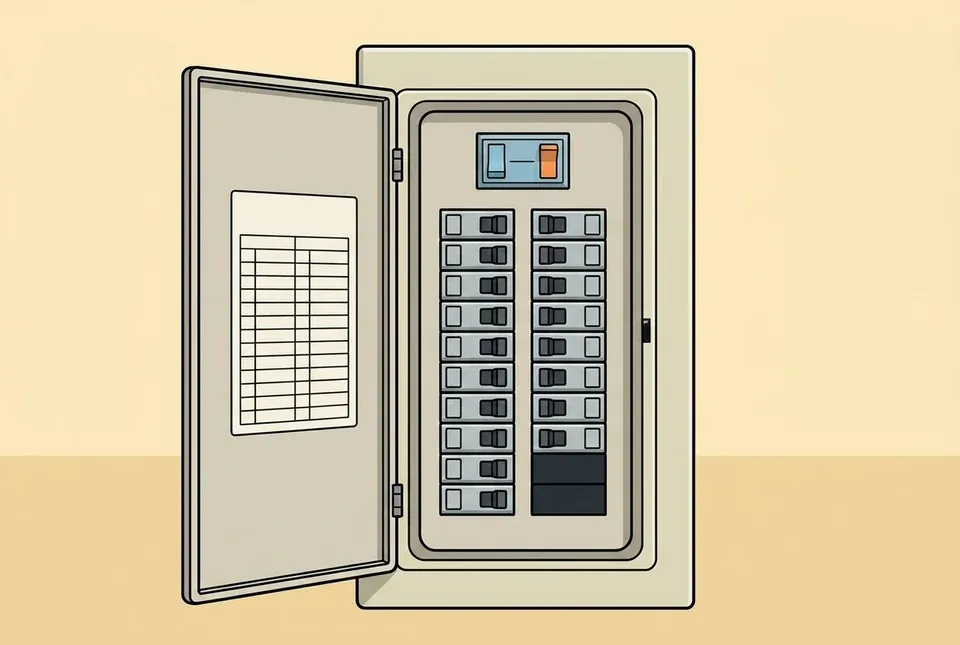
- A tripped breaker or blown disconnect. Check your electrical panel and the small disconnect box on the wall near the outdoor unit.
- A failed contactor, the electrical switch that lets power into the outdoor unit when the thermostat calls for cooling. Contactors get pitted and stop closing.
- A blown low-voltage fuse or a thermostat/wiring fault.
What you can safely check
Look at your breaker panel. If the AC breaker is tripped, reset it once. If it trips again, stop. A breaker that keeps tripping is doing its job, protecting you from a real electrical fault, and resetting it over and over is how small problems become fires. Also check that the outdoor disconnect is fully seated.
Typical repair cost: $150 – $600 depending on whether it’s a contactor, fuse, or a wiring/breaker issue.
Other things that stop a fan
- Debris around the blade: a stick, leaves, or a bird’s nest jamming it.
- Iced-up unit. If the fan looks frozen in place and you see ice, you likely have a separate airflow or refrigerant problem. Shut it off and let it thaw.
- Worn motor bearings. A fan that’s slow, wobbly, or grinding before it quit points at the motor, not the capacitor.
When to call a pro
Call right away if you notice a burning smell, a breaker that keeps tripping, the fan won’t hold a spin after your stick test, or the unit is dead silent. Anything involving the compressor or electrical faults is a same-day issue in summer. The longer an AC runs with a fan that won’t turn, the more you risk the compressor.
Fan not spinning on a hot day? Leonard Splaine runs same-day AC repair across Fairfax, Prince William, Arlington, Alexandria, and Stafford, with upfront flat-rate pricing. Call 703-494-2855 or request service online.