Why Is My HVAC System So Loud? Noisy Heating Systems After Long Runtimes, Explained
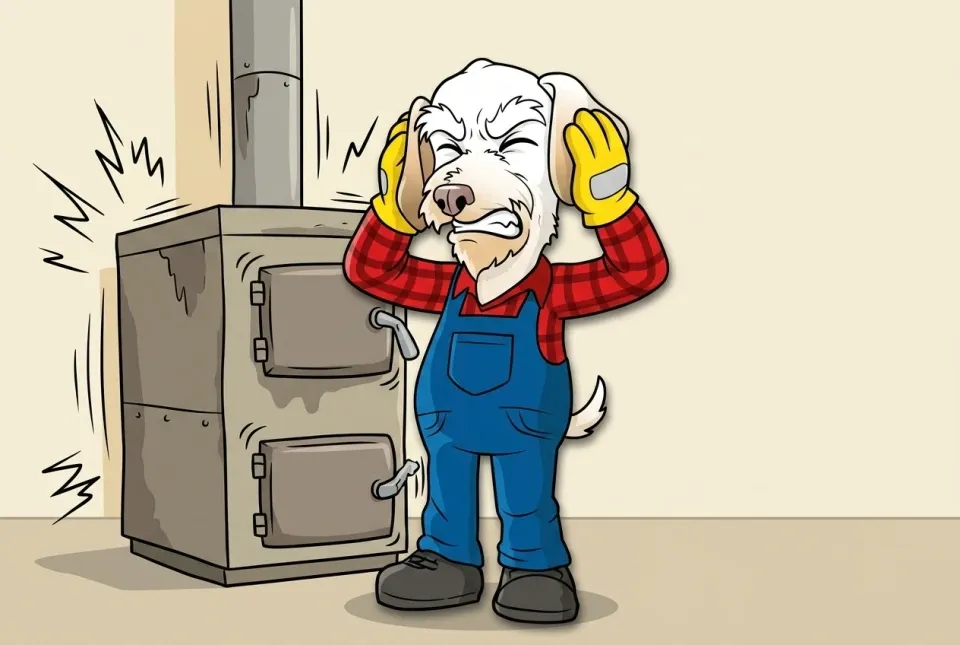
Every winter we get a version of the same call: “My heat has been running all day and now it’s making a noise it never made before.” That timing is not a coincidence. Long heating cycles put hours of continuous stress on the blower, burners, ducts, and electrical parts, and stress is exactly what turns a small hidden problem into an audible one.
The trick is knowing which sounds are harmless winter quirks and which ones mean shut it off and call. Here is how we sort them on service calls.
Quick answer
A noisy heating system after long runtimes usually comes down to one of five things: banging or booming at ignition (delayed ignition, treat as urgent), whistling from a clogged filter or leaky duct, grinding or squealing from failing blower bearings or a slipping belt, rattling panels and ticking ducts (mostly cosmetic), or an electrical hum from a weak capacitor or contactor. Long runtimes don’t create these problems, they expose them: parts heat up, expand, and wear faster, so the flaw you couldn’t hear in October becomes the noise you can’t ignore in January.
Here’s each sound, what it means, and what the fix runs.
1. Banging or booming when the burners light
A single metallic bang right as the system starts is often just ductwork flexing under sudden pressure, annoying but harmless. A boom or whump from the furnace itself at ignition is different. It usually means delayed ignition: gas builds up in the combustion chamber for a few extra seconds before it lights, then ignites all at once. Dirty burners, a weak igniter, or misaligned components are the usual causes.
This is the one furnace noise we treat as urgent. Those small explosions crack heat exchangers over time, and a cracked heat exchanger is both a carbon monoxide risk and often the repair that totals an older furnace. Shut the system off and have it checked.
Typical cost: $150 – $500 for a burner cleaning and ignition adjustment, far less than the heat exchanger it protects.
2. Whistling or whining from the vents
A high-pitched whistle means air is being forced through an opening smaller than it should be. With the blower moving air for hours, even a modest restriction sings. The usual suspects, in order: a clogged filter, closed or blocked supply vents, furniture over a return grille, or a leak in the ductwork itself.
Check it yourself: pull the filter. If you can’t see light through it, replace it and listen again. Then walk the house and make sure vents and returns are open and clear. Whistling that survives a fresh filter usually points to duct leaks or an undersized return.
Typical cost: the price of a filter, up to a few hundred dollars if duct sealing or a return modification is the real fix.
3. Grinding or squealing from the blower
Metal-on-metal grinding or a sharp squeal that rises with runtime is the sound of blower motor bearings wearing out or, on older furnaces, a belt slipping. These noises never improve on their own. Bearings that grind eventually seize, and a seized blower in January means no heat at all, often after burning out the motor along the way.
If you hear grinding, shut the system down and call. Running it “until it dies” usually converts a modest repair into a bigger one.
Typical cost: $150 – $250 for a belt or minor adjustment, $300 – $700 installed for most residential blower motor replacements.
4. Rattling panels and ticking ducts
Not every noise is a crisis. A rattle that comes and goes is usually a loose access panel, a screw that has vibrated free, or debris sitting on top of the unit. Rhythmic ticking or popping from the walls and ceiling is sheet-metal ductwork expanding as hot air flows and contracting as it cools, the same physics as a car hood ticking after a drive.
These are the cosmetic end of the spectrum. Snug the panel screws and clear anything resting on the cabinet. The caveat: a rattle that steadily gets louder over weeks can be an early sign of a blower assembly working itself loose, so if tightening panels doesn’t quiet it, have it looked at during your next tune-up.
Typical cost: usually nothing, or a minor fix rolled into a maintenance visit.
5. Humming or buzzing that wasn’t there before
Every system hums a little. A louder, harsher buzz, especially at startup or shutdown, points to an electrical component under strain: a weakening capacitor, a pitted contactor, or a motor drawing more current than it should. A loud buzz from a heat pump’s outdoor unit deserves the same attention.
Electrical noises are worth a prompt call because the failing part is usually cheap and what it takes down is not: a capacitor is a minor repair, the compressor or motor it starves is a major one.
Typical cost: $150 – $400 installed for a capacitor or contactor.
Why long runtimes bring noises out
Cold snaps make heating systems run for hours instead of minutes, and three things happen. Components heat up and expand, so loose parts vibrate and worn bearings scrape. Sustained airflow makes any restriction or duct leak audible in a way short cycles never do. And older equipment shows its age: a furnace that sounded fine in mild weather announces its worn parts during the first week of real cold. That’s why most heating breakdowns happen on the coldest days, the noise was the warning shot.
Which noises are urgent, and which can wait
Shut the system off and call the same day for booming at ignition, grinding, screeching, repeated electrical buzzing, or any noise paired with a burning smell. Book a normal appointment for whistling that a new filter didn’t fix or a rattle that keeps returning. Ticking ducts and the occasional startup bang from ductwork are fine to mention at your next tune-up.
Frequently asked questions
Is it normal for a furnace to get louder as it ages? Gradually, somewhat. Motors and bearings wear, and a 15-year-old system will never be as quiet as it was new. But a noticeable change over one season, or one week, is a symptom, not aging.
Can I keep running the heat while I wait for a technician? For whistling or rattling, yes. For booming, grinding, screeching, or burning smells, no, shut it down. Those are the noises that turn into no-heat emergencies and safety issues.
Will a tune-up actually prevent these noises? Mostly, yes. A fall tune-up catches dirty burners, weak capacitors, loose hardware, and dry bearings, which covers nearly every noise on this list before winter runtimes expose them.
My ducts pop loudly every time the heat kicks on. Is that a problem? It’s harmless, just thin sheet metal flexing under pressure, but it is fixable if it bothers you. Bracing the duct panel that “oil-cans” or adjusting blower speed usually quiets it.
Heating system getting louder by the day? Leonard Splaine has kept Northern Virginia homes warm for three generations, and our technicians can trace a noise to its source in one visit. Call 703-494-2855 or book a heating repair.