Understanding the Role of Humidifiers in Your HVAC System for Allergy Relief
If allergy season leaves you sneezing indoors as much as outside, the humidity level in your house may be part of the reason. Humidifiers in your HVAC system do more than make winter air feel less harsh. Held at the right level, indoor humidity changes how your sinuses handle allergens and how much of that allergen load is floating around in the first place.
Here is how the mechanism actually works, and how to use it for allergy relief without accidentally making things worse.
Quick answer
A humidifier integrated into your HVAC system relieves allergy symptoms in two ways: it keeps your nasal passages, sinuses, and throat moist enough to trap and clear allergens the way they’re designed to, and it holds indoor humidity in the 30% to 50% range where dust mites and mold struggle to grow and airborne pollen settles out of the air faster. Below 30%, dry air inflames the very tissues that protect you. Above 50%, dust mites and mold take off. The sweet spot in between is where allergy sufferers breathe easiest.
Why humidity levels change how bad your allergies feel
Your body’s first line of defense against pollen, dust, and dander is a thin layer of mucus lining your nose and airways. That layer catches particles before they reach deeper tissue, and tiny hairs sweep them out. It only works when it stays moist.
When indoor air drops below about 30% relative humidity, which happens in most Northern Virginia homes every winter once the furnace runs daily, that mucus layer dries out. Suddenly the same amount of pollen or dust produces far more irritation: raw sinuses, a scratchy throat, nosebleeds, and congestion that feels like allergies even on low-pollen days. Many people also find that dry air makes the side effects of antihistamines worse, since those medications are drying to begin with.
Humidity swings the other direction cause a different problem. Above roughly 50%, and especially above 60%, two of the most potent indoor allergens flourish:
- Dust mites absorb water straight from the air rather than drinking it. In humid air they multiply quickly in bedding, carpet, and upholstery. Dry the air out below 50% and their populations fall off sharply.
- Mold needs moisture to grow on walls, windowsills, and inside ductwork. Persistent high humidity is an open invitation, and mold spores are among the most aggressive allergy and asthma triggers there are.
So allergy relief isn’t about adding as much moisture as possible. It’s about holding the middle.
The 30% to 50% sweet spot
The EPA and allergists generally agree on the same target: keep indoor relative humidity between 30% and 50%. In that band, your airways stay hydrated and functional, dust mites can’t sustain large populations, and mold doesn’t get the damp surfaces it needs.
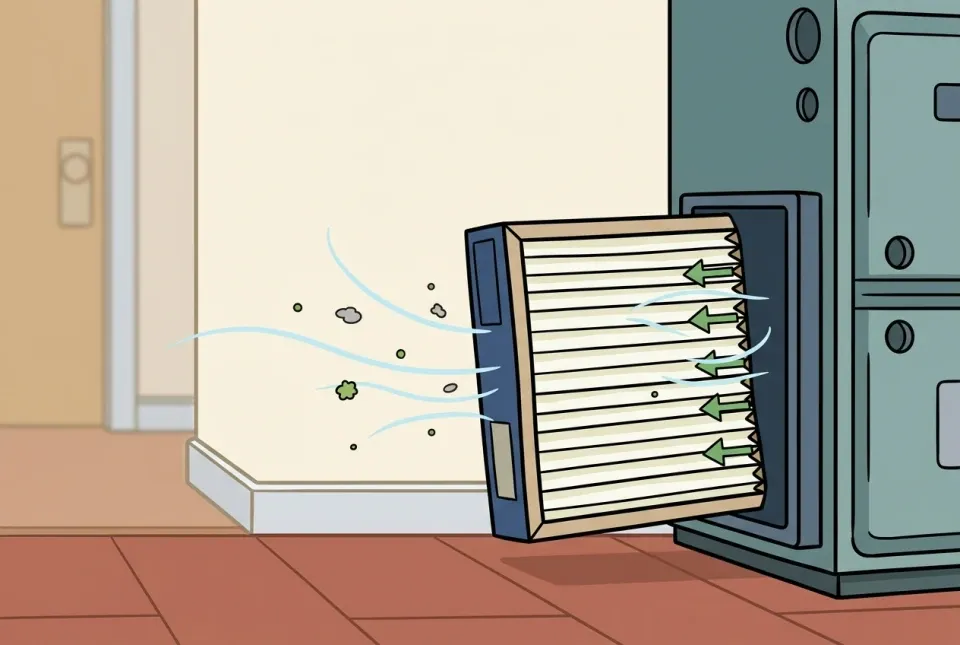
There’s a bonus effect on pollen and dust too. In very dry air, lightweight particles stay suspended for a long time, drifting through rooms and past your face for hours. Properly humidified air adds a little weight to those particles, so they settle out faster or get pulled into your return duct, where the HVAC filter can catch them instead of your nose. Balanced humidity quietly teams up with your filter.
A cheap hygrometer (often built into smart thermostats) tells you where your home actually sits. Most homes we test in winter are running 20% to 30%, well below the comfort and health range.
How an HVAC-integrated humidifier holds that range
A whole-home humidifier mounts on your furnace or air handler and adds moisture directly to the air your system is already circulating. A humidistat measures the indoor humidity and meters water vapor into the airflow only as needed, so every room gets the same balanced air, all season, without you thinking about it.
That automatic regulation is the part that matters for allergies. Symptom relief comes from humidity that stays inside the 30% to 50% band day after day, not from moisture that spikes and crashes. A console unit you fill by hand can help one bedroom overnight, but it can’t hold a steady level through a whole house, and an overenthusiastic one can push a small room past 60% and feed the dust mites you were trying to starve. The HVAC-integrated approach removes both failure modes: consistent coverage, capped at a healthy setpoint.
If you’re weighing whether your home needs one at all, that’s its own decision, and it depends on your home’s construction, your heating system, and how dry your winters run. For this article the point is simpler: if allergies are the problem, regulation is the feature that delivers the relief.
Keep it clean, or it works against you
One honest caveat: a neglected humidifier can make allergies worse instead of better. Standing water and mineral buildup inside any humidifier can grow mold and bacteria, and a unit tied into your ductwork will distribute whatever grows in it to the whole house.
The fix is simple maintenance:
- Replace the water panel (the evaporative pad) at least once a year, ideally at the start of heating season.
- Check the drain line and reservoir for scale or slime, and clean them per the manufacturer’s schedule.
- Set the humidistat no higher than 45% to 50%, and lower it on very cold days so moisture doesn’t condense inside walls and windows.
- Have the unit checked during your fall heating tune-up, it takes a technician only a few extra minutes.
Do that, and the humidifier stays what it should be: a background appliance that quietly keeps your air in the healthy zone.
Frequently asked questions
Will a humidifier help with pollen allergies specifically? It helps indirectly but meaningfully. Moist airways clear inhaled pollen more effectively, and balanced humidity helps airborne pollen settle out of the air faster so your filter can capture it. It won’t stop pollen from entering the house, so pair it with good filtration and closed windows on high-count days.
Can a humidifier make allergies worse? Yes, in two cases: if it pushes humidity above about 50%, which encourages dust mites and mold, or if the unit itself is dirty and harboring growth. A whole-home unit with a humidistat and an annual pad change avoids both.
What humidity level is best for allergy sufferers? Aim for 30% to 50% relative humidity, and many allergists suggest staying near 40% to 45% in winter. Below 30%, dry air irritates sinuses and skin. Above 50%, allergen growth accelerates.
Do I run it year-round? Mostly in heating season. Winter is when furnaces dry homes out. In a humid Virginia summer the problem reverses, and your air conditioner (or a dehumidifier) does the moisture control instead.
Wondering whether balanced humidity would calm your allergies? Leonard Splaine installs and services whole-home humidifiers across Northern Virginia and can test your home’s actual humidity levels. Call 703-494-2855 or explore indoor air quality services.