Is Your Alexandria Panel a Federal Pacific?
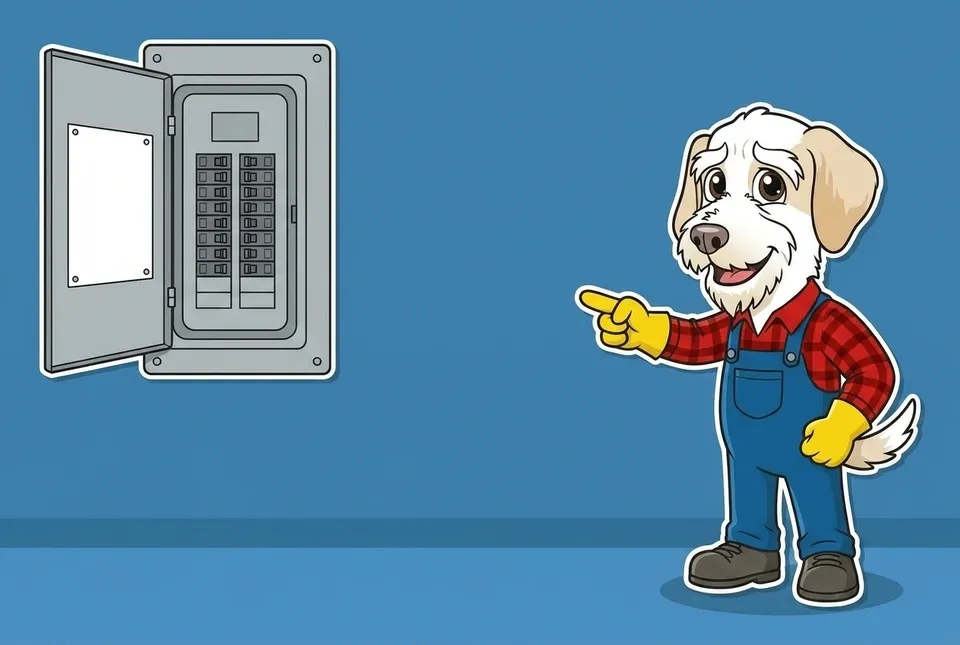
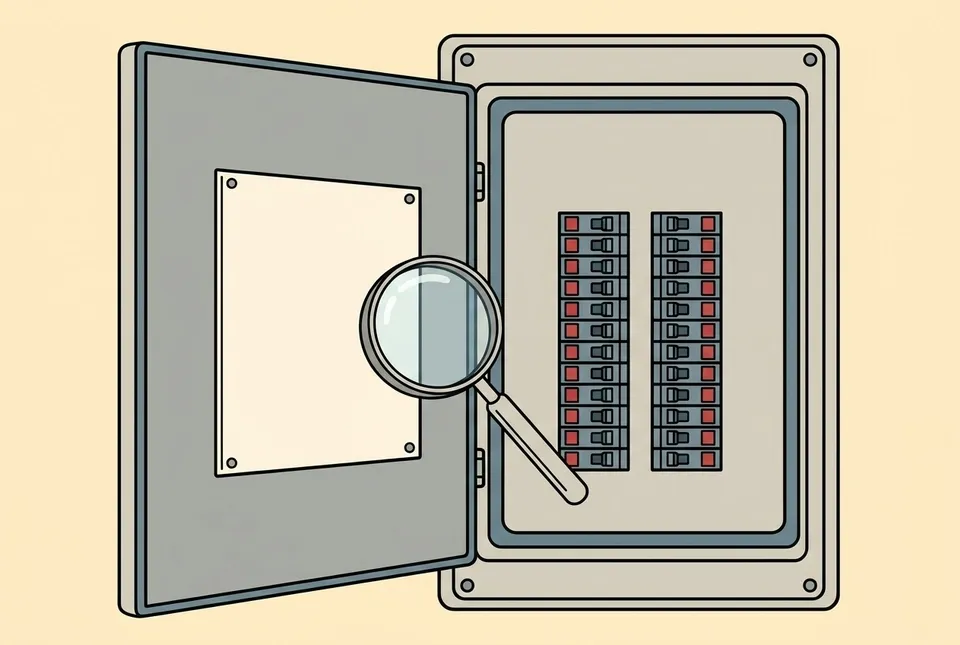
You can usually settle this in thirty seconds with a flashlight. Open the panel door, read the label, then look at the breaker faces. If you see Federal Pacific Electric, FPE, or Stab-Lok, you have the panel people are asking about. We find them regularly in Alexandria, because much of the city went up in the decades these were sold. The honest version is this: these panels have a documented history of breakers that fail to trip under overload, the evidence comes from independent and contracted testing rather than any government finding, and there was never a recall of them in the United States. Even so, electricians and some insurers routinely recommend replacing them, home inspectors flag them, and so do we. Our family has looked after Northern Virginia homes since 1956, and electrical panel replacement in Alexandria is one of our most common calls after a home inspection.
How Do You Tell If an Alexandria Home Has a Stab-Lok Panel?
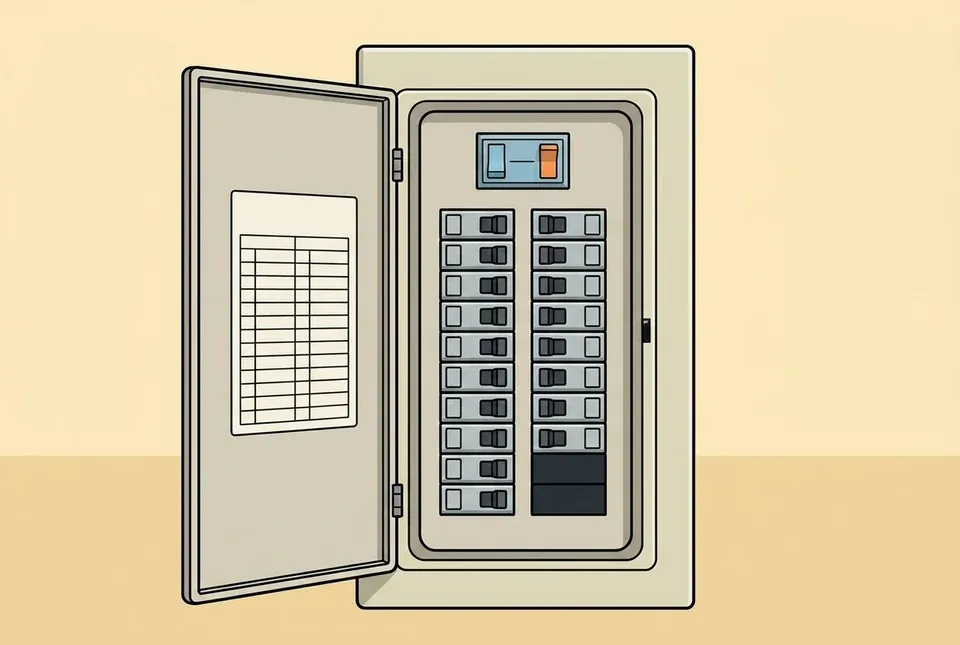
Start with the label. The panel door, or its inside face, almost always carries a manufacturer name, and on these it reads Federal Pacific Electric, Federal Pacific, FPE, or on Canadian market equipment, Federal Pioneer. Then look at the breakers: many have Stab-Lok printed on the face, and many production runs used red or orange toggles, though neither marking is universal.
One distinction gets missed constantly. Federal Pacific also made other breaker lines and many fuse panels, and those are not what this is about. The concern is the Stab-Lok breaker and the bus it plugs into.
The design is a tell in itself. Stab-Lok breakers wedge into slots on the bus, held by friction rather than a firm mechanical latch. One master electrician who posts panel replacement videos describes breakers that rock loose, and some that have fallen out with the cover still on. Two other warning signs: a warm or burnt smell, and browning or charring where the breakers meet the bus.
Open the outer door only. The metal cover behind it is for trained hands.
Why Do FPE Breakers in Alexandria Homes Fail to Trip?
Because a breaker has one job that really matters and this design has repeatedly failed it on the test bench. It should carry its rated current, then shut the circuit off within a set time when the load climbs past that rating. Testers kept finding Stab-Lok breakers that would not open under overload.
The numbers deserve care, because one figure gets quoted online as though it were the whole story. During the federal investigation the CPSC’s own bench tested 27 double-pole breakers and found 20 that would not trip at 135 percent of rating. Wright-Malta Corporation, testing under contract for the CPSC, ran 122 double-pole breakers and recorded 62 no-trip failures, which is the 51 percent figure repeated everywhere online. Jesse Aronstein, the engineer behind much of that work, independently tested 345 single-pole breakers with an 18 percent failure rate and 120 double-pole with 35 percent. Those tallies sit in a table of test records the CPSC released under the Freedom of Information Act, and the honest range across testers and breaker types runs from about 18 percent to 74 percent. Aronstein’s later testing of 830 breakers from one New Jersey condominium, submitted to the CPSC in 2010, found up to 70 percent of two-pole breakers failing to trip.
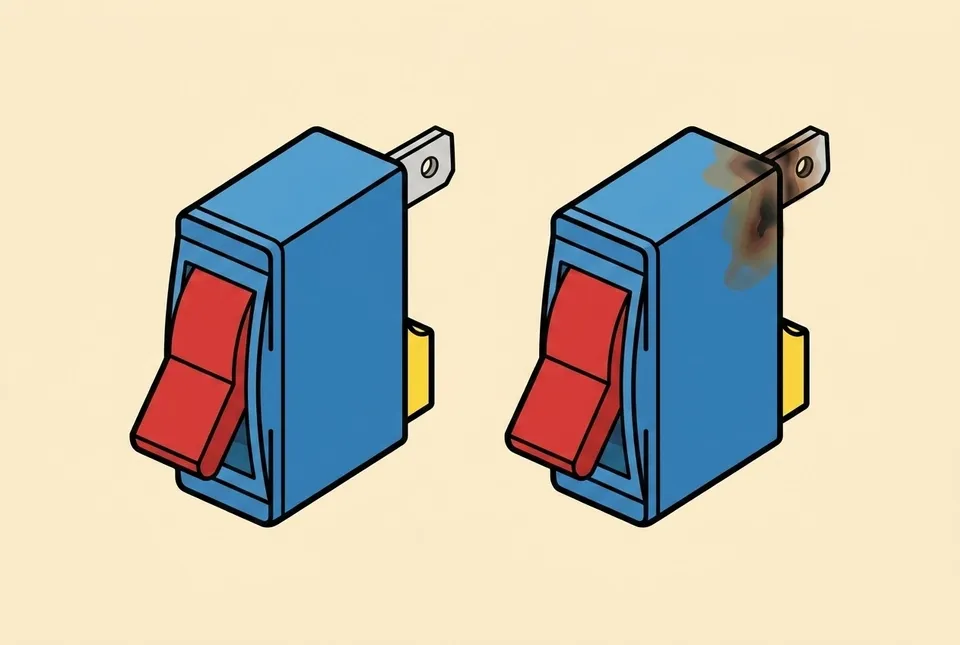
That is what makes the risk hard to feel. Nothing looks wrong on an ordinary Tuesday: the lights work, the breakers hold, and the failure shows up only on the day a circuit is genuinely overloaded. One more quirk: these breakers can read off at the handle while the circuit stays energized, a shock hazard rather than a fire one.
When Did the CPSC Close Its Investigation Into FPE Breakers?
On March 3, 1983, with a revision added on February 18, 2011. The Commission opened the matter in June 1980, after the manufacturer’s own parent company reported that many FPE breakers did not fully comply with Underwriters Laboratories requirements.
How it closed matters, because much of what you read about this is wrong. There was no recall of these panels in the United States. The Commission did not rule the breakers hazardous, and it did not clear them either. It stopped for lack of money. It closed its two year investigation on the grounds that “the data currently available to the Commission does not establish that the circuit breakers pose a serious risk of injury to consumers,” and explained that gathering the data to answer it properly would cost several million dollars it could not justify against a limited annual budget. It kept the right to reopen the case. The release itself has not been touched since that 2011 clarification, and nothing in the public record shows the investigation was ever reopened.
The 2011 revision made that non-finding plainer still. CPSC staff added a note urging electricians, homeowners, home inspectors and real estate agents to read the release carefully, because the Commission closed the matter “without making a determination as to the safety of FPE circuit breakers or the accuracy of the manufacturer’s position on the matter.”
So where does “recalled” come from? Two real recalls, neither of them this product. In 1997 Federal Pioneer, the Canadian sibling brand, recalled two single-pole 15-amp breaker models, and around 1981 Federal Pacific recalled certain industrial breakers. Neither touched the residential Stab-Lok panel in an American home.
When Do Home Insurers Flag Federal Pacific Panels in Alexandria Homes?
Usually at one of two moments: when you apply for a policy on a home you are buying, and when a carrier re-inspects a home it already covers.
Some carriers decline or condition coverage over these panels, and a few have put it in writing. Loss control bulletins recommend replacing Federal Pacific Stab-Lok panels and breakers with UL listed equipment, and at least one carrier declines outright any risk that includes an FPE-made panel. Those documents come from outside Virginia and none of them binds your insurer, but they show where the industry has landed.
Beyond the written positions, the pattern is what homeowners report. In insurance and real estate forums the recurring story is a carrier giving roughly thirty days to replace the panel or lose coverage, sometimes after the policy was already bound. That is homeowner experience rather than a published industry rule, and it is not universal. Plenty of carriers still write these homes, some with conditions.
Which is the practical reason to look before anyone else does. Replacing a panel because you chose to is very different from replacing one inside a window somebody else set.
Why Do Inspectors Notice Federal Pacific Panels in Older Alexandria Homes?
Because the panel is one of the first things a home inspector opens, and Alexandria has a great deal of housing built during exactly the years these were sold, roughly the early 1950s into the mid 1980s.
Alexandria’s Housing 2040 needs analysis, presented in 2024, gives a median year built of 1966 for the city’s multifamily rental buildings and 1986 for its multifamily condominium buildings. Those figures cover multifamily stock rather than every house in the city, but both land inside the window.
A 2021 notice from the Watergate at Landmark condominium association here in Alexandria, reproducing a 2015 email from the City’s Code Administration Department, records that its FPE panel boxes went in between 1973 and 1978. That same city email confirms the panels were never recalled by the CPSC. Nor is this unique to Alexandria; we see the same equipment in older Arlington homes from the same building era.
Inspectors also look at what came after installation: aluminum bus bars are common in these panels, and drywall texture overspray during the 1970s building booms left contamination that inspectors fail on sight.
Does a Federal Pacific Panel Need Replacing Before an Alexandria Home Sale?
Not necessarily before, but it will come up, and it is better to choose how you handle it than to be surprised at the inspection table.
The pattern repeats. The inspector flags the panel. The buyer either asks the seller to replace it before closing or asks for a credit and handles it afterward. Sellers commonly resist paying directly, and buyers often prefer the credit anyway, because it lets them pick the contractor. Deals proceed either way. Two people who described working in real estate transactions, in separate online discussions, landed on the same measured position: recommend replacement, do not treat it as a red alert emergency, and expect to negotiate rather than walk away.
If you are selling, get ahead of it. Knowing before you list means you decide whether to replace it, price it in, or plan for a credit, instead of renegotiating under a closing clock.
If you are buying, get insurance quotes early in your contingency period. A carrier’s underwriting answer can settle this faster than any negotiation, and better during due diligence than after settlement. Either way, an Alexandria home with one of these panels is a normal transaction, a line item rather than a deal killer.
When Does an Alexandria Home Need a New Panel, Not Just a New Breaker?
When the panel is the Stab-Lok assembly itself. That is the honest dividing line, and it comes down to a limitation nobody has solved: there is no practical way to tell which breakers inside a given panel are defective internally.
A breaker that passes a test today tells you nothing about the one beside it, which is why the advice from insurers and inspectors keeps landing on the whole assembly rather than the piece that acted up.
Replacing a panel is permitted, inspected work with the power off for part of a day, and it is the natural moment to catch up on anything the original installation missed, which is where wiring and safety work beyond the panel itself gets sorted.
What it costs depends on the home, where the panel sits, and what the wiring behind it looks like, so we will not quote a number on a web page. We will look at what you have and give you a free written estimate.
Why Do Replacement Breakers Not Fix the Risk in Alexandria Homes?
Because the concern lives in the connection between the breaker and the bus, not only inside the breaker. Replacement breakers for these panels are sold and will physically fit, but they stab into the same friction-held slots on the same bus bar, which is the part of the design being questioned in the first place.
There is a listing problem on top of the physical one. Panels and breakers are tested and listed together as an assembly, so mixing another manufacturer’s breakers into a Federal Pacific panel falls outside what either product was listed for. AmTrust says so directly: replacing the breakers only is not recommended, even with UL approved parts.
Replace one breaker and you have addressed the one you happened to notice, in a panel whose failures were never predictable from the outside. That is a postponement, not a repair.
Federal Pacific Stab-Lok panels were never recalled in the United States. The CPSC investigated for two years and closed the case in 1983 without deciding either way, because the testing needed to settle it cost more than the agency could spend. What drives replacement is the independent and contracted testing that followed, which repeatedly found breakers failing to trip under overload.
None of that means your house is in danger tonight. It means a safety device may not do its job on the day it is needed, you cannot tell from the outside, and insurers and inspectors have drawn their own conclusions. Handle it on your schedule rather than someone else’s deadline.
If you want a straight answer about the panel in your Alexandria home, we will come look and tell you what we find, including when the answer is that it can wait. Same-day service, and no interest in scaring anybody into a sale. That is how we have worked since 1956.