HVAC UV Lights: Do They Work, and Which Type Is Best?
Quick answer
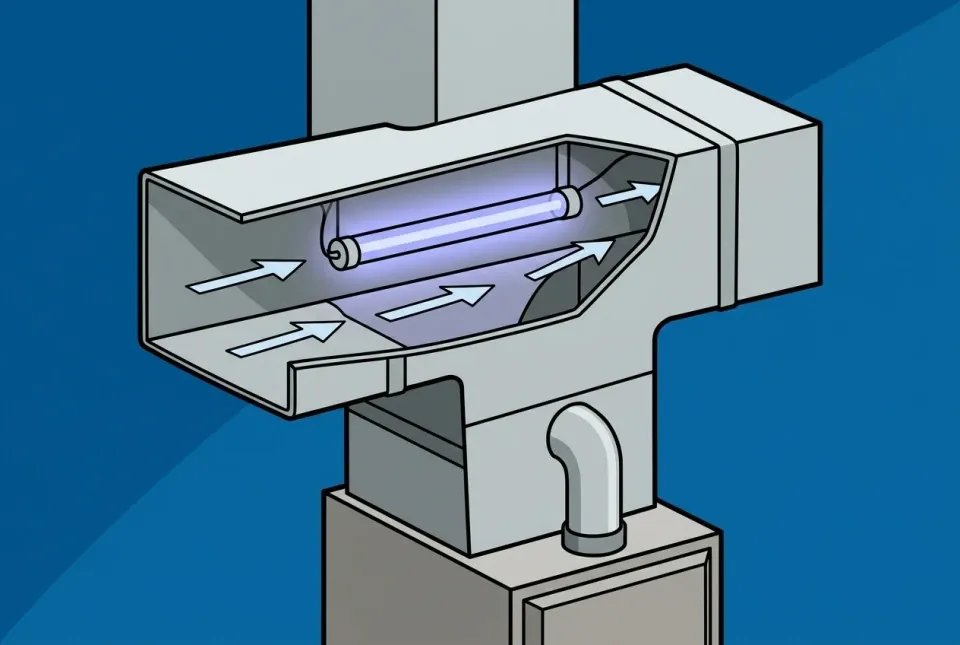
A UV light installed in your HVAC system is a genuinely useful add-on for keeping your indoor coil and drain pan free of mold and mildew, which is exactly the kind of growth our humid Northern Virginia summers encourage. It’s not a magic air purifier, and it won’t replace good filtration or fix a moisture problem on its own, but a properly placed UV-C coil light is affordable, low-maintenance, and does real work keeping your system clean and your air fresher. Here’s what it does, the two types to know, and what to expect on cost.
How HVAC UV lights work
UV-C lamps look a lot like the fluorescent tubes in an office ceiling, and they work on a similar principle: an electric discharge through gas produces light at a specific wavelength, around 254 nanometers, known as UV-C. That wavelength damages the DNA and RNA of mold spores, bacteria, and viruses so they can’t reproduce. Enough exposure at close range, and the organism is effectively neutralized.
The key phrase is close range and enough exposure. UV-C is powerful right next to the lamp and weakens quickly with distance and speed. That’s why placement matters so much, and why the type of light you choose determines what it can actually do.
The two types of HVAC UV lights
Coil sterilization lights (the practical choice)
A coil light mounts inside your air handler and shines continuously on the indoor evaporator coil and the drain pan below it. Those surfaces stay cold and damp whenever the AC runs, which makes them a favorite breeding ground for mold and biofilm, the black gunk that fouls coils, clogs drains, and pushes a musty smell through your vents.
Because the coil sits still and the light is always on it, a coil light gets the long, close exposure UV-C needs to work. This is the type we recommend for most homes. It keeps the coil clean, protects airflow and efficiency, cuts down on that damp-basement smell, and reduces how often the coil needs a deep cleaning.
Air sterilization lights (in the airstream)
An air light (sometimes called a germicidal or duct light) mounts in the ductwork and targets airborne organisms as they pass by. These are usually wired to run with the blower. The catch is physics: air moves through the duct fast, so each organism only spends a fraction of a second in front of the lamp. To disinfect moving air meaningfully, you need more or stronger lamps, which costs more and does less than the marketing implies.
For most homeowners, a coil light delivers the best return. If air disinfection is your goal, it usually makes more sense to pair strong filtration (a high-MERV media filter) with a coil light than to rely on an in-duct lamp alone.
What a UV light will and won’t do
It will:
- Keep your evaporator coil and drain pan free of mold and biofilm
- Reduce musty odors coming from the system
- Help maintain airflow and efficiency by keeping the coil clean
- Cut down on coil cleaning and related maintenance
It won’t:
- Replace your air filter (UV doesn’t capture dust, dander, or pollen, filtration does that)
- Fix a humidity or moisture problem on its own
- Remove cooking odors or most VOCs (that’s a job for carbon filtration or ventilation)
- Instantly sterilize all the air in your home
Think of a UV light as one layer in a healthy-air setup, alongside good filtration, proper humidity control, and regular maintenance, not a stand-alone cure.
Cost and maintenance
For Northern Virginia homes, a professionally installed coil UV light typically runs a few hundred dollars, including the lamp and installation. In-duct air systems with multiple or higher-output lamps cost more. Maintenance is minimal: the bulb loses effectiveness over time and should be replaced roughly once a year, even though it may still glow. A lamp that’s still lit but past its rated hours isn’t putting out enough UV-C to do its job.
Installation is quick for a technician, and placement is the whole game: the lamp has to be positioned to actually hit the coil (or the airstream) without shining where its light could reach your eyes. That’s the main reason we’d steer you away from a purely DIY approach.
Frequently asked questions
Do HVAC UV lights really work? Yes, for what they’re designed to do. A coil light reliably controls mold and biofilm on the evaporator coil, which is where they earn their keep. Claims of whole-home air sterilization from a single in-duct lamp are overstated.
Coil light or air light, which should I get? For most homes, a coil light. It gets the constant, close exposure UV-C needs and solves the most common problem, coil mold and musty odors. Air lights have their place but need more hardware to matter.
How often do I replace the bulb? About once a year. UV-C output fades before the visible glow does, so go by the manufacturer’s rated hours, not whether the lamp still lights up.
Is a UV light worth it in Northern Virginia? Our humid summers make coil mold a genuine and recurring problem, so a coil light is one of the better-value indoor-air upgrades for homes here.
Curious whether a UV light makes sense for your system? Leonard Splaine installs and services HVAC UV lights across Northern Virginia and will give you a straight answer on what it’ll actually do for your home. Call 703-494-2855 or contact us online.